HomeGoa › Travel Guide
The complete guide

Goa Travel Guide

Everything you need to plan your trip to Goa, Goa.

← Back to Goa overview & guest houses
📑Jump to a section

Introduction to Goa

Goa occupies a small strip of the Konkan coast between Maharashtra and Karnataka — about 3,700 square kilometres, India's smallest state, with a population of roughly 1.5 million.

Its distinctiveness is a product of history. While most of India experienced roughly two centuries of British rule, Goa was Portuguese from 1510 to 1961 — four and a half centuries during which a substantial part of the population converted to Catholicism and a genuinely hybrid Indo-Portuguese culture developed. Goa only joined India in 1961, and became a full state as recently as 1987.

The result is a place that feels different from the rest of India in ways that go beyond beaches: the architecture, the food, the pace, the relationship with alcohol, the Catholic festivals alongside Hindu ones, and the Konkani language written in more than one script.

Tourism arrived in the 1960s with the hippie trail, developed through the 1980s and 1990s into a package-holiday destination for Europeans, and has more recently shifted towards a domestic Indian market and a growing upmarket and long-stay segment.

This guide covers the North-South decision, when to visit, how to get around, what to see beyond the beach, and what things cost.


History

Goa's recorded history stretches back well over two thousand years, with the region mentioned in the Mahabharata and ruled successively by the Mauryas, Satavahanas, Chalukyas, Kadambas and the Vijayanagara Empire. The Kadamba dynasty, from roughly the 10th to 14th centuries, is considered a high point of pre-colonial Goan culture, and several temples date from around this period.

In 1510, Afonso de Albuquerque captured Goa from the Bijapur Sultanate, and it became the capital of the Portuguese State of India — the administrative centre of Portugal's entire Asian empire, stretching from East Africa to Macau. Old Goa, the city they built, was at its height one of the largest and wealthiest cities in the world, described as "Rome of the East", with a population reputedly exceeding that of Lisbon or London at the time.

The Portuguese brought Catholicism, and conversion was extensive — through missionary work, through Jesuit and Franciscan orders, and, during the Goa Inquisition from 1560 to 1812, through outright coercion, including the destruction of temples and persecution of both Hindus and converted Christians suspected of relapse. It is a difficult history that sits alongside the beauty of the churches.

St. Francis Xavier, the Jesuit missionary, arrived in Goa in 1542 and died in 1552 off the coast of China. His body was brought to Goa and is held in the Basilica of Bom Jesus, where it remains a major object of veneration. It is displayed publicly during an Exposition held roughly once every ten years.

Old Goa was eventually abandoned as a capital in the 18th and 19th centuries following repeated epidemics — cholera and malaria — and the administration moved to Panaji in 1843. The churches were left standing amid what reverted largely to open ground, which is why they now sit in a landscape rather than a city.

Portuguese rule continued after Indian independence in 1947, despite Indian pressure and international arbitration. In December 1961, India launched Operation Vijay, a military action that ended Portuguese control in around 36 hours. Goa became a Union Territory and, in 1987, India's twenty-fifth state.

The 1960s and 1970s brought the hippie trail — Anjuna, Calangute and Arambol became fixtures of the overland route from Europe — and laid the foundation of the tourism economy that now dominates the state.


Geography

Goa lies on India's west coast between Maharashtra to the north and Karnataka to the east and south, on the Konkan strip between the Arabian Sea and the Western Ghats.

The state is small — roughly 105 km north to south and 60 km at its widest — which means nowhere is far from anywhere. The coastline runs about 100 kilometres and is broken by a series of river mouths, headlands and small bays, which is why Goa has so many distinct beaches rather than one continuous stretch.

Two main rivers, the Mandovi and the Zuari, cut across the state and join near Panaji, effectively dividing North Goa from South Goa. This division is the single most important planning fact for visitors: the two halves have quite different characters.

Inland, the land rises towards the Western Ghats, a UNESCO-designated biodiversity hotspot. The eastern part of Goa is forested and hilly, holding the Mollem and Bhagwan Mahavir protected areas, Dudhsagar Falls — one of India's tallest waterfalls at around 310 metres, on the Goa-Karnataka border — and the spice plantations that make a popular inland excursion.

The coastal plain is fertile, with paddy fields, coconut groves and cashew plantations. Cashew is significant both agriculturally and culturally, as the base for feni, Goa's distinctive local spirit.

The state has several islands in the river estuaries, including Divar and Chorão, the latter holding the Dr. Salim Ali Bird Sanctuary. These are reachable by ferry and offer a quieter, more rural Goa.

Beach erosion and unregulated construction are ongoing pressures on the coastline.


Climate

Goa has a tropical monsoon climate — hot and humid for most of the year, with a very pronounced wet season and no genuinely cold period.

Winter / dry season (November to February) is the tourist season and by far the most pleasant. Daytime temperatures typically sit around 28–32°C with cooler evenings, humidity drops noticeably, and rain is essentially absent. Sea conditions are calm and swimming is at its best.

Summer (March to May) is hot and increasingly humid as the monsoon approaches. Temperatures reach the mid-to-high 30s, and the humidity makes it feel considerably worse. Sea temperatures are warm. Tourist numbers drop and prices fall accordingly. Beach shacks begin closing towards the end of this period.

Monsoon (June to September) is intense. Goa sits directly in the path of the southwest monsoon as it hits the Western Ghats, and rainfall is very heavy — among the highest in India. June and July are the wettest months. The sea becomes rough and dangerous, swimming is prohibited on most beaches, water sports shut down, and the majority of beach shacks are dismantled entirely, as regulations require them to be removed each monsoon and rebuilt for the season.

The landscape, however, is transformed — the whole state turns intensely green, waterfalls appear everywhere, and Dudhsagar is at its most spectacular (though the trek and jeep access are often closed for safety).

Post-monsoon (October) is a transitional month. The rain withdraws, humidity stays high initially, and the state gradually reopens as shacks are rebuilt through the month.


🌞 Best Time to Visit

November to February is the best time to visit Goa, and within that window there is a further choice to make.

Mid-November to mid-December is arguably the sweet spot — the weather is fully settled, the sea is calm, shacks are all open, and the extreme peak-season crowds and prices have not yet arrived.

Mid-December to early January is the absolute peak. Christmas and New Year in Goa are a major event, the state is at its liveliest, and there is a real festival atmosphere — but accommodation prices can triple or more, beaches and roads are packed, and booking months ahead is essential. Come for this if the atmosphere is the point; avoid it if you want space.

January to February remains excellent — the weather is still ideal, crowds thin out after the New Year rush, and prices settle. For many people this is the best combination of conditions and value.

October and March are shoulder months. October sees the state reopening after the monsoon, with green landscapes and low prices but incomplete infrastructure early in the month. March is still comfortable and considerably cheaper than peak, with warm sea temperatures.

April and May are hot and humid but cheap and quiet, with the sea still swimmable. Reasonable if you prioritise price and space over comfort.

June to September is for a specific kind of traveller — someone who wants green, empty, dramatic Goa and doesn't mind that swimming is off the table and most shacks are gone. Prices are at their lowest. The Western Ghats and waterfalls are the draw rather than the beach.

Festival timing: the Goa Carnival falls in February or March, Shigmo (the Goan spring festival) in March, and the Feast of St. Francis Xavier on 3 December.

Weather

November to February — the season. Warm days around 28–32°C, comfortable evenings, low humidity, no rain, calm seas. This is when Goa is at its best and, correspondingly, its most crowded and most expensive. The mid-December to early-January peak sees prices multiply.

March to May — hot and quiet. Temperatures in the mid-to-high 30s with rising humidity. Swimming is still possible and the sea is warm, but midday is uncomfortable. Prices are low and beaches are quiet. Shacks start closing from around late April.

June to September — monsoon. Very heavy rain, rough seas, swimming prohibited on most beaches, most shacks removed, many businesses closed. Humidity is near-total. Green landscapes and waterfalls are the compensation, and prices are at their lowest. Not the trip most people picture when they think of Goa, but genuinely beautiful if you want a different experience.

October — reopening. Rain tapers off, the state greens up, shacks are rebuilt through the month, and the season restarts towards the end. Prices are still moderate and crowds light. A good compromise month if you don't mind some residual rain and incomplete infrastructure.

Sea safety note. Drownings occur in Goa every season. Currents and undertow are dangerous at many beaches, red flags are posted for a reason, and alcohol is a factor in a substantial share of incidents. Swim only where lifeguards are on duty and flags indicate it is safe.


✈ How to Reach Goa

By air. Goa has two airports, and choosing the right one matters considerably because they are at opposite ends of the state:

  1. Manohar International Airport (GOX) at Mopa, in the far north, opened in 2023. Best for North Goa — roughly 45 minutes to the Baga, Anjuna, Morjim and Arambol areas. It handles a growing share of domestic and international traffic.
  2. Goa International Airport (GOI) at Dabolim, in the south near Vasco da Gama. Best for South Goa — around 30 minutes to Colva and Benaulim, and closer to Palolem than Mopa would be. Also a naval airbase, which occasionally affects operations.

Getting from Mopa to South Goa, or Dabolim to far North Goa, can take two hours or more. Book your flight into the airport nearest where you are staying.

Both airports have prepaid taxi counters, and app-based cabs operate with some restrictions (see below). Many hotels arrange transfers, which is often the simplest option.

By train. The Konkan Railway runs down the coast and is one of the most scenic rail journeys in India, particularly during and just after the monsoon.

  1. Madgaon / Margao (MAO) — the main station, in South Goa, serving most long-distance trains
  2. Thivim (THVM) — the most convenient station for North Goa beaches
  3. Karmali (KRMI) — nearest to Panaji
  4. Vasco da Gama (VSG) — near Dabolim airport

Direct services run from Mumbai (roughly 10–12 hours), Delhi, Bengaluru, Mangaluru and elsewhere. Book well ahead, particularly for the December-January period.

By road. Goa connects to Mumbai (around 10–12 hours), Pune (around 9–10 hours) and Bengaluru (around 10–12 hours) by road. Overnight sleeper buses, both government and private, run these routes frequently and are a popular option. The main bus stands are at Panaji, Margao and Mapusa.

The coastal drive from Mumbai down the Konkan is scenic but slow.

🚗 Local Transport

Getting around is the single most important practical thing to understand about Goa, because it works differently from the rest of India.

Rented scooter or motorbike is how most visitors get around, and it is the best option by a wide margin. Goa's attractions are spread across the state and public transport is limited. Rentals are cheap and available everywhere.

Requirements and cautions:

  1. You legally need a valid licence — an International Driving Permit alongside your home licence for foreign visitors. Police checks happen and fines are issued.
  2. Helmets are mandatory and enforced, including for pillion riders
  3. Inspect the vehicle and photograph any existing damage before taking it
  4. Roads have potholes, unlit stretches, sand on corners and unpredictable traffic. Accidents involving tourists are common.
  5. Never ride after drinking. This is the single biggest cause of tourist injury in Goa.
  6. Fuel up when you can; petrol stations are sparse in some areas

Rented car — self-drive cars are available and sensible if you're travelling as a family or dislike two-wheelers.

Taxis. Goa's taxi situation is notoriously difficult. The state has a strong taxi union, app-based cabs have faced sustained resistance, and metered taxis are uncommon. Fares are high by Indian standards and generally fixed by negotiation or union rate cards. The state has introduced its own app-based service (Goa Miles) with mixed availability. Expect taxis to cost considerably more than you would pay in Mumbai or Bengaluru for the same distance.

Auto-rickshaws operate for shorter distances; negotiate first.

Buses. Kadamba Transport Corporation runs services connecting the main towns — Panaji, Margao, Mapusa, Vasco — and to many villages. Very cheap, slow, and useful if you're patient and not in a hurry. Not practical for beach-hopping.

Ferries. Free or nominal-cost river ferries connect several points, including to Divar and Chorão islands. Pleasant and useful.

Pilots (motorcycle taxis). Goa has a licensed motorcycle-taxi system unique in India — yellow-fendered bikes that will carry a single passenger. Cheap and quick for short hops.

Practical note. Distances look short on a map but roads are winding and slow. Allow more time than you expect, particularly moving between North and South Goa, which can take well over an hour and a half.

Top Tourist Places in Goa

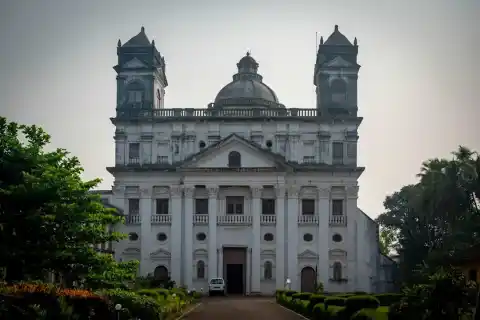
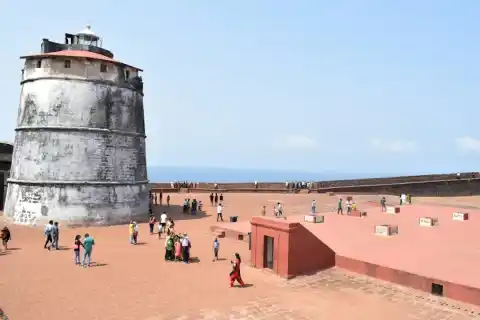
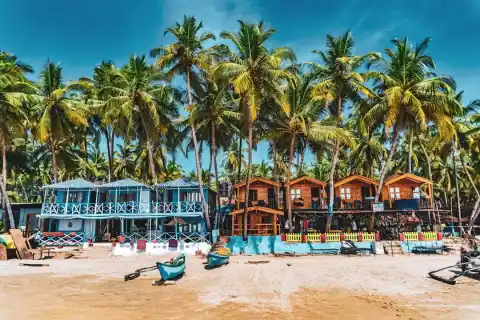
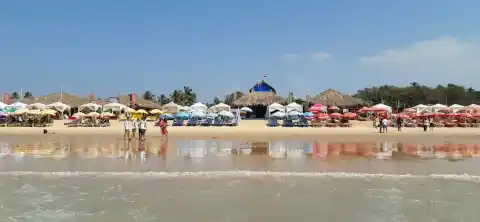
Basilica of Bom JesusSe Cathedral Old GoaFort AguadaChapora FortDudhsagar FallsPalolem BeachBaga BeachAnjuna BeachCalangute BeachFontainhas Latin Quarter PanajiArambol BeachAgonda BeachButterfly BeachChurch of St Francis of AssisiShri Mangueshi TempleDr Salim Ali Bird SanctuaryCabo de Rama FortDivar Island

🛍 Shopping

Anjuna Flea Market — Held on Wednesdays during the season (roughly November to April), the original and best-known Goan market, dating to the hippie era. Clothing, jewellery, textiles, handicrafts and a lot of tourist tat. Bargain hard.

Arpora Saturday Night Market — A seasonal night market with a more organised, festival-like atmosphere, including food stalls and live music.

Mapusa Friday Market — A genuine local market rather than a tourist one, where Goans actually shop. Produce, spices, chorizo sausage, and household goods. Worth going for the atmosphere.

Panaji and Margao markets — Everyday municipal markets, good for spices, produce and local goods.

Calangute and Baga market strips — Beachwear, souvenirs, and general tourist retail.

What to buy:

  1. Feni — Goa's local spirit, distilled from either cashew apple or coconut sap. It has protected geographical indication status. Cashew feni is the more distinctive. Note that it cannot legally be carried out of Goa in unlimited quantities and there are restrictions on transporting alcohol across state lines — check current rules.
  2. Cashew nuts — Goa is a major producer; buy from established shops rather than beach vendors
  3. Spices — from the plantations near Ponda or from Mapusa market
  4. Port wine and Goan wines — widely sold, variable quality
  5. Azulejo tiles — hand-painted ceramic tiles in the Portuguese tradition, made by a handful of Goan studios. A genuinely distinctive souvenir.
  6. Bebinca — the layered Goan dessert, sold in tins that travel reasonably well
  7. Kunbi sarees — the traditional Goan handloom, a red-and-white checked cotton weave, increasingly revived
  8. Crochet and lacework, a Portuguese-influenced Goan craft
  9. Beachwear and clothing — Goa's markets are full of it, quality varies


🍴 Local Food

Goan food is a genuine hybrid — Konkani coastal cooking transformed by four and a half centuries of Portuguese influence. The Portuguese introduced chillies, potatoes, tomatoes, cashews and vinegar to Goa (and through it to much of India), and the local cuisine absorbed them completely.

There are two distinct traditions: Goan Catholic cooking, which uses pork, beef, vinegar and Portuguese technique, and Goan Hindu (Saraswat) cooking, which is largely vegetarian and seafood-based, uses coconut and kokum, and avoids the vinegar and meat.

The essential dishes:

  1. Fish curry rice — the everyday Goan meal, a coconut-and-tamarind or kokum-based curry with the day's catch, over rice. This is what Goans actually eat, and it is excellent.
  2. Vindaloo — from the Portuguese carne de vinha d'alhos (meat in wine and garlic), adapted with palm vinegar and Kashmiri chillies. Traditionally pork. Note it is a vinegar-and-garlic dish, not merely the "hottest thing on the menu" as British curry houses have it.
  3. Xacuti — a complex curry with roasted coconut, poppy seed and a large number of spices, usually chicken or mutton
  4. Cafreal — green marinade of coriander, chilli and spices, typically chicken, with East African-Portuguese origins
  5. Sorpotel — a rich, vinegary pork dish traditionally including liver and offal, made for Christmas and celebrations. Improves over several days.
  6. Balchão — prawns or fish in a fiery, tangy dried-shrimp-and-chilli paste, essentially a pickle
  7. Recheado — whole fish, usually mackerel or pomfret, slit and stuffed with a red masala paste, then fried
  8. Ambot tik — a sour and spicy fish curry, no coconut
  9. Chorizo (Goan sausage) — heavily spiced, vinegar-cured pork sausage, quite unlike Spanish chorizo, often served in a pav

Seafood. Kingfish, pomfret, mackerel, prawns, crab, mussels and squid, all fresh. Beach shacks typically display the day's catch and cook it to order — grilled, tandoori or in curry.

Vegetarian Goan dishes — khatkhate (mixed vegetable stew), tondak, and various coconut-based preparations. Goan Hindu cuisine is well worth seeking out and is often overlooked by visitors.

Breads. Goa has a distinctive bread culture inherited from the Portuguese, unusual in India — poi (a soft wholewheat pocket bread), pao, and kankonn. The poder (baker) still cycles through Goan villages in the morning and evening with a horn.

Sweets:

  1. Bebinca — the classic Goan dessert, a layered pudding of coconut milk, egg yolk and sugar, baked one layer at a time, traditionally sixteen layers. Rich and time-consuming to make.
  2. Dodol — a dense coconut and jaggery sweet
  3. Serradura — a Portuguese-derived "sawdust pudding" of cream and crushed biscuit

Drinks:

  1. Feni — the local spirit, from cashew apple or coconut sap. Strong, distinctive, and an acquired taste. Usually drunk with lime soda.
  2. Urrak — the first distillation of cashew feni, lighter and available only in season (roughly March to May)
  3. Kokum sherbet — a cooling drink from the kokum fruit
  4. Beer is cheap in Goa because of low alcohol taxes

Where to eat. Beach shacks are the classic experience and the fish is usually excellent and fair value. For proper Goan home cooking, seek out the smaller village restaurants inland — Assagao, Siolim and the Salcete villages in the south — rather than the beachfront strips, where menus tend towards international tourist food.


Festivals

Goa Carnival (February or March) — Held in the three days before Lent, a Portuguese-inherited tradition unique in India. Parades with floats led by the figure of King Momo, music, dancing and street celebrations, primarily in Panaji, Margao, Vasco and Mapusa. Colourful and genuinely distinctive.

Shigmo (March) — The Goan Hindu spring festival, effectively Goa's version of Holi but with its own character — large parades with floats depicting mythological scenes, folk dances and traditional music across towns and villages. Runs over roughly a fortnight.

Feast of St. Francis Xavier (3 December) — The major Catholic feast, centred on Old Goa, drawing very large numbers of pilgrims. The saint's relics are displayed publicly during the Exposition, held roughly once a decade — an event that draws enormous crowds.

Christmas and New Year (December) — Goa's peak. Midnight Mass across the state's churches, elaborate decorations, and a party atmosphere on the beaches that draws visitors from across India and abroad. Accommodation prices peak sharply and booking months ahead is essential.

Sao Joao (24 June) — A monsoon festival in which young men jump into wells and ponds to retrieve bottles, wearing crowns of leaves and flowers. Held during the heaviest rains and very much a local celebration.

Ganesh Chaturthi / Chovoth (August–September) — The most important Hindu festival in Goa, celebrated in homes across the state with considerable devotion.

Bonderam (August) — A flag festival on Divar Island with mock battles and parades, unique to the island.

Feast of Our Lady of the Immaculate Conception (8 December) — Celebrated in Panaji at the landmark white church above the town.

Sunburn Festival (December, typically) — A large electronic dance music festival that has been held in Goa in various years and locations; check current status and venue as it has moved.

Goa Food and Cultural Festival, and the International Film Festival of India (IFFI), held annually in Panaji in November — India's premier film festival.


Photography Spots

Fontainhas, Panaji — The Latin Quarter's painted houses, tiled street signs, wrought-iron balconies and narrow lanes. Early morning gives the best light and empty streets. The most photogenic urban location in Goa.

Old Goa churches — The Basilica of Bom Jesus façade and the scale of Se Cathedral. Late afternoon light on the laterite is warm and rich.

Chapora Fort at sunset — Panoramic views over Vagator and the coastline, and the classic Goa sunset shot.

Fort Aguada — The lighthouse and ramparts against the sea, best in the late afternoon.

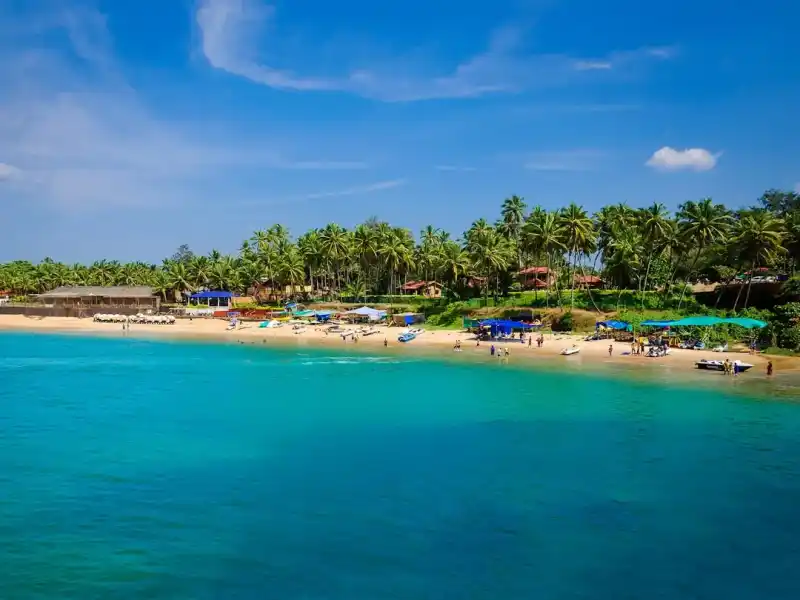
Palolem Bay — The crescent of the bay with its palm fringe, particularly from the rocks at either end or from a kayak on the water.

Arambol and the far north beaches — Long empty stretches, drum circles and sunset gatherings.

Divar and Chorão islands — Rural Goa, Portuguese-era village houses, paddy fields and ferry crossings. Almost no other photographers.

Dudhsagar Falls — Spectacular during and just after the monsoon. Access via jeep safari; the falls are also visible from the Konkan Railway, which makes for an unusual shot from a moving train.

Spice plantations and the Western Ghats interior — Green, layered landscapes, especially in the monsoon and immediately after.

Anjuna Flea Market and Mapusa Friday Market — Colour, texture and people. Ask before close portraits.

Fishing boats and beach mornings — Traditional wooden boats drawn up on the sand at dawn, particularly at the less commercial beaches in the south.

Sao Joao and Carnival — If your timing coincides, both are vivid, energetic subjects.


📅 Suggested Itinerary

Four days — a first visit

Day 1 — Arrival and North beaches

  1. Arrive, settle in the Baga/Calangute/Candolim area
  2. Afternoon: beach, swim, water sports if you want them
  3. Sunset at Fort Aguada or Sinquerim
  4. Evening: dinner at a beach shack, then Baga's nightlife strip

Day 2 — Old Goa and Panaji

  1. Morning: Old Goa — Basilica of Bom Jesus, Se Cathedral, St. Francis of Assisi
  2. Lunch: Panaji
  3. Afternoon: Fontainhas Latin Quarter on foot
  4. Late afternoon: Reis Magos Fort or a Mandovi river cruise
  5. Evening: Panaji — dinner, or a river casino if that appeals

Day 3 — North Goa exploring

  1. Morning: Anjuna (flea market if it's a Wednesday), Vagator, Ozran
  2. Midday: Chapora Fort
  3. Afternoon: ride north to Morjim, Ashwem and Arambol — quieter beaches
  4. Sunset at Arambol
  5. Evening: live music at Arambol or dinner in Assagao

Day 4 — Inland

  1. Morning: spice plantation tour near Ponda with lunch
  2. Afternoon: Shri Mangueshi and Shri Shantadurga temples
  3. Alternative: full-day Dudhsagar Falls jeep safari (needs the whole day)
  4. Evening: return to the coast

One week — North and South

Days 1–4 as above, based in North Goa.

Day 5 — Transfer south

  1. Move to Palolem or Agonda (allow 2 hours)
  2. Afternoon and evening: beach, quieter pace

Day 6 — South Goa

  1. Morning: kayak or boat trip from Palolem; Butterfly Beach
  2. Afternoon: Agonda or Galgibaga
  3. Sunset and dinner on the beach; silent disco at Palolem if you want it

Day 7 — South exploring

  1. Morning: Cabo de Rama fort
  2. Afternoon: Colva or Benaulim, or a Salcete village drive for Portuguese houses
  3. Optional: Margao's Sunday market and old town

Two weeks

Add Divar and Chorão islands, a proper Dudhsagar trip, more time in the far north (Arambol/Mandrem) or far south (Galgibaga/Patnem), and consider a side trip to Hampi in Karnataka (a UNESCO World Heritage Site, reachable overnight) or Gokarna down the coast.


🌑 What to Pack

Clothing. Light, breathable cotton and linen throughout the year. Goa is the most relaxed place in India for dress — beachwear is normal on the beach and shorts and vests are unremarkable in tourist areas. However:

  1. Cover up away from the beach. Walking through villages, markets or towns in swimwear is disrespectful and increasingly resented locally.
  2. Modest dress for churches and temples — shoulders and knees covered. Old Goa's churches enforce this.

Beach essentials:

  1. Swimwear (bring more than one set — things don't dry fast in humidity)
  2. Sarong or beach cover-up, which doubles as a temple shoulder cover
  3. High-SPF sunscreen — the sun is strong and reflects off water and sand
  4. Sunglasses and a hat
  5. Flip-flops plus one pair of proper walking shoes or sandals with grip
  6. Quick-dry towel

For scooter riding:

  1. Your driving licence and, for foreign visitors, an International Driving Permit — you will be asked
  2. Consider bringing or buying a decent helmet; rental helmets are often poor quality
  3. Long trousers and closed shoes for longer rides — road rash from a low-speed fall in shorts is nasty
  4. Sunglasses for dust and glare

Monsoon (June–September):

  1. Proper rain jacket and quick-dry clothing
  2. Waterproof phone pouch
  3. Footwear with grip
  4. Insect repellent — mosquitoes are worse in this season

Other essentials:

  1. Mosquito repellent — year-round, particularly at dusk near vegetation and water
  2. Basic first aid including antiseptic and dressings — useful given the scooter risk
  3. Reusable water bottle
  4. Universal adapter — 230V, 50Hz, Type C, D and M sockets
  5. Waterproof dry bag for boat trips and kayaking
  6. Medication with prescriptions, oral rehydration salts, stomach remedies
  7. Documents — passport, visa, copies stored separately, insurance details including whether it covers motorcycle riding, which many policies exclude unless you have a valid licence

Insurance note. Check specifically whether your travel insurance covers motorcycle or scooter riding, and under what conditions. Many policies exclude it entirely, or require a full motorcycle licence. Given how common scooter accidents are in Goa, this matters.


Hospitals

Goa's medical facilities are adequate for most needs, with the main government hospital and several private options. For very serious or specialised treatment, Mumbai, Pune or Bengaluru offer more comprehensive care.

Principal facilities:

  1. Goa Medical College and Hospital, Bambolim — the main government hospital and teaching institution, between Panaji and Margao, the largest and most comprehensive facility in the state and the trauma referral centre
  2. Manipal Hospital, Dona Paula — private multi-speciality hospital near Panaji, well regarded
  3. Victor Hospital, Margao — private multi-speciality serving South Goa
  4. Healthway Hospital, Old Goa — private multi-speciality
  5. Apollo Victor Hospital, Margao — private, South Goa
  6. Vrundavan Hospital, Mapusa — convenient for North Goa
  7. District hospitals at Mapusa (North) and Margao (South)

Practical advice. Bambolim (GMC) is centrally located between north and south and is where serious trauma cases go — relevant given how many scooter accidents occur. Private hospitals require payment or insurance confirmation upfront.

Health notes specific to Goa:

  1. Road traffic accidents are the leading medical risk for visitors. Wear a helmet, don't ride after drinking, and check your insurance covers two-wheelers.
  2. Drowning is a real and recurring risk. Swim only at beaches with lifeguards, heed red flags, and never swim after drinking. Drishti Marine operates lifeguard services on Goa's main beaches.
  3. Mosquito-borne illness including dengue occurs; use repellent
  4. Sunburn and heat exhaustion are common and easily avoided
  5. Pharmacies are widespread across all the main towns and beach areas


Emergency Numbers


  1. 112 — National emergency number (police, fire, ambulance)
  2. 100 — Police
  3. 101 — Fire and rescue
  4. 102 — Ambulance
  5. 108 — Emergency medical response service
  6. 1091 — Women's helpline
  7. 1098 — Childline (child protection)
  8. 1363 — Tourist helpline (national, multilingual)
  9. Drishti Marine lifeguards — present on the main beaches during daylight; approach the nearest lifeguard tower for water emergencies


💡 Travel Tips

Choose your airport carefully. Mopa (GOX) in the north and Dabolim (GOI) in the south are at opposite ends of the state, and getting from one to the far end of the other can take two hours or more. Book into the airport nearest your accommodation.

Decide North or South before booking. North Goa is busier, cheaper, better for nightlife, markets and a social scene. South Goa is quieter, greener, more upmarket, with emptier beaches. Trying to do both from one base means a lot of driving. If you want both, split your stay.

Scooter safety is the single most important thing. Accidents involving tourists are common and sometimes serious. Wear a helmet, carry your licence and IDP, never ride after drinking, avoid riding at night on unlit roads, and check your insurance actually covers you.

Sea safety. Drownings happen every season. Swim only where lifeguards are on duty and flags indicate it's safe, respect red flags absolutely, don't swim after drinking, and be aware that currents can be strong even where water looks calm. During the monsoon, swimming is prohibited on most beaches for good reason.

Taxis are expensive. Goa's taxi union has resisted app-based cabs, fares are high and often non-negotiable, and metered taxis are rare. Budget for this, or rent a scooter, which is why almost everyone does.

Drugs. Goa's reputation notwithstanding, Indian narcotics law is severe and enforcement is real. Penalties are serious and involve lengthy pre-trial detention. Do not assume tolerance.

The 10pm music rule. Amplified music in open spaces is banned statewide after 10pm. This is why South Goa has silent discos and why some beach parties end earlier than you might expect. Enforcement varies but the rule exists.

Respect local sensibilities. Goa is relaxed but it is not a resort enclave — people live here. Wearing swimwear away from the beach, in villages, markets or shops, causes genuine offence and is increasingly policed. Cover up when you leave the sand.

Beach shacks are seasonal. Regulations require them to be dismantled each monsoon and rebuilt for the season. Between roughly May and October, most are gone. Don't plan a shack-based holiday for those months.

Peak season pricing. Mid-December to early January sees accommodation prices triple or more, and everything books out. If you're coming then, book months ahead. If you want the same weather for much less, come mid-November to mid-December or in late January and February.

Alcohol. Cheap by Indian standards due to low state taxes, legal drinking age 18. Note that carrying alcohol out of Goa across state borders is restricted — check limits before loading up on feni.

Language. Konkani is the state language; Marathi, Hindi and English are all widely used. English is very widely spoken in tourist areas, more so than most of India.

Money. ATMs are widespread in the main towns and beach areas but can be sparse in remote spots and sometimes run out during peak season. Carry cash for shacks, markets and scooter rental.

Book a beach that matches what you want. Goa's beaches vary enormously — Baga is nothing like Agonda. Read about the specific beach rather than "Goa" before booking.


Budget Guide

Approximate per-person daily costs in Indian rupees, excluding international flights. Goa's prices vary more by season than anywhere else in India — peak-season rates can be three times shoulder-season for the same room.

Budget traveller — ₹1,500 to ₹3,000 per day (shoulder season)

  1. Accommodation: ₹600–1,500 (hostel dorm, guesthouse, basic beach hut; far north and far south are cheapest)
  2. Food: ₹400–800 (local restaurants, thali, shack meals, street food)
  3. Transport: ₹300–500 (scooter rental, roughly ₹300–500 a day plus fuel)
  4. Activities: ₹200–500

Mid-range — ₹4,000 to ₹8,000 per day (shoulder season)

  1. Accommodation: ₹2,500–5,500 (good guesthouse, boutique hotel, beach resort)
  2. Food: ₹1,000–2,000 (shacks, good restaurants, some fine dining)
  3. Transport: ₹500–1,200 (scooter plus occasional taxi)
  4. Activities: ₹800–1,500 (water sports, spice plantation, Dudhsagar trip)

Luxury — ₹15,000 and upward per day

  1. Accommodation: ₹10,000–50,000+ (five-star beach resorts, luxury villas, heritage properties — Goa has some of India's best resorts)
  2. Food: ₹3,000–6,000
  3. Transport: ₹2,500–4,500 (private car with driver)
  4. Activities: private tours, yacht charter, spa

Peak season (mid-December to early January): expect accommodation costs to increase by 2–3x or more across all categories. Some properties impose minimum stays and compulsory New Year gala dinner charges.

Specific costs to plan around:

  1. Scooter rental: ₹300–600 per day, less for longer rentals; more in peak season
  2. Petrol: relatively cheap, and a scooter costs little to run
  3. Airport taxi (Mopa to North Goa beaches): roughly ₹1,200–2,000
  4. Airport taxi (Dabolim to South Goa beaches): roughly ₹900–1,800
  5. Taxi between North and South Goa: ₹2,500–4,000 — this is why people rent scooters
  6. Beach shack meal with fish: ₹400–900
  7. Beer at a shack: ₹100–200
  8. Feni: very cheap by the bottle
  9. Spice plantation tour with lunch: ₹600–1,500
  10. Dudhsagar jeep safari: ₹1,500–3,000
  11. Water sports package (parasailing, jet ski, banana boat): ₹1,500–3,000
  12. Old Goa churches: free entry
  13. Kayak rental at Palolem: ₹300–600

Money-saving notes. Travel in shoulder season (November, or late January to March) for peak-season weather at a fraction of the price. Renting a scooter instead of using taxis is the single biggest saving. Eat at local restaurants inland rather than beachfront shacks for better Goan food at half the price. The far north (Arambol, Mandrem) and far south (Patnem, Agonda, Galgibaga) are consistently cheaper than Baga, Calangute and Candolim.


Good to know

Frequently Asked Questions about Goa

What is the best time to visit Goa?
November to February, with mid-November to mid-December arguably the sweet spot — settled weather, calm seas, all shacks open, but before peak crowds and prices. Mid-December to early January is the absolute peak with prices tripling. January and February remain excellent with thinner crowds.
Which Goa airport should I fly into?
It depends where you are staying. Manohar International Airport (GOX) at Mopa in the north is best for Baga, Anjuna, Morjim and Arambol. Goa International Airport (GOI) at Dabolim in the south is best for Colva, Benaulim and Palolem. Getting from one to the far end of the other can take over two hours.
Should I stay in North Goa or South Goa?
North Goa is busier, cheaper and better for nightlife, markets and a social scene — Baga, Calangute, Anjuna, Vagator, Arambol. South Goa is quieter, greener and more upmarket with emptier beaches — Palolem, Agonda, Colva, Benaulim. Decide before booking, or split your stay, as travelling between them takes time.
How do I get around Goa?
Renting a scooter is how most visitors get around and is by far the best option — attractions are spread across the state and public transport is limited. Taxis are expensive because of a strong local taxi union and limited app-cab access. Buses are cheap but slow. Ferries connect the river islands.
Do I need a licence to rent a scooter in Goa?
Yes. You legally need a valid licence, and foreign visitors need an International Driving Permit alongside their home licence. Police checks happen and fines are issued. Helmets are mandatory for both rider and pillion. Also check that your travel insurance actually covers two-wheeler riding, as many policies exclude it.
Is it safe to ride a scooter in Goa?
It requires care. Roads have potholes, unlit stretches, sand on corners and unpredictable traffic, and accidents involving tourists are common. Wear a helmet, never ride after drinking, avoid riding at night on unlit roads, and wear closed shoes and long trousers for longer rides.
Is it safe to swim at Goa's beaches?
Only where lifeguards are on duty and flags indicate it is safe. Drownings occur every season, currents can be strong even where water looks calm, and alcohol is a factor in many incidents. Respect red flags absolutely. During the monsoon, swimming is prohibited on most beaches.
What happens in Goa during the monsoon?
June to September brings very heavy rain, rough dangerous seas, prohibited swimming, and most beach shacks dismantled — regulations require them to be removed each monsoon and rebuilt for the season. The landscape turns spectacularly green and waterfalls appear, and prices are at their lowest, but it is a very different trip.
When do the beach shacks operate?
Roughly October to April or May. They must be dismantled each monsoon and rebuilt for the following season, so between around May and October most are gone. Don't plan a shack-based holiday for those months.
What food is Goa famous for?
Fish curry rice is the everyday staple. Also vindaloo (a vinegar-and-garlic pork dish, not just a hot curry), xacuti, cafreal, sorpotel, balchão and recheado fish. Bebinca is the classic layered dessert, and feni is the local cashew or coconut spirit.
What is feni?
Goa's local spirit, distilled from either cashew apple or coconut sap, with protected geographical indication status. Cashew feni is the more distinctive. It is strong and an acquired taste, usually drunk with lime soda. Note that carrying alcohol across state borders out of Goa is restricted.
Is Goa expensive?
It varies enormously by season. In shoulder season, budget travellers manage on ₹1,500-3,000 a day and mid-range on ₹4,000-8,000. During the mid-December to early-January peak, accommodation costs two to three times more or higher. Taxis are expensive; scooters are cheap.
Why are taxis so expensive in Goa?
Goa has a strong taxi union that has resisted app-based cabs, metered taxis are uncommon, and fares are largely fixed by negotiation or union rates. A North-to-South Goa transfer can cost ₹2,500-4,000. This is the main reason most visitors rent a scooter.
What is Old Goa and is it worth visiting?
Old Goa was the capital of Portugal's Asian empire and once one of the world's largest cities. Its churches and convents are a UNESCO World Heritage Site, including the Basilica of Bom Jesus which holds the relics of St. Francis Xavier, and Se Cathedral, one of the largest churches in Asia. Yes, it is worth half a day.
Can I wear swimwear away from the beach in Goa?
No — cover up when you leave the sand. Goa is relaxed by Indian standards, but walking through villages, markets and shops in swimwear causes genuine offence and is increasingly policed. Carry a sarong or cover-up, which also works for church and temple visits.
Is there a curfew on music in Goa?
There is a statewide ban on amplified music in open spaces after 10pm. Enforcement varies, but this is why South Goa has silent discos at Palolem and why some beach parties end earlier than expected. Indoor licensed venues continue later.
What is the drinking age in Goa?
18, which is lower than most Indian states. Alcohol is also notably cheap because Goa has the lowest alcohol taxes in India. Note there are restrictions on carrying alcohol out of the state across borders.
How do I get to Dudhsagar Falls?
Dudhsagar is on the Goa-Karnataka border in the Bhagwan Mahavir sanctuary, accessed by jeep safari from Kulem — allow a full day. It is one of India's tallest waterfalls at around 310 metres, most spectacular during and just after the monsoon, though access is often restricted at peak flow for safety.
What is Fontainhas?
The Latin Quarter of Panaji — a small grid of narrow streets with brightly painted Portuguese-era houses, azulejo tiles and overhanging balconies. Best explored on foot in the morning. It is quite unlike anywhere else in India and the most photogenic urban spot in Goa.
When is the Anjuna flea market?
Wednesdays during the season, roughly November to April. It is the original and best known Goan market, dating to the hippie era. The Arpora Saturday Night Market is the other main one. Mapusa's Friday market is a genuine local market rather than a tourist one.
What is Goa Carnival?
A Portuguese-inherited tradition unique in India, held in the three days before Lent, usually February or March. Parades with floats led by the figure of King Momo, music and street celebrations, mainly in Panaji, Margao, Vasco and Mapusa.
Which railway station should I use for Goa?
Madgaon/Margao (MAO) is the main station and serves most long-distance trains, convenient for South Goa. Thivim (THVM) is the most convenient for North Goa beaches. Karmali is nearest Panaji and Vasco da Gama is near Dabolim airport. The Konkan Railway journey down the coast is very scenic.
How many days do you need in Goa?
Four days covers a first visit to one half of the state plus Old Goa and an inland trip. A week lets you do both North and South properly. Two weeks suits a longer, slower stay with the islands, more of the interior, and possibly a side trip to Hampi or Gokarna.
Are drugs tolerated in Goa?
No. Despite Goa's reputation, Indian narcotics law is severe, enforcement is real, and penalties include lengthy pre-trial detention. Do not assume tolerance.
Is Goa good for families?
Yes, particularly South Goa, where beaches are wider, quieter and calmer. Palolem, Agonda, Colva and Cavelossim suit families well. North Goa's Baga and Calangute are busier and more party-oriented. Choose the beach carefully, as they vary enormously.
What should I buy in Goa?
Feni, cashew nuts, spices from the Ponda plantations, hand-painted azulejo tiles, bebinca in tins, Kunbi handloom sarees, and Goan port wine. Mapusa's Friday market is better for authentic local goods than the tourist markets.
Can I visit both North and South Goa in one trip?
Yes, but travelling between them takes well over an hour and a half by road and taxis are expensive. The better approach is to split your stay — a few nights in each — rather than trying to day-trip between them from a single base.

Ready to book your stay in Goa?

Browse verified, admin-reviewed guest houses with real photos and honest prices.

← Back to overview Book guest house in Goa