Planning a Trip to Hyderabad
Hyderabad is Telangana's capital and one of India's most distinctive urban destinations. The city began around the Charminar and the Musi River, grew through the Qutb Shahi and Asaf Jahi periods, and now extends west into HITEC City, Madhapur, Kondapur and Gachibowli. That combination gives visitors several trips in one: monumental Deccan history, living bazaars, celebrated food, museums, lakeside evenings and a major technology district.
First-time visitors usually come for Charminar, Golconda Fort, the Qutb Shahi Tombs, Chowmahalla Palace and Salar Jung Museum. Hyderabad rewards a slower visit too. Irani cafés, neighbourhood bakeries, Laad Bazaar, the granite landscape and the contrast between the Old City and western business corridor reveal more than a checklist of monuments.
The metropolitan area is large, so location matters. Stay near Abids or another central neighbourhood for heritage sightseeing, near Banjara Hills or Somajiguda for a balanced base, or near Madhapur, HITEC City, Kondapur and Gachibowli for work in the western corridor. Two days cover the essentials; three days provide a better mix of history, food and modern Hyderabad.
History of Hyderabad
Hyderabad's story is closely connected with Golconda. The Qutb Shahi rulers governed from Golconda before Muhammad Quli Qutb Shah founded Hyderabad in 1591. The new city was planned around the Charminar, with broad routes leading into markets and neighbourhoods on the south bank of the Musi. The nearby Golconda kingdom was internationally known for diamond trade, while Persian, Telugu and Deccani influences shaped architecture, language, court culture and food.
From the Qutb Shahis to the Nizams
Mughal forces under Aurangzeb captured Golconda in 1687. In the eighteenth century, Asaf Jah I established the dynasty whose rulers became known as the Nizams of Hyderabad. Their state developed its own institutions, palaces, railways, hospitals and universities. Secunderabad expanded north of Hussain Sagar around the British cantonment, creating the twin-city pattern still recognised today.
Modern Hyderabad
The princely state was integrated into India in 1948. Hyderabad later became the capital of Andhra Pradesh and, in 2014, the capital of the newly formed state of Telangana. Since the late twentieth century, the city has expanded rapidly toward Madhapur, HITEC City, Gachibowli and the Financial District. Its historic core, cantonment-era neighbourhoods and technology corridor now form a single, wide metropolitan experience.
Hyderabad Climate
Hyderabad has a tropical wet-and-dry climate. Summers are hot, the south-west monsoon supplies most annual rain, and winters are generally dry and mild. The city's plateau elevation makes winter mornings and evenings more comfortable than the hot pre-monsoon months, but midday sun can remain strong throughout much of the year.
- Summer: March to May, with April and May usually the hottest period.
- Monsoon: June to September, bringing humid conditions, showers and occasional intense downpours.
- Post-monsoon and winter: October to February, usually the most comfortable season for long outdoor visits.
Weather can vary from seasonal patterns. Check the latest forecast and local advisories before travelling, especially during heatwaves or heavy monsoon rain.
Hyderabad Weather
October to February
Days are usually warm to pleasant and evenings can feel mild or cool. This is the easiest period for walking around forts, tombs and markets. December and January mornings may justify a light layer.
March to May
Heat builds quickly and exposed monuments can be tiring around midday. Begin at opening time, rest indoors during the hottest hours, carry water and resume sightseeing later in the afternoon.
June to September
Rain provides relief from peak summer heat but can be sudden and locally heavy. Road traffic, waterlogging and outdoor plans may be affected. Keep one indoor alternative—such as a museum or palace—and allow more time for airport and station transfers.
Best Time to Visit
October to February is the best overall time to visit Hyderabad for heritage walks, forts, markets and outdoor photography. November through January is especially comfortable for travellers who want full sightseeing days.
Read the full guide to the best time to visit Hyderabad →How to Reach Hyderabad
Rajiv Gandhi International Airport (HYD) is at Shamshabad, south of central Hyderabad. It handles domestic and international flights. Airport buses, prepaid or app-based cabs and private transfers connect it with major parts of the city. Journey time depends heavily on the destination and traffic, so leave a generous buffer rather than relying only on distance.
Read the full Hyderabad transport guide →Getting Around Hyderabad
Hyderabad works best with a combination of metro, suburban rail, city buses, autos and cabs. No single mode reaches every attraction.
- Metro: useful across the operational Red, Blue and Green corridors, including connections near several commercial areas and transport hubs. Check the official network map and current service hours before travel.
- MMTS suburban rail: useful on selected routes linking Hyderabad, Secunderabad and outer neighbourhoods; frequency varies by line and time.
- City buses: cover a wider area than the metro and can be economical, although route identification and peak-hour crowding may be challenging for first-time visitors.
- Autos and app-based cabs: practical for the Old City, last-mile travel and places away from rail corridors. Confirm the meter or app fare before starting.
Group each day geographically: Charminar, Chowmahalla Palace and Salar Jung Museum together; Golconda Fort and Qutb Shahi Tombs together; and HITEC City, Durgam Cheruvu and nearby western areas together. This saves more time than repeatedly crossing the city.
Top Attractions on a Hyderabad Trip
Qutb Shahi Tombs
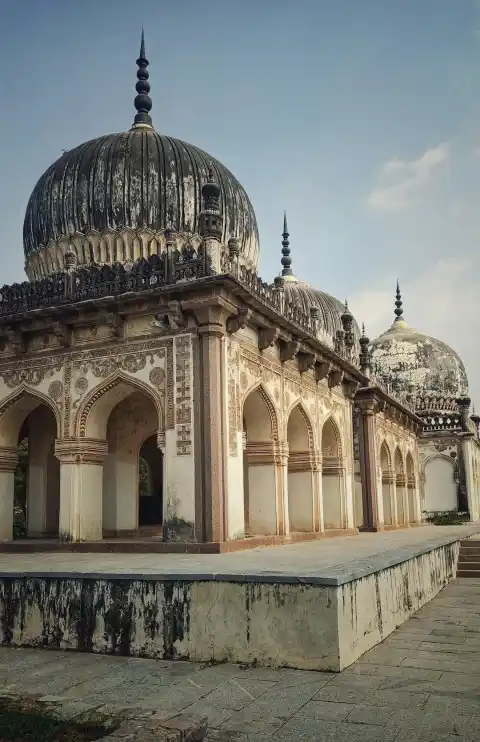
A monumental royal necropolis beside Golconda, the Qutb Shahi Tombs preserve the domes, gardens and architectural legacy of Hyderabad's founding dynasty.
Read more ›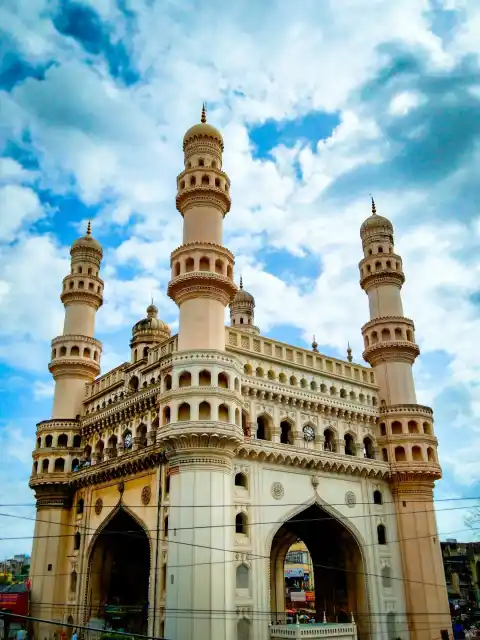
Charminar
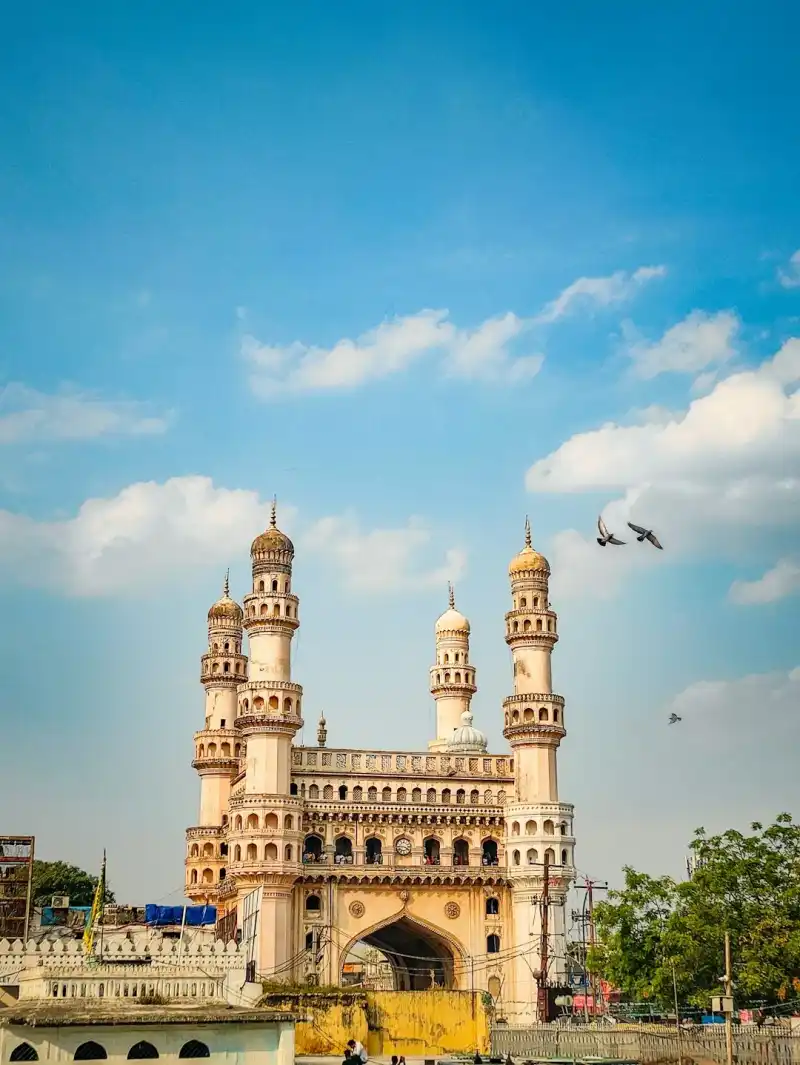
The four-minaret symbol of Hyderabad, Charminar stands at the heart of the Old City amid Laad Bazaar, Mecca Masjid, pearl shops and the city's unmistakable Deccani street life.
Read more ›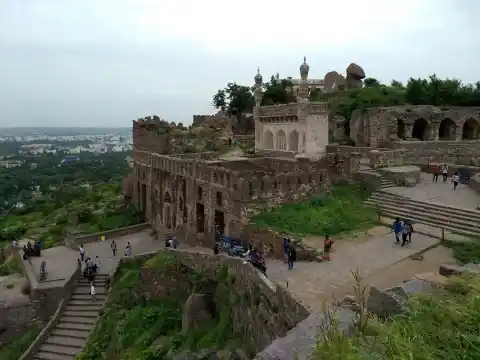
Golconda Fort
A vast granite citadel west of Hyderabad, Golconda Fort combines Qutb Shahi history, dramatic ramparts, ingenious acoustics and sweeping views over the Deccan.
Read more ›
Ramoji Film City
A vast film-studio and entertainment complex on Hyderabad's outskirts, Ramoji Film City combines movie sets, studio tours, live shows, gardens and family attractions.
Read more ›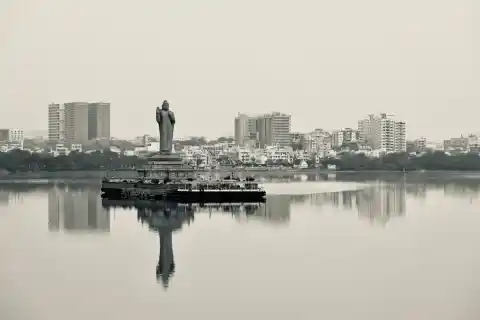
Hussain Sagar Lake
The heart-shaped lake between Hyderabad and Secunderabad, Hussain Sagar is known for its giant Buddha statue, boating, Necklace Road and lively evening waterfront.
Read more ›
Salar Jung Museum
One of India's great art museums, Salar Jung Museum houses the extraordinary collection of Salar Jung III, including global art, decorative objects, manuscripts and famous mechanical pieces.
Read more ›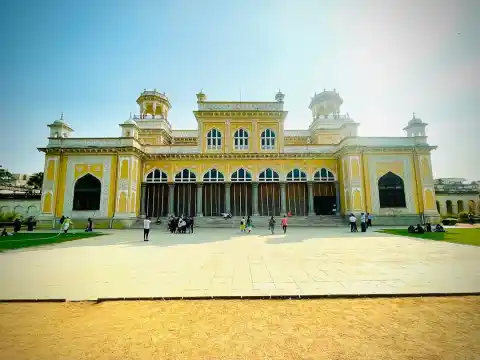
Chowmahalla Palace
The ceremonial palace of Hyderabad's Nizams, Chowmahalla combines grand courtyards, the Khilwat Mubarak durbar hall, royal objects and the refined culture of the Asaf Jahi court.
Read more ›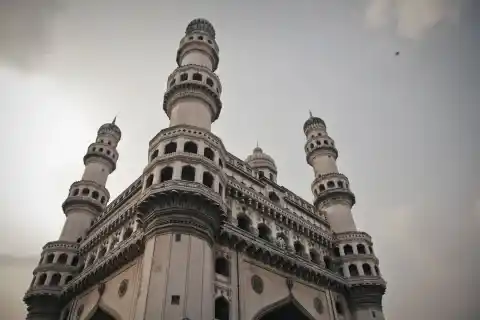
Birla Mandir
A luminous white-marble Venkateswara temple on Kala Pahad, Birla Mandir combines devotional calm, blended temple architecture and panoramic views over central Hyderabad.
Read more ›Shopping
Hyderabad shopping ranges from historic bazaars to craft centres and modern malls. Around Charminar, Laad Bazaar is known for lacquer and glass bangles, wedding accessories and traditional jewellery. Nearby Pathergatti has pearl and jewellery shops, while the lanes around the Old City sell attar, textiles, caps and household goods.
Read the Hyderabad shopping guide →Local Food
Hyderabadi cuisine blends Deccani, Mughlai, Iranian, Arab, Telugu and Marathwada influences. Hyderabadi biryani is the best-known dish, but the city's food identity is much broader.
Explore Hyderabad local food →Festivals in Hyderabad
Hyderabad's festival calendar reflects its Telugu, Deccani and multi-faith culture. Dates change each year, and processions can affect traffic.
- Bonalu: a Telangana festival dedicated to Goddess Mahakali, observed prominently at temples including Ujjaini Mahakali in Secunderabad and sites in the Old City.
- Bathukamma: Telangana's floral festival, celebrated before Dussehra with arranged flower stacks, songs and community gatherings.
- Ramadan and Eid: the Old City becomes especially active after sunset, with food, shopping and prayer schedules shaping the evening rhythm.
- Ganesh Chaturthi: large installations and the immersion procession bring major crowds and road diversions.
- Diwali, Muharram and Christmas: also form visible parts of the city's diverse annual calendar.
Visitors are welcome to observe public celebrations respectfully. Dress appropriately at religious sites, do not block worshippers or processions for photographs, and follow police diversions and venue-specific camera rules.
Photography Spots
- Charminar: early morning for cleaner street frames, or blue hour for illuminated arches and market atmosphere.
- Golconda Fort: late afternoon for textured stone, ramparts and broad city views; allow enough time to descend before closing.
- Qutb Shahi Tombs: domes, arcades, symmetry and quieter architectural compositions.
- Chowmahalla Palace: courtyards, chandeliers and palace details, subject to the site's current photography policy.
- Hussain Sagar and Tank Bund: skyline and lake views around sunset and blue hour.
- Durgam Cheruvu area: contemporary bridge and cityscape photographs from lawful public viewpoints.
- Laad Bazaar: colour, bangles and street scenes; ask before making close portraits or photographing inside shops.
Tripods, drones, commercial shoots and photography inside museums or active religious buildings may require permission. Do not fly a drone without confirming current aviation, security and local restrictions.
Suggested Itinerary
Start early at Charminar, walk through Laad Bazaar and visit Mecca Masjid respectfully. Continue to Chowmahalla Palace, then spend the afternoon at Salar Jung Museum. Finish with an early dinner or guided food walk in a busy, established part of the Old City. Keep the sequence flexible because weekly closures and prayer times can affect access.
See the Hyderabad itinerary hub →What to Pack for Hyderabad
- Light, breathable clothing, sunglasses, a hat and sunscreen for most of the year.
- Comfortable, grippy footwear for Golconda's steps, bazaars and long museum visits.
- A reusable water bottle and oral rehydration sachets during hot months.
- A compact umbrella or light rain layer from June to September.
- A light sweater or shawl for winter mornings, air-conditioned interiors and overnight travel.
- Modest clothing or a scarf for active religious sites.
- Photo ID, digital and backup payment methods, essential medicines and copies of prescriptions.
- A universal adapter if needed; India generally uses 230V, 50Hz electricity and plug types C, D and M.
Keep luggage compact for autos and crowded transport. Do not pack valuables that you do not need for the trip.
Hospitals in Hyderabad
Hyderabad is a major medical centre with government teaching hospitals and private multi-speciality networks. Large institutions include Osmania General Hospital, Gandhi Hospital, Nizam's Institute of Medical Sciences (NIMS) and Niloufer Hospital. Private emergency care is available through hospitals such as Apollo, CARE, KIMS and Yashoda at multiple city locations.
In an emergency, use the nearest appropriate facility rather than crossing the city for a familiar name. Call first for non-emergency appointments, because departments, availability and locations can change. Carry identification, insurance details, a medicine list and prescriptions. International travellers should check whether their insurer requires pre-authorisation or a particular hospital network.
This guide is for trip planning and does not provide medical advice. For urgent help, use India's unified emergency number 112 or the locally advertised ambulance services.
Hyderabad Emergency Numbers
- 112: unified emergency response in India.
- 100: police control room.
- 101: fire and rescue.
- 102: ambulance helpline.
- 108: accident and emergency response service.
- 1098: child helpline.
- 1077: district disaster helpline.
Numbers are based on official government listings reviewed in September 2026. Availability can change; use 112 when unsure. Share your landmark, neighbourhood and live location clearly.
Travel Tips
Plan by area: the Old City, Secunderabad and western technology corridor are far apart in real traffic conditions. Start monuments early: this reduces heat and crowds at Charminar, Golconda and the tombs. Check closures: museums and monuments may have different weekly holidays, ticket windows and last-entry times. Respect living heritage: Mecca Masjid and other religious sites are active places of worship, not only attractions. Use safe transport: prefer official prepaid…
Read all Hyderabad travel tips →Hyderabad Trip Budget
These are planning ranges per person per day in Indian rupees, excluding travel to Hyderabad and major shopping. They are indicative September 2026 estimates, not fixed prices; weekends, festivals, events and location can change costs.
- Budget trip: ₹1,800–₹3,500. Hostel or basic shared room, public transport, local eateries and one or two paid attractions.
- Mid-range trip: ₹4,500–₹8,500. Comfortable double room shared by two, a mix of cabs and metro, restaurant meals and several attractions.
- Comfort-focused trip: ₹9,000+. Premium hotel, frequent cabs, upscale dining, private transfers and paid experiences.
Where the money goes
Accommodation and cross-city cab journeys are usually the largest variables. Staying close to the day's main purpose may cost more per night but reduce transport expense and lost time. Food can remain good value when combining local restaurants and cafés with one special meal. Verify current attraction tickets only through official sites or counters, and keep a separate allowance for Ramoji Film City, guided tours or nightlife.
Planning to stay in Hyderabad?
We are adding local stays in Hyderabad. Share your dates and we will contact you when suitable options are available.
Free · No payment · No obligation
Good to know