Planning a Trip to Deoghar
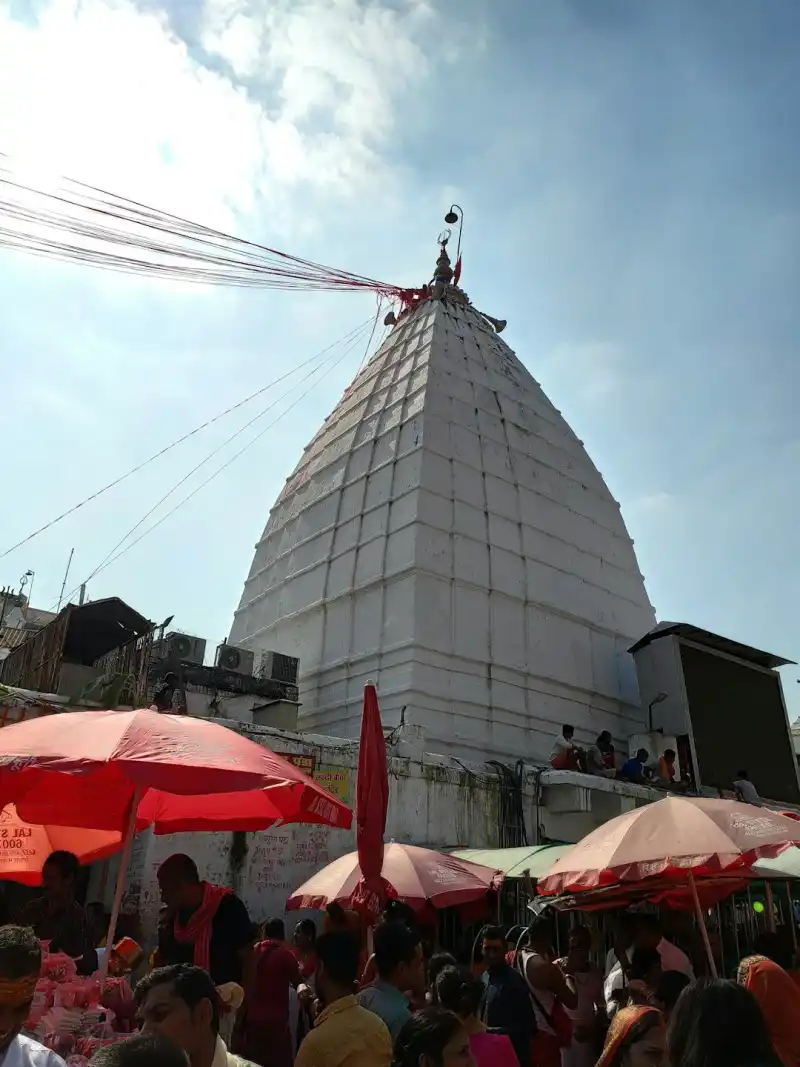
Most visitors plan Deoghar around one question: when to reach Baba Baidyanath Dham. The temple opens before dawn, so travellers who stay within walking distance can finish darshan before the queues build and still have the day for Naulakha Mandir, Satsang Ashram, Tapovan and Trikut Pahar.
Give Deoghar one day for the temple and town sights, two days to add the hills, and a third if you also want Basukinath (about 45 km). Trains stop at Jasidih Junction, about 7 km away, and Deoghar Airport is about 12 km from the temple. October to March is the calmest time; in Sawan (July–August) the town fills with kanwariyas, rooms sell out early and queues are long.
History of Deoghar
Deoghar's temple is old enough that its origins sit in scripture rather than record. In classical Sanskrit literature the area appears under the names Haritakivan and Ketakivan. The Bhavishya Purana, a text whose parts scholars date to different periods, contains a mention of the temple of Lord Baidyanath at Deoghar — one of the earliest textual references to the shrine.
The temple's founding legend concerns Ravana, king of Lanka, a devotee of Shiva. In the account, Ravana offered his ten heads one by one in penance. Shiva, moved by the devotion, appeared and restored him — acting as a physician, and taking the name Vaidyanath, lord of physicians. The healing association has stayed with the shrine ever since.
Administratively, Deoghar's history is more recent. Santhal Pargana district was created in 1855, following the partition of Bhagalpur and Birbhum. Deoghar remained part of Santhal Pargana until 1 June 1983, when it was constituted as a district in its own right. It became part of Jharkhand when the state was carved out of Bihar in 2000.
More recently the town has grown well beyond its pilgrimage role. AIIMS Deoghar opened here, and Deoghar Airport began operations in 2022 — both changing how easily the town can be reached and what brings people to it.
Deoghar Climate
Deoghar has a humid subtropical climate with a dry winter — hot summers, a defined monsoon, and mild, comfortable winters.
The year divides clearly into a dry season from November to April and a wet season from June to September. Annual rainfall is high at around 1,276 mm, with July the wettest month and December the driest.
Temperatures range from January nights of about 10°C (daytime highs around 22°C) to May highs of around 36–38°C. The annual average maximum is roughly 32°C.
For visitors, the practical shape of this is straightforward: summer is genuinely hot and difficult for temple queues that involve standing outdoors, the monsoon brings heavy rain and coincides with the year's largest crowds, and the winter months are comfortable for both sightseeing and darshan.
Deoghar Weather
October to March — The comfortable window. Days are mild to warm, evenings are cool, and rain is minimal. December and January are the coolest and driest months, and this is the easiest time to queue for darshan or climb Trikut Pahar.
April to June — Hot. Temperatures climb through the 30s and peak around 38°C in May. Early morning darshan is strongly advisable; the middle of the day is uncomfortable for anything outdoors, especially the hill trips.
Mid-June to September — Monsoon, and heavy. July is the wettest month of the year. This period also covers Shravan, so the heaviest rain coincides with the largest crowds of the year. Hill paths become slippery, and road journeys can be disrupted.
October — A transitional month and often the sweet spot: the rain has largely gone, the heat has broken, and the Shravan crowds have dispersed.
Best Time to Visit
October to March is the best time to visit Deoghar for a comfortable trip. The weather is mild and dry, temple queues are manageable, and the surrounding hills are pleasant to explore.
Read the full guide to the best time to visit Deoghar →Travelling in peak season or on a festival date? Popular stays fill early, so share your dates now. Get Free Stay Offers →
How to Reach Deoghar
Deoghar is well connected by air, rail and road, making it accessible from major cities across India. Travellers visiting Baba Baidyanath Temple, one of the twelve Jyotirlingas, can arrive directly in Deoghar or use nearby Jasidih Junction as the main long-distance railway gateway.
Read the full Deoghar transport guide →Getting Around Deoghar
Auto-rickshaws, e-rickshaws and local taxis are commonly available for travel within Deoghar. Confirm the fare before starting your journey. During Shravan and major festivals, expect traffic restrictions, longer queues and changed drop-off points near Baba Baidyanath Temple.
Top Attractions on a Deoghar Trip
Baba Baidyanath Temple
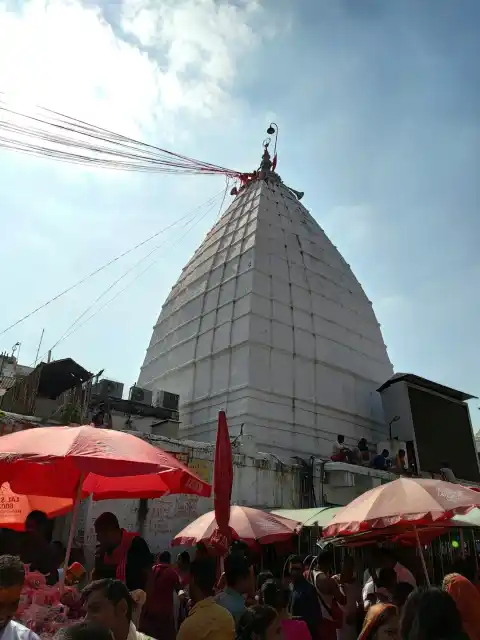
One of the twelve Jyotirlingas of Lord Shiva. Open about 4 AM–3:30 PM and 6–9 PM; Shighra Darshanam (VIP) coupon ₹300, ₹600 on peak days, at the temple counter only.
Read more ›Naulakha Mandir
A distinctive 146-foot Radha-Krishna temple known for its graceful architecture, peaceful setting and association with Rani Charushila.
Read more ›Maa Parvati Temple, Baidyanath Dham
The adjacent Shakti temple, connected to the main shrine by a sacred red thread.
Read more ›
Shivganga
A sacred pond beside the Baidyanath pilgrimage area, Shivganga is traditionally visited by devotees before proceeding for temple darshan.
Read more ›Nandan Pahar
A small scenic hill in Deoghar combining hilltop temples, family recreation and panoramic views over the city.
Read more ›Basukinath Temple
The 'court of Baba Bhole Nath' — a twin pilgrimage site about 44 km away, commonly paired with Baidyanath Dham.
Read more ›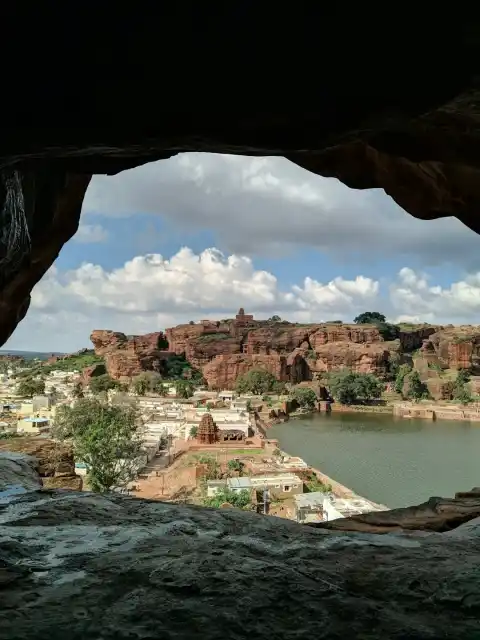
Tapovan Hills
A spiritual hill-and-cave destination near Deoghar, Tapovan is known for meditation traditions, rocky landscapes, shrines and panoramic views.
Read more ›
Trikuta Parvat
Deoghar's major hill-and-adventure excursion, Trikuta Parvat combines three peaks, forested scenery, trekking and religious sites.
Read more ›Kaman Chowk / Pera Gali Market
The pedestrian pilgrim lane leading to the temple, lined with prasad, bangle and puja shops.
Read more ›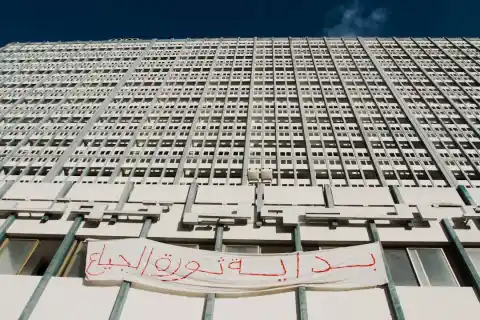
Satsang Ashram
A major spiritual centre founded by Thakur Anukulchandra, Satsang Ashram is known for prayer, reflection, community activity and peaceful surroundings.
Read more ›Shopping
TOWER CHOWK is the town's main market and the natural place to shop. It is where most visitors go for religious souvenirs, hand-crafted items and textiles, and it is also the centre of the peda trade.
Read the Deoghar shopping guide →Local Food
PEDA — Deoghar's signature sweet and the thing to eat here. It is a soft, fudge-like sweet made from khoya (reduced milk) and sugar, often scented with cardamom. It is both a local speciality and a traditional temple offering, and the shops around the temple precincts and Tower Chowk compete on freshness. Most visitors take a box home.
Explore Deoghar local food →Evenings in Deoghar
Deoghar is a temple town, and it does not have a nightlife scene in the conventional sense — there are no bars or clubs, and alcohol is not part of the local visitor culture.
Evenings here are centred on the temple. The Baidyanath complex and the smaller shrines around it are at their most atmospheric after dark, particularly during aarti, and the lanes leading to the temple stay busy well into the evening.
Most shops and sweet stalls, including those around Tower Chowk, stay open until roughly 9–10 pm, so an evening walk through the market is the usual way visitors spend the hours after dinner. Cash is still the preferred payment at smaller stalls.
During the Shravani Mela the town effectively runs through the night, with queues and movement continuing around the clock.
Festivals in Deoghar
SHRAVANI MELA (July–August, the month of Shravan) — the largest event of the year and one of the biggest religious gatherings in India. Through the month, pilgrims known as kanwariyas walk the 105 km from Sultanganj carrying Ganga water to offer at the Jyotirlinga. In 2026 the Mela runs from 30 July to 28 August. Attendance is measured in millions, the town operates around the clock, and administration deploys thousands of police alongside drone monitoring and NDRF teams at Shivganga. Extraordinary to witness; book accommodation months ahead.
MAHASHIVRATRI (February–March) — the other major peak in the temple calendar, marked with night-long worship and special rituals. Crowds are large but far more manageable than Shravan, and the weather is much kinder.
BASANT PANCHAMI (January–February) — marks the beginning of spring, and at Baidyanath Dham it traditionally signals the start of preparations leading toward Shivratri. A comfortable time to visit, with moderate crowds and pleasant weather.
NAG PANCHAMI (July–August) — falls within the Shravan period and adds to crowds already present for the Mela.
For anyone whose priority is a calm darshan rather than the spectacle, the weeks either side of these dates are considerably easier.
Photography Spots
BABA BAIDYANATH TEMPLE COMPLEX — the lotus-shaped main shrine and the twenty-one temples around it. Note that photography restrictions apply inside the shrine itself; check on arrival rather than assuming, and always respect the restrictions.
TRIKUT PAHAR — the best views in the area. The three peaks and the ropeway give elevated perspectives over the surrounding plateau, and this is the most rewarding spot for landscape photography near Deoghar.
NAULAKHA MANDIR — 146 feet tall, architecturally distinctive, and often compared to Belur Math in West Bengal. It photographs well from a distance where the full height reads.
NANDAN PAHAR — a hillock at the edge of town, good for sunset and for looking back over Deoghar.
TAPOVAN — the caves and the hillside setting, roughly 10 km from town.
SHRAVANI MELA — visually, the most striking thing in Deoghar's year: the saffron column of kanwariyas moving toward the temple. Photograph respectfully; this is an act of devotion, not a spectacle staged for visitors.
TOWER CHOWK — market life, sweet shops and the everyday texture of the town.
Suggested Itinerary
ONE DAY — the essential visit
See the Deoghar itinerary hub →Following this plan with overnight stays? Tell local owners your dates and compare their offers. Get Free Stay Offers →
What to Pack for Deoghar
For the temple — clothing that covers shoulders and knees, for both men and women. You will be removing footwear before entering, so shoes that come on and off easily save real time in a queue. Socks are worth carrying: the stone underfoot gets very hot in summer.
A cloth bag for footwear and belongings is useful, as is carrying as little as possible — bags and electronics are often restricted at the shrine.
For summer visits (April–June) — a hat, sunglasses, and more water than you think you need. Queues involve prolonged standing, frequently in the open.
For the monsoon and Shravan (July–September) — a compact umbrella or rain jacket, and footwear with grip. Hill paths at Trikut and Tapovan become slippery, and rain here is heavy rather than intermittent.
For winter (December–January) — a light jacket or shawl for early mornings and evenings. Mangal Aarti is before dawn and it is genuinely cold at that hour.
General — cash. Card acceptance is limited outside larger establishments, and the smaller stalls and sweet shops are cash-first. Carry any regular medication with you; while Deoghar now has AIIMS, pharmacy hours near the temple are not guaranteed late at night.
Hospitals in Deoghar
AIIMS DEOGHAR is the principal healthcare facility in the region and a tertiary care hospital. It was approved as a 750-bed hospital and its departments are opening in phases, so check which services are running before relying on it. A dedicated 30-bed emergency facility including intensive care units opened in June 2025 and runs a 24/7 emergency wing for trauma and critical cases.
Specialities include general medicine, general surgery, cardiothoracic and vascular surgery, orthopaedics, paediatrics, obstetrics and gynaecology, ophthalmology, ENT, dermatology, psychiatry, pulmonary medicine and surgical oncology. Diagnostic support includes pathology and laboratory medicine, radiology with a 128-slice CT scanner, and a blood bank. OPD hours run Monday to Saturday, roughly 10 am to 5 pm, and telemedicine and online appointment booking are available.
SADAR HOSPITAL DEOGHAR is the district hospital and is empanelled under Ayushman Bharat PM-JAY, so the Ayushman card is accepted there.
Pharmacies are widely available around the town and the temple area, though late-night hours are not guaranteed — carry any regular medication with you rather than relying on buying it here.
Deoghar Emergency Numbers
112 — National emergency number (police, fire, ambulance — single number for all)
100 — Police
101 — Fire
102 / 108 — Ambulance
1091 — Women's helpline
1098 — Childline
1363 — Tourist helpline (Incredible India)
Travel Tips
GO EARLY. The single most useful thing you can do is reach the temple before the crowd builds. The temple opens around 4 am for Mangal Aarti, and early morning darshan is a completely different experience from mid-morning.
Read all Deoghar travel tips →Deoghar Trip Budget
Deoghar is an inexpensive destination by Indian standards, and the temple itself costs nothing to visit — entry and darshan are free.
WHAT COSTS NOTHING
General darshan, entry to the temple complex and its twenty-one shrines, Nandan Pahar, and walking the town and market.
WHAT COSTS A LITTLE
Sheeghra (VIP) darshan coupons for those who prefer not to queue — priced by the temple management and variable with demand. The Trikut Pahar ropeway carries a ticket price. Auto-rickshaw fares within town and shared autos to Jasidih are minimal, and shared options cost a fraction of a private hire.
WHAT COSTS MOST
Accommodation during Shravani Mela, when demand across the town far outstrips supply and rates rise accordingly. Booking months ahead is the difference between a reasonable rate and no room at all. Outside Shravan, Deoghar has a wide range of guest houses and dharamshalas at genuinely modest rates.
Private car hire for a day covering Trikut, Tapovan and Basukinath is the other meaningful expense, and worth sharing if you are a group.
HOW TO KEEP IT LOW
Travel outside Shravan, use shared autos rather than private hire, eat where local families eat rather than at the tourist-facing places immediately beside the temple, and stay slightly away from the temple precinct where rates drop noticeably.
Get stay offers from local owners in Deoghar
- Share your dates and needs
- Matching stays send their offers
- You compare and choose
Free · No payment · No obligation
Good to know