About Varanasi
Varanasi is one of the oldest continuously inhabited cities in the world and the holiest city in Hinduism. It sits on the west bank of the Ganges in eastern Uttar Pradesh, at a point where the river takes a broad northward curve — a geographic feature that gives the city its distinctive crescent of ghats.
Also known as Kashi and Banaras, it is sacred to Hindus, Buddhists and Jains. The Kashi Vishwanath Temple is one of the twelve Jyotirlingas, the most sacred shrines to Shiva. Sarnath, ten kilometres away, is where the Buddha delivered his first sermon after attaining enlightenment. Jains revere it as the birthplace of two Tirthankaras.
For Hindus, dying in Varanasi is believed to bring moksha — release from the cycle of rebirth — and the cremation ghats at Manikarnika and Harishchandra burn continuously, as they have for centuries.
Beyond the religious significance, Varanasi is a centre of Sanskrit learning, Hindustani classical music, and the Banarasi silk weaving tradition. Banaras Hindu University is one of Asia's largest residential universities.
History of Varanasi
Varanasi's antiquity is genuine, if difficult to pin down precisely. Archaeological excavation at Rajghat has produced evidence of settlement dating to around the 8th century BCE, and possibly earlier. Hindu tradition places its founding far earlier, attributing it to Shiva himself.
Read the full history →Geography of Varanasi
Varanasi sits on the west bank of the Ganges in the eastern part of Uttar Pradesh, on the Indo-Gangetic plain, at an elevation of roughly 80 metres above sea level.
The city's geography is defined by a particular feature of the river: at Varanasi the Ganges, which generally flows southeast, curves back on itself and flows briefly northward. This north-flowing stretch is considered especially auspicious in Hindu tradition, and it produces the broad crescent along which the ghats are built.
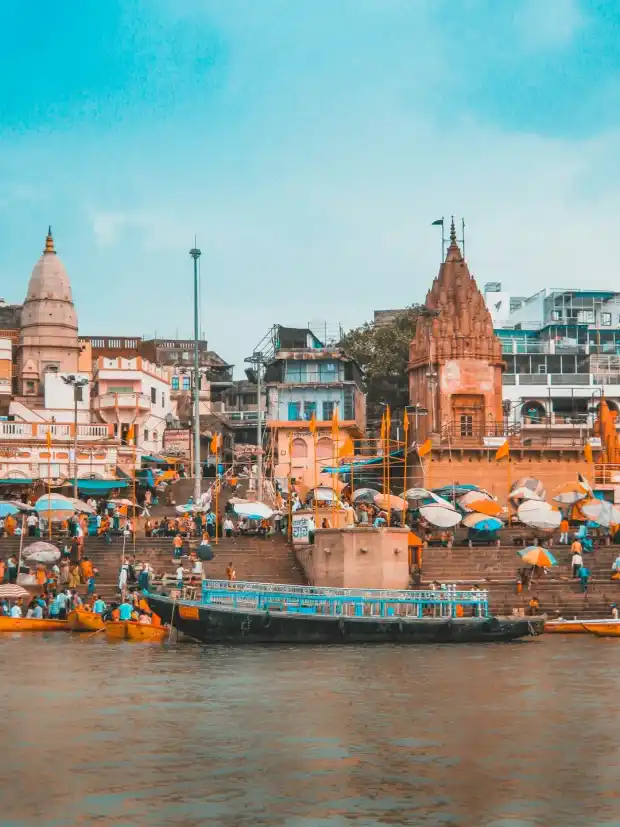
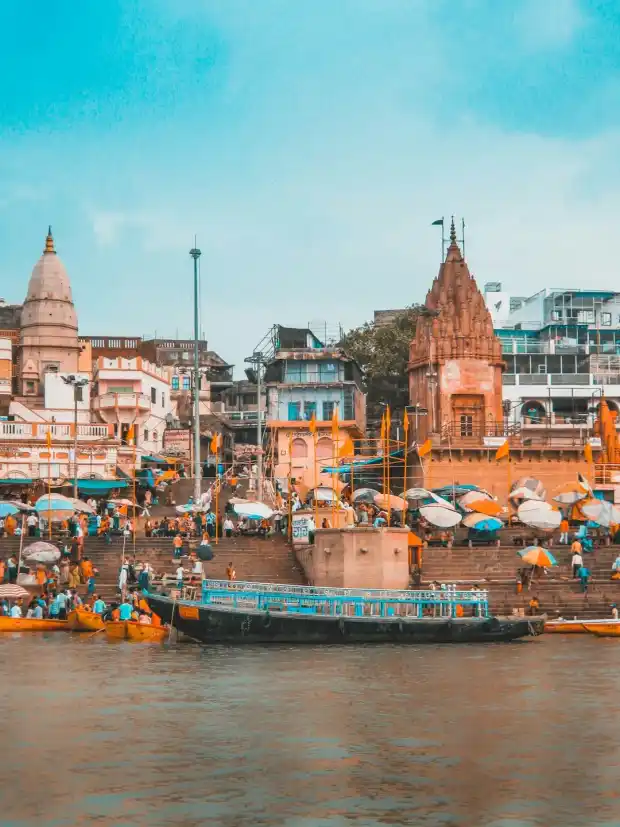
The west bank, where the city stands, is high and steep, which is why the ghats are constructed as long flights of steps. The east bank, opposite, is low, sandy and largely undeveloped — floodplain that is submerged during the monsoon. This asymmetry is unusual and is the reason the classic view of Varanasi is from a boat looking west at the city.
The city lies between two small tributaries that give it its name — the Varuna to the north and the Assi to the south — with Varanasi derived from their combination.
The surrounding region is fertile alluvial plain, intensively farmed. Sarnath lies about 10 km to the northeast.
The Ganges at Varanasi is heavily polluted, receiving sewage and industrial effluent along with the residue of religious activity, despite long-running cleanup programmes. Visitors should not bathe in or ingest the water regardless of how many pilgrims they see doing so.
Monsoon flooding regularly submerges the lower ghats between July and September, sometimes to a considerable height, which affects boat operations and access.
Why Visit Varanasi
Varanasi offers something no other city in India does: an unbroken, entirely unselfconscious continuity of ritual life stretching back thousands of years.
The ghats at sunrise are the defining experience. Take a boat out on the Ganges as the light comes up and you see the whole crescent of the city waking — pilgrims bathing, priests performing rituals, wrestlers training, laundry being beaten on stone, smoke rising from the cremation grounds. None of it is staged. It has simply always happened this way.
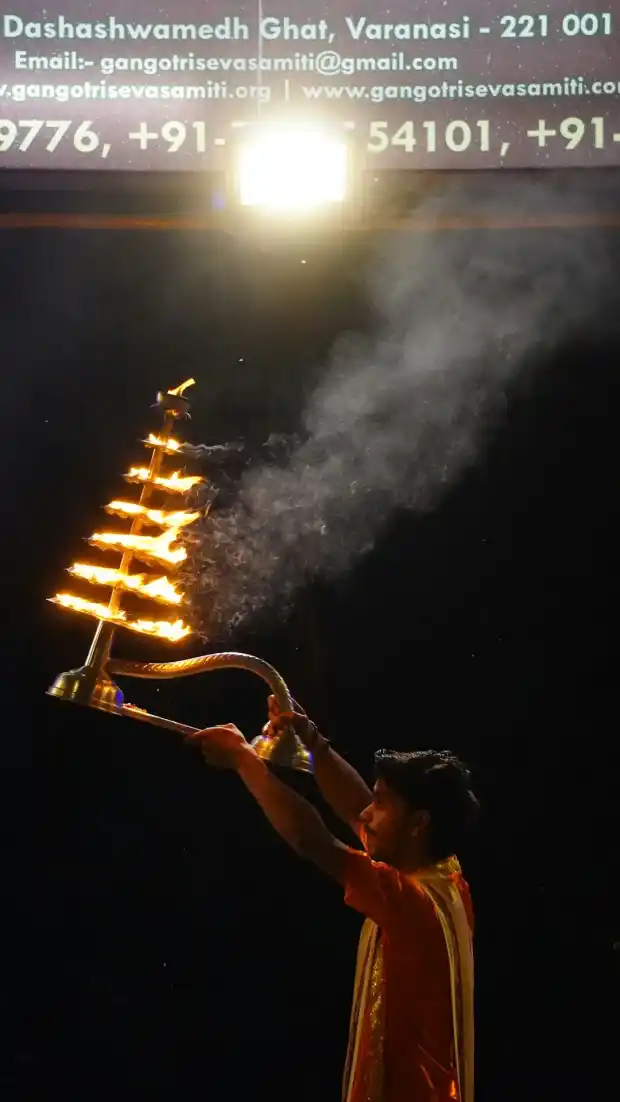
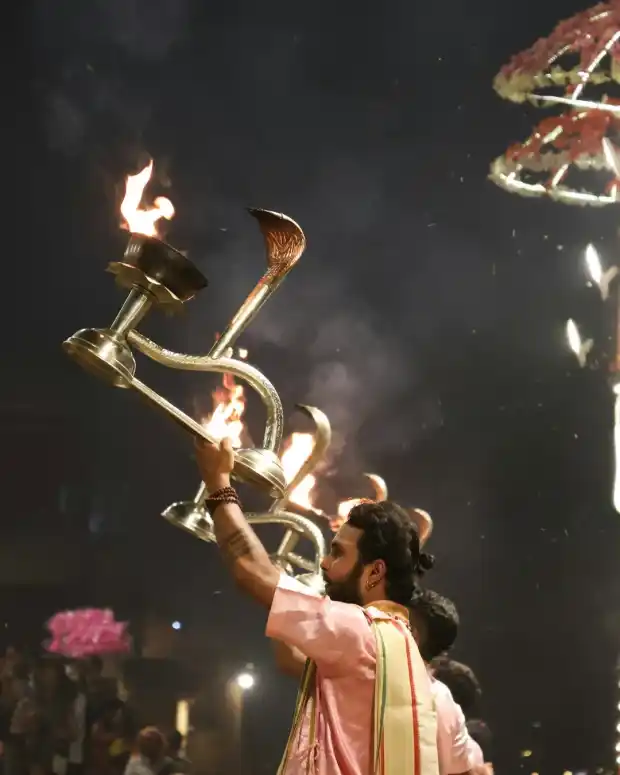
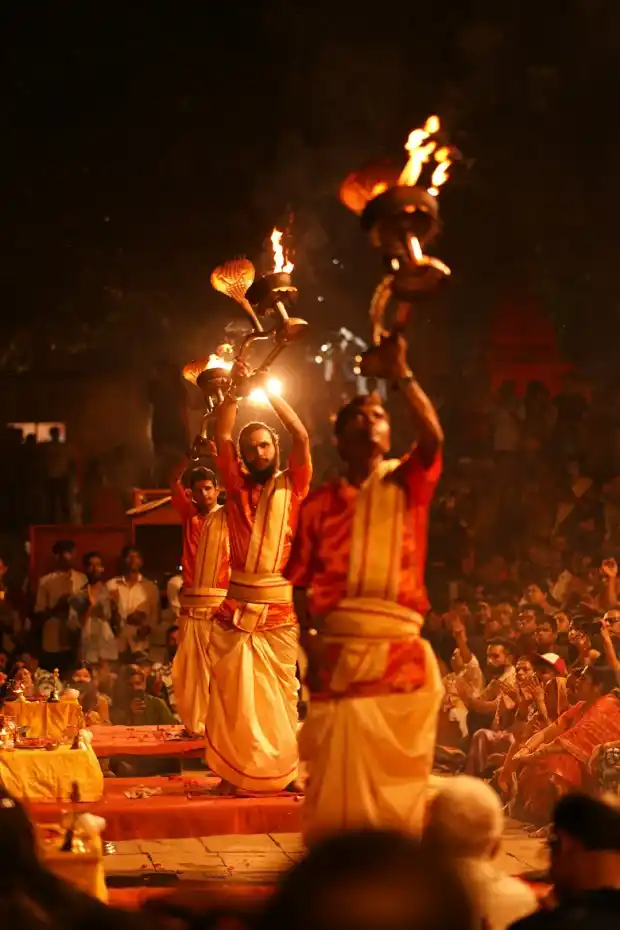
The evening Ganga Aarti at Dashashwamedh Ghat is the other set piece — seven priests performing a synchronised ritual with brass lamps, incense and conch shells, watched from the steps and from boats on the water.
Beyond the ghats, Sarnath is one of the four most important Buddhist pilgrimage sites in the world, with the Dhamek Stupa marking where the Buddha first taught. The old city's lanes are a maze of shrines, silk shops and food stalls. And the city's musical tradition — the Banaras gharana — produced Ravi Shankar and Bismillah Khan.
Varanasi is intense, crowded and can be confronting, particularly around the cremation grounds. It is also, for many travellers, the most memorable place they visit in India.
Top Tourist Places & Things to Do in Varanasi
The Varanasi tourist places and things to do that most travellers plan their visit around.
Where to Stay in Varanasi: Popular Areas
Planning to stay in Varanasi?
We are adding local stays in Varanasi. Share your dates and we will contact you when suitable options are available.
Free · No payment · No obligation
Plan Your Varanasi Trip
Quick, practical guidance for getting there, moving around, eating well and organising your time.
Railway, Airport and Bus Access in Varanasi
Check the terminal on your ticket before travelling because major cities can have more than one arrival point.
Varanasi Junction (BSB, also called Varanasi Cantt), plus Banaras (BSBS)
Lal Bahadur Shastri International Airport (VNS) at Babatpur, approx. 25 km northwest of the city
Varanasi Cantt bus stand, near the railway station; services across Uttar Pradesh and to neighbouring states
Best Time to Visit Varanasi
October to March is the best time to visit Varanasi , with November to February the most comfortable and February to March arguably the sweet spot for combining pleasant weather with clearer mornings. The reasoning is…
Read the full guide →Photos of Varanasi
Varanasi Map
Explore top attractions around Varanasi directly on the map.
More Varanasi Guides
Varanasi FAQs
What is the best time to visit Varanasi?⌄
How many days do you need in Varanasi?⌄
What is the sunrise boat ride and is it worth it?⌄
When is the Ganga Aarti and how do I see it?⌄
Can I take photos at the cremation ghats?⌄
Complete Varanasi Travel Guide
Explore food, transport, weather, travel tips, FAQs and deeper destination information.