Planning a Trip to Varanasi
Varanasi claims to be the oldest continuously inhabited city in the world. Whether or not that claim survives strict scrutiny, the city has been a major religious centre for well over two and a half thousand years, and the essential character of what happens on its riverbank has changed remarkably little in that time.
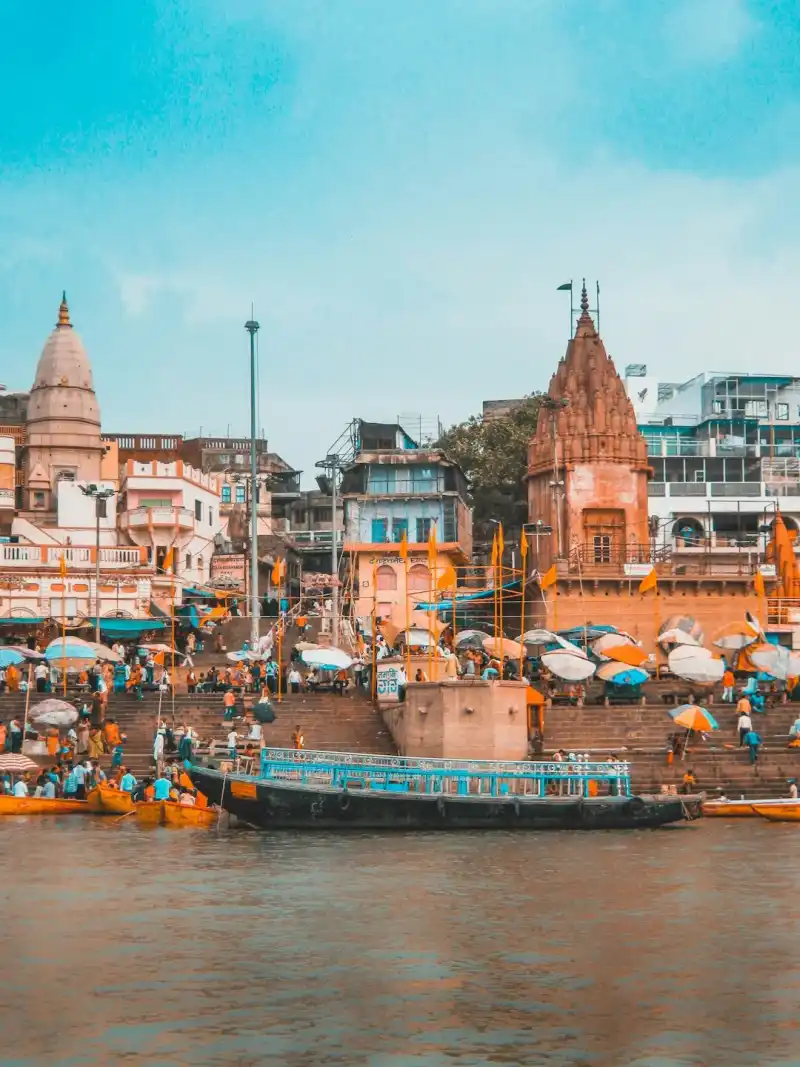
The city stretches along roughly six kilometres of the west bank of the Ganges, connected to the water by some eighty-eight ghats — flights of stone steps descending into the river. Pilgrims come to bathe in the Ganges, to worship at Kashi Vishwanath, and, at the end of life, to die and be cremated here in the belief that doing so breaks the cycle of rebirth.
Behind the ghats lies a dense old city of narrow lanes, too tight for cars, packed with shrines, silk workshops, sweet shops and guesthouses. Ten kilometres away at Sarnath, the Buddha gave his first sermon.
For visitors, Varanasi is not a comfortable city, and it is not trying to be. It is crowded, noisy, and its most central rituals concern death. It is also extraordinary, and most people who go find it stays with them.
This guide covers when to visit, how to reach and navigate the city, what to see, and how to approach a place where you are a guest in an active religious landscape.
History of Varanasi
Varanasi's antiquity is genuine, if difficult to pin down precisely. Archaeological excavation at Rajghat has produced evidence of settlement dating to around the 8th century BCE, and possibly earlier. Hindu tradition places its founding far earlier, attributing it to Shiva himself.
By the time of the Buddha in the 6th century BCE, Varanasi was the capital of the Kashi kingdom, one of the sixteen mahajanapadas of ancient India, and already an established centre of trade, learning and religion. The Buddha travelled to Sarnath, on its outskirts, to deliver his first sermon — the Dhammacakkappavattana Sutta — to his five former companions, an event traditionally called the "turning of the wheel of dharma". This makes Sarnath one of the four holiest sites in Buddhism.
Under the Mauryan emperor Ashoka in the 3rd century BCE, Sarnath was substantially developed, with stupas and monasteries built and a pillar erected whose lion capital is now India's national emblem.
Through the classical period, Varanasi flourished as a centre of Sanskrit scholarship, philosophy and the arts, under the Guptas and successive dynasties.
From the 12th century onwards the city was repeatedly attacked and its temples destroyed during periods of Muslim rule, most severely under Qutb-ud-din Aibak and later under Aurangzeb, who ordered the destruction of the Kashi Vishwanath temple in 1669 and built the Gyanvapi Mosque on part of the site. The temple that stands today was constructed in 1780 by Ahilyabai Holkar, the Maratha queen of Indore, and its gold plating was donated by Maharaja Ranjit Singh in the 1830s.
The Marathas and later regional rulers rebuilt many of the ghats in stone during the 18th century, and much of what visitors see today dates from that period of reconstruction.
Under the British, Varanasi became part of the Benares State and later the United Provinces. The 19th and 20th centuries saw the city retain its religious centrality while becoming a focus of Hindu revivalism and nationalism. Banaras Hindu University was founded in 1916 by Pandit Madan Mohan Malaviya and is now one of the largest residential universities in Asia.
In recent years the area immediately around Kashi Vishwanath has been substantially redeveloped as the Kashi Vishwanath Corridor, clearing a wide processional route from the temple to the river — a significant and much-debated change to the old city's fabric.
Varanasi Climate
Varanasi has a humid subtropical climate with hot summers, a distinct monsoon, and cool winters — typical of the Gangetic plain, with substantial seasonal extremes.
Summer (April to June) is severe. Temperatures routinely exceed 40°C, with May and June the hottest months and readings sometimes approaching 45°C. Hot, dry loo winds blow during the afternoons. Humidity is relatively low early in this period, rising as the monsoon approaches. Outdoor activity in the middle of the day is genuinely uncomfortable and can be dangerous.
Monsoon (July to September) brings heavy rain and high humidity. The Ganges rises substantially, often flooding the lower ghats and sometimes submerging them entirely. Boat operations are frequently suspended during peak flow for safety reasons, which removes one of the city's central experiences. Temperatures moderate to the low-to-mid 30s but humidity is oppressive. The narrow lanes of the old city become slippery and difficult.
Post-monsoon (October to November) is pleasant and increasingly dry, with the river receding and the ghats becoming fully accessible again. Dev Deepawali falls in November.
Winter (December to February) is cool to genuinely cold, particularly at night. January is the coldest month, with night temperatures sometimes falling to around 5°C or lower. Dense morning fog is common in December and January, which can obscure sunrise boat rides and disrupt flights and trains. Daytime temperatures are comfortable.
Spring (late February to March) is mild and pleasant, before the heat builds.
Air quality across the Gangetic plain deteriorates significantly in winter, and Varanasi is affected.
Varanasi Weather
October to March — the travel season. October and November are warm and comfortable, with clear skies and the river settled after the monsoon. December and January are cool by day and cold at night — bring genuinely warm clothing, as early-morning boat rides on the water are cold. February and March are mild and probably the most comfortable overall.
Fog in December and January. Dense morning fog is common and can obscure the sunrise boat ride, which is the city's signature experience. It also disrupts flights and trains regularly. If you're visiting in this window, allow more than one morning for the boat trip and build slack into travel plans.
April to June — extreme heat. Regularly above 40°C, sometimes approaching 45°C, with hot loo winds. Sightseeing must be confined to early morning and evening. The stone ghats radiate heat. Not recommended unless you have a specific reason.
July to September — monsoon. Heavy rain, high humidity, and — crucially — a swollen river. The lower ghats flood and boat rides are often suspended. The old-city lanes become slippery. If the sunrise boat ride matters to you, and it should, avoid these months.
Best Time to Visit
October to March is the best time to visit Varanasi, with November to February the most comfortable and February to March arguably the sweet spot for combining pleasant weather with clearer mornings.
The reasoning is practical. Varanasi's essential experiences — the sunrise boat ride, walking the ghats, the evening aarti, exploring the old city on foot — all depend on being outdoors for extended periods. Between October and March this is comfortable. Between April and June it is punishing, and between July and September the river is high and boats are often not running.
November is particularly good. The weather is settled, the river has receded, and Dev Deepawali — held on the full moon of Kartik, roughly a fortnight after Diwali — sees the entire length of the ghats lit with hundreds of thousands of earthen lamps. It is one of the most spectacular sights in India and draws large crowds.
December and January offer the coolest, clearest air but bring cold mornings and the risk of fog obscuring sunrise. Pack properly for cold; visitors regularly underestimate how cold a 5.30am boat ride in January feels.
Mahashivaratri (February or March) is the major festival at Kashi Vishwanath, given the temple's dedication to Shiva. Enormous crowds and very long queues, but a significant occasion.
How to Reach Varanasi
By air. Lal Bahadur Shastri International Airport (VNS) at Babatpur is about 25 km northwest of the city. It has good domestic connections — Delhi is roughly 1 hour 15 minutes, Mumbai around 1 hour 45 minutes, Kolkata around 1 hour — plus limited international routes including Kathmandu and some Gulf and Southeast Asian services, and seasonal Buddhist-circuit connections.
Getting into the city: prepaid taxis and app cabs are available and typically take 45 minutes to an hour to reach the ghat areas. Note that vehicles cannot enter the old-city lanes — you will be dropped at the nearest accessible point and walk the final stretch, sometimes 10 minutes or more with luggage. Confirm this with your accommodation in advance.
By train. Varanasi is well connected by rail:
- Varanasi Junction (BSB), also known as Varanasi Cantt, is the main station, centrally located
- Banaras station (BSBS) at Manduadih handles a growing number of services
- Pandit Deen Dayal Upadhyaya Junction (DDU), formerly Mughalsarai, is a major junction about 15 km away across the river, where many long-distance trains stop
Direct trains connect Varanasi to Delhi (several overnight and Vande Bharat services), Kolkata, Mumbai, Lucknow, Patna, Gaya and across the country. Book well ahead through IRCTC, particularly around festivals.
By road. National highways connect Varanasi to Lucknow (around 6 hours), Allahabad/Prayagraj (around 3 hours), Gaya and Bodh Gaya (around 5 hours), Patna (around 5 hours) and Khajuraho. State and private buses operate from the Cantt bus stand near the railway station.
Buddhist circuit note. Varanasi is a natural base or waypoint for the Buddhist pilgrimage circuit — Sarnath is in the city, and Bodh Gaya, Kushinagar and Lumbini (in Nepal) are all reachable by road.
Getting Around Varanasi
Walking is unavoidable and essential. The old city between the ghats and Godowlia is a maze of lanes too narrow for cars, and often too narrow for two people to pass comfortably. You will walk. Wear shoes you can clean, and be prepared for cows, motorbikes, and the general density.
Boats. The most important form of transport for visitors. Rowing boats and motorboats operate from most ghats, with the classic route running along the ghat crescent at sunrise or before the evening aarti. Negotiate the fare before boarding and be clear on duration. Rowing boats are quieter and better for photography; shared boats are cheaper. Life jackets are not always offered — ask.
Auto-rickshaws and e-rickshaws. The main motorised option for getting between areas — the Cantonment, Assi Ghat, Godowlia, BHU and Sarnath. E-rickshaws are ubiquitous and cheap. Agree fares in advance.
Cycle rickshaws. Useful for medium distances and for reaching the edges of the pedestrian old city.
App cabs. Uber and Ola operate but are limited by the road network and cannot reach much of the old city. Useful for the airport, station and Sarnath.
Hired car with driver. Worth arranging for Sarnath, Ramnagar Fort, or onward day trips.
Practical notes:
- Getting lost in the old-city lanes is normal and, within limits, part of the experience. The river is always downhill — head that way to reorient.
- Many guesthouses are only reachable on foot. Confirm the approach and whether they offer a porter or guide to meet you.
- Avoid the lanes late at night if you don't know your route.
Top Attractions on a Varanasi Trip
Kashi Vishwanath Temple
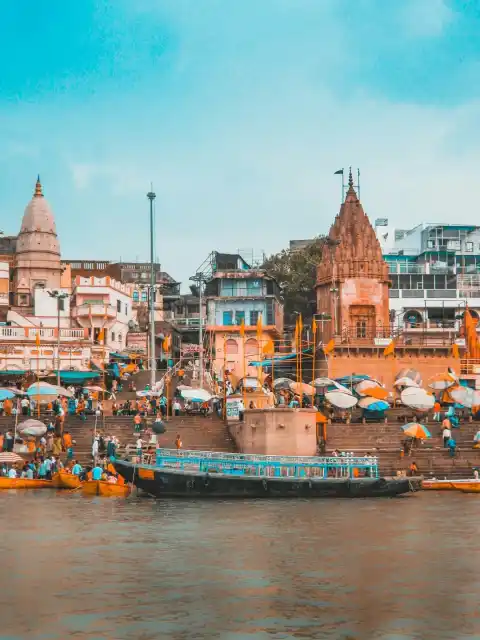
One of the twelve Jyotirlingas, with an 800 kg gold-plated tower on the Ganga's west bank.
Read more ›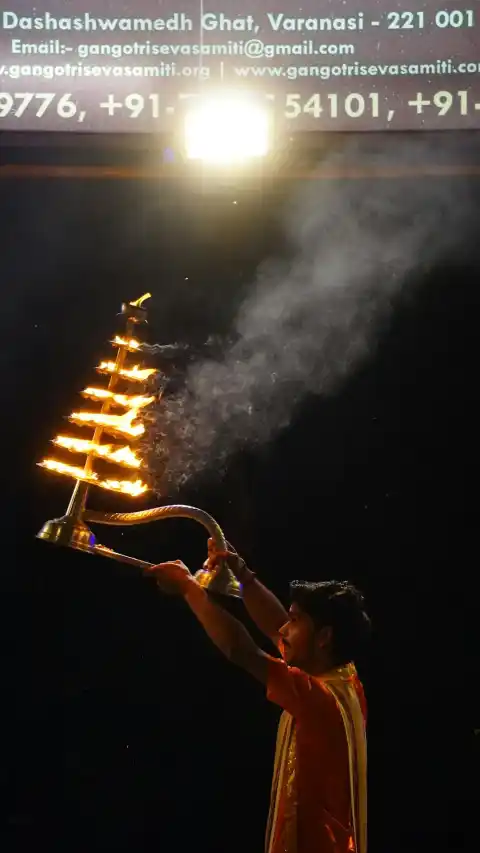
Dashashwamedh Ghat
Varanasi's main ghat, famous for the nightly Ganga Aarti ceremony.
Read more ›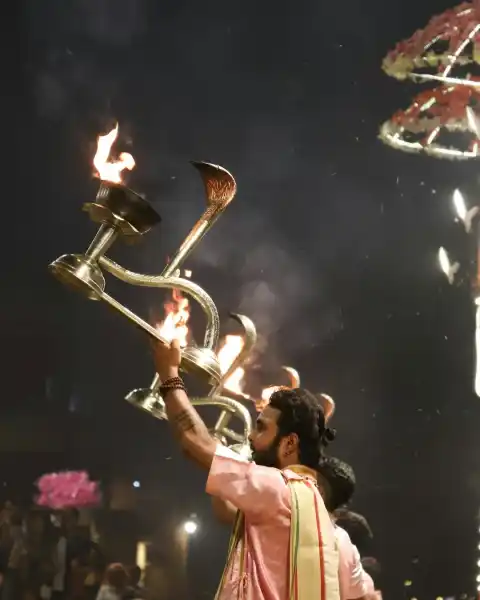
Assi Ghat
The southernmost of Varanasi's ghats, popular for sunrise boat rides and a calmer atmosphere.
Read more ›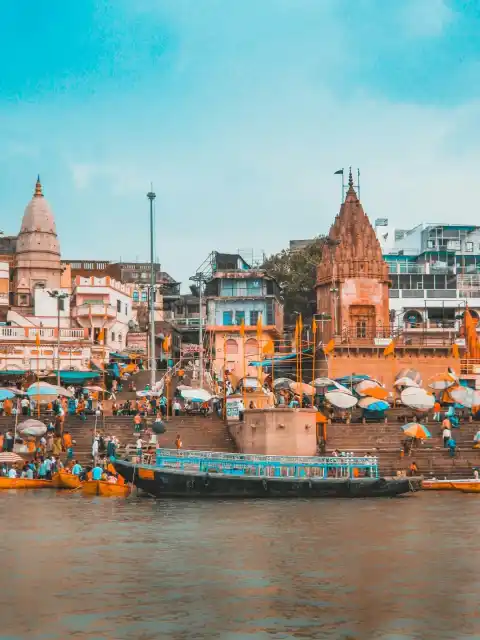
Manikarnika Ghat
Varanasi's principal cremation ghat, considered one of the most sacred spots to die in Hindu tradition.
Read more ›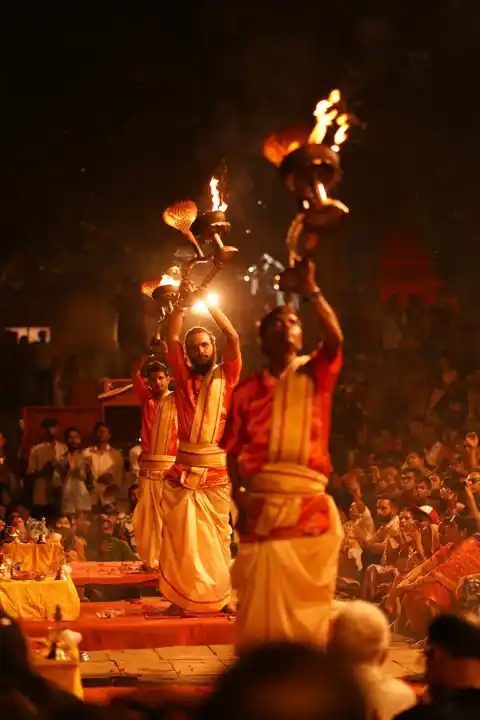
Sarnath
The site of Buddha's first sermon, with the Dhamek Stupa and Ashoka Pillar.
Read more ›Sankat Mochan Hanuman Temple
A Hanuman temple founded by the saint Tulsidas, one of Varanasi's most visited temples.
Read more ›Tulsi Manas Temple
A marble temple marking where Tulsidas composed the Ramcharitmanas, with verses inscribed on its walls.
Read more ›Ramnagar Fort
An 18th-century fort and former royal residence on the east bank of the Ganga.
Read more ›Shopping
Banarasi silk is the city's signature purchase and one of India's most celebrated textiles. Banarasi sarees are woven with fine silk and intricate zari (gold or silver thread) brocade, traditionally featuring Mughal-influenced floral and foliate motifs. A genuine handwoven piece takes weeks or months to make and is priced accordingly.
Buying silk without being cheated requires care, because Varanasi has a well-established industry of selling machine-made or blended fabric as handwoven pure silk:
- Buy from established, fixed-price showrooms rather than from someone who approaches you on the street or in a boat
- Be extremely wary of anyone — including rickshaw drivers, guides and "students" who befriend you — offering to take you to a workshop; they earn substantial commissions that are added to your price
- Ask for the Silk Mark label, which certifies pure silk
- Genuine handwoven Banarasi silk is expensive. A very cheap "pure silk saree" is not one.
- Handloom pieces have slight irregularities; power-loom pieces are perfectly uniform on the reverse
Where to shop: The government emporium and established showrooms in the Cantonment and around Godowlia are the safer options. Some weavers' cooperatives in the Madanpura and Alaipura areas sell directly, but go with a trusted contact rather than a street introduction.
Other purchases:
- Brass and copper items — lamps, puja vessels, figurines, from the lanes around Vishwanath Gali
- Wooden toys and lacquerware — a traditional Varanasi craft
- Rudraksha beads and prayer malas — widely sold; quality and authenticity vary considerably
- Stone inlay and soapstone work
- Books on Indian philosophy and religion — the university area has good bookshops
- Musical instruments — tabla, sitar and other instruments are made in Varanasi, given the city's classical music tradition. Buy from established makers.
- Langda aam — the celebrated local mango variety, in season roughly June to July
Markets: Vishwanath Gali (the lane approaching the main temple, dense with shops), Godowlia Market (general), Thatheri Bazaar (metalware), Chowk (traditional).
Local Food
Varanasi's food is distinctively its own — predominantly vegetarian, given the religious context, with a strong street-food and sweet tradition.
The classic Banarasi breakfast is kachori sabzi — a fried, spiced-lentil-stuffed pastry served with a potato curry, often accompanied by jalebi. Eaten early, standing at a stall, it is the correct way to start a day in Varanasi.
Other savoury specialities:
- Chaat — Varanasi's chaat is highly regarded, particularly tamatar chaat (a spiced tomato preparation quite unlike chaat elsewhere) and palak chaat (crisp-fried spinach leaves with yoghurt and chutneys)
- Baati chokha — baked wheat dough balls served with mashed spiced vegetables (chokha) and dal, a rustic Purvanchal speciality
- Litti chokha — the related Bihari dish, widely available
- Nimish or malaiyo — a seasonal winter delicacy, an extraordinarily light milk foam flavoured with saffron and cardamom, made overnight in the winter dew. Available only roughly December to February. If you visit in winter, seek it out — there is nothing else quite like it.
- Dahi vada, samosa, and various fried snacks at street stalls throughout the old city
Sweets:
- Rabri — thickened, reduced milk, often served with jalebi
- Launglata — a clove-pinned stuffed pastry in syrup
- Malai gilori and malai roll — delicate milk sweets
- Peda and barfi — widely available
Lassi — Varanasi's thick lassi, often served in a clay cup and topped with malai (cream), is a genuine speciality. Several long-running lassi shops in the old city are institutions.
Banarasi paan — Perhaps the city's most famous product after silk. Betel leaf folded around areca nut, lime paste, katha and various flavourings — sweet (meetha) versions are what most visitors try. Paan is chewed and the residue spat out; if you're not accustomed, ask for a small meetha paan and be aware that it's not swallowed. Note that paan containing tobacco (zarda) is carcinogenic and should be avoided.
Thandai — A cold spiced milk drink with almonds, fennel and rose. Note that a variant called bhang thandai contains cannabis preparation, which is legally sold in Varanasi at licensed government bhang shops and is traditionally associated with Shiva worship, particularly at Holi and Mahashivaratri. Effects are strong, slow to arrive and long-lasting, and many visitors have had genuinely bad experiences by underestimating it. If it doesn't appeal, always confirm you are ordering plain thandai.
Festivals in Varanasi
Dev Deepawali (November) — The most spectacular event in Varanasi's calendar, held on the full moon of Kartik, roughly fifteen days after Diwali. The entire length of the ghats is lit with hundreds of thousands of earthen lamps, and the river fills with boats. Crowds are enormous and accommodation must be booked well ahead. If you can time a visit to anything in Varanasi, make it this.
Mahashivaratri (February or March) — The great night of Shiva, and given that Kashi Vishwanath is one of the twelve Jyotirlingas, this is Varanasi's most significant religious observance. Queues at the temple are extremely long — many hours — and the city fills with pilgrims. Processions and all-night worship.
Ganga Mahotsav (November) — A cultural festival of classical music and dance held on the ghats around Dev Deepawali, showcasing the Banaras gharana and visiting artists.
Holi (March) — Celebrated with considerable intensity in Varanasi. Note that Holi here has a reputation for being rougher than in many places, with heavy bhang consumption. Foreign visitors, particularly women, should be cautious about being out on the streets during the main celebrations; many guesthouses organise safer in-house celebrations.
Diwali (October–November) — Widely celebrated, with lamps along the ghats, preceding Dev Deepawali a fortnight later.
Nag Nathaiya (October–November) — A distinctive Varanasi festival re-enacting Krishna's subduing of the serpent Kaliya, performed at Tulsi Ghat.
Ramlila at Ramnagar (September–October) — An exceptional month-long cycle of Ramayana performances staged across the town of Ramnagar, running for 31 days, patronised by the Maharaja of Benares and dating back to the 19th century. Quite unlike Ramlila elsewhere — it moves between locations and draws large audiences over its full run.
Buddha Purnima (April–May) — Major celebration at Sarnath, marking the Buddha's birth, enlightenment and death.
Kartik Purnima (November) — Ritual bathing in the Ganges, coinciding with Dev Deepawali.
Makar Sankranti (January) — Ritual bathing and kite flying.
Photography Spots
Sunrise boat ride along the ghats — The single most rewarding photographic opportunity in India for many travellers. Soft light on the ghat facades, pilgrims bathing, priests performing rituals, boats and birds. Leave around 5.15–5.45am depending on season. A rowing boat is better than a motorboat for stability and quiet. Book a private boat if you want control over timing and position.
Evening Ganga Aarti at Dashashwamedh — The synchronised fire ritual. Shoot either from a boat on the water (better angle, fewer obstructions) or from the steps (more intimate, but crowded). A fast lens helps in low light.
Assi Ghat at dawn — Less crowded than the central ghats, with the Subah-e-Banaras programme, yoga sessions and morning light.
The old-city lanes — Narrow alleys, shrines set into walls, silk workshops, sweet shops, cows and motorbikes. Dense, difficult and rewarding. Early morning gives the best light and least congestion.
Ghat architecture from the water — Chet Singh Ghat, Darbhanga Ghat and Munshi Ghat have the most striking palace facades. Late afternoon light on the west-facing bank is ideal.
Sarnath — The Dhamek Stupa, the excavated monastery ruins, and the modern international temples. Calmer and easier than the city.
Dev Deepawali — If you visit in November, the illuminated ghats are extraordinary. Book a boat well in advance; positions on the water are heavily contested.
Wrestling akharas — Traditional wrestling grounds near some ghats, active in the early morning. Ask permission.
Suggested Itinerary
Two days — the essentials
Day 1 — River and old city
- 5.30am: sunrise boat ride along the ghats
- Breakfast: kachori sabzi and jalebi at a street stall
- Morning: walk the ghats from Assi northward, or from Dashashwamedh south
- Late morning: Kashi Vishwanath Temple (expect queues and security; leave phone at accommodation)
- Lunch: Banarasi thali or street food around Godowlia
- Afternoon: rest — the middle of the day is best avoided
- Late afternoon: explore the old-city lanes, Vishwanath Gali
- Evening: Ganga Aarti at Dashashwamedh Ghat — arrive 45 minutes early or take a boat
Day 2 — Sarnath and beyond
- Morning: Sarnath — Dhamek Stupa, monastery ruins, Mulagandha Kuti Vihar, and the Archaeological Museum for the Lion Capital
- Lunch: back in the city or at Sarnath
- Afternoon: Banaras Hindu University — New Vishwanath Temple, Bharat Kala Bhavan museum
- Late afternoon: Sankat Mochan Hanuman Temple, Durga Temple
- Evening: Assi Ghat — quieter aarti, rooftop café, or a classical music recital
Three to four days
Days 1 and 2 as above.
Day 3 — Depth
- Early morning: second boat ride, this time going further along the crescent, or the Subah-e-Banaras programme at Assi Ghat
- Morning: Ramnagar Fort across the river
- Lunch: local
- Afternoon: silk showroom visit (a genuine one — arrange through your accommodation, not a street contact)
- Evening: aarti from a different vantage point, or a music performance
What to Pack for Varanasi
Clothing by season:
October to March. Layers. October and March are mild, but December and January are genuinely cold, particularly at dawn on the water — night temperatures can fall to around 5°C. A warm jacket, sweater, scarf and even gloves are worth having for early-morning boat rides. Visitors consistently underpack for this.
April to June. The lightest cotton possible, long sleeves for sun protection, a wide-brimmed hat, high-SPF sunscreen. The stone ghats radiate heat.
July to September. Umbrella or rain jacket, quick-dry clothing, and footwear with grip — the old-city lanes and ghat steps become slippery and unpleasant in the rain.
Year-round essentials:
- Modest clothing — Varanasi is a conservative pilgrimage city. Shoulders and knees covered for both men and women, at all times, not just in temples. This matters more here than in most Indian cities.
- A scarf or shawl — for covering the head at religious sites and for sun and dust
- Slip-on shoes — you will remove footwear constantly at temples and some guesthouses. Also, the lanes are dirty; shoes you can clean or wash are sensible.
- A second pair of footwear — useful if the first pair gets soaked or soiled
- Hand sanitiser and wet wipes — genuinely essential here
- Mosquito repellent — particularly near the river and after the monsoon
- Reusable water bottle — and stick strictly to sealed or filtered water
- A small bag worn in front — the lanes and aarti crowds are dense
- Torch or headlamp — the lanes are poorly lit at night and power cuts occur
- Universal adapter — 230V, 50Hz, Type C, D and M sockets
- Medication — prescriptions with copies, oral rehydration salts, stomach remedies. Stomach upsets are more common here than in many Indian cities.
- Documents — passport, visa, printed copies stored separately, insurance details
Note on the temple: Phones, cameras and bags are generally not permitted inside Kashi Vishwanath. Plan to leave them at your accommodation or use the deposit facilities, and allow
Hospitals in Varanasi
Varanasi has reasonable medical facilities, anchored by the Banaras Hindu University medical institute, though for serious conditions Lucknow or Delhi offer more comprehensive options.
Principal facilities:
- Sir Sunderlal Hospital, Institute of Medical Sciences, BHU — the main teaching hospital attached to Banaras Hindu University, the most comprehensive facility in the city and the referral centre for the region
- Heritage Hospital, Lanka — private multi-speciality hospital near the BHU area
- Apex Hospital, Kabir Nagar — private multi-speciality
- Popular Hospital, Sigra — private hospital, centrally located
- Galaxy Hospital, Sigra — private multi-speciality
- Government District Hospital (Pandit Deendayal Upadhyay Hospital), Pandeypur — government district hospital
- Shiv Prasad Gupta Divisional Hospital, Kabir Chaura — long-established government hospital
Varanasi Emergency Numbers
Travel Tips
Varanasi Trip Budget
Planning to stay in Varanasi?
We are adding local stays in Varanasi. Share your dates and we will contact you when suitable options are available.
Free · No payment · No obligation
Good to know