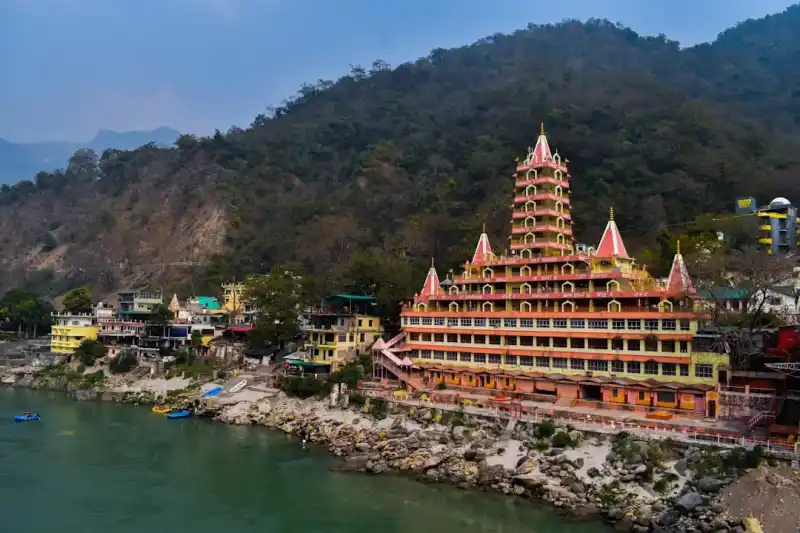
Planning a Trip to Rishikesh
Rishikesh is where the Ganga comes down out of the Himalayas, and the town has organised its whole character around that river. It's globally known as the Yoga Capital of the World, but it's just as much a base for rafting, trekking, and Char Dham pilgrimage — the kind of place where a sunrise meditation session and a white-water rafting trip happen a few hundred metres apart. Whether you're here for a week-long yoga retreat, a rafting weekend, or simply the evening Ganga Aarti, this guide covers what to actually plan around before you arrive.
History of Rishikesh
Rishikesh is tied in Hindu scripture to the Ramayana, as the place where Lord Rama did penance after killing Ravana. Its modern global identity, though, was shaped far more recently: The Beatles' 1968 stay at Maharishi Mahesh Yogi's ashram brought international attention and effectively launched Rishikesh's yoga-tourism era. Lakshman Jhula's iron bridge dates to 1929, while its sister bridge Ram Jhula was completed in 1986.
Rishikesh Climate
A moderate foothill climate overall. Winters (October–March) range roughly 5–20°C and are the most popular season. Summers (April–June) can reach 35–40°C in the lower town. Monsoon (July–September) brings heavy rainfall and elevated landslide/flood risk.
Rishikesh Weather
Expect cool, foggy mornings and pleasant days in winter; hot, dry afternoons with cooler evenings in summer; and humid, wet conditions through the monsoon months. Evenings by the river are cooler than the town average year-round.
Best Time to Visit
October to March is the most comfortable window, with daytime temperatures around 12–25°C and clear skies — ideal for sightseeing, ashram stays, and the March International Yoga Festival. February to April and September to November are also good shoulder-season options with fewer crowds. Summers (April–June) get hot in the lower town (up to 35–40°C) but are still workable for rafting and early-morning activities. Avoid July–September if your plans centre on the river —…
Read the full guide to the best time to visit Rishikesh →How to Reach Rishikesh
By air - The nearest airport is Jolly Grant Airport in Dehradun, roughly 20–45 km away (about 30–45 minutes by road) depending on which part of Rishikesh you're headed to. It has regular flights from Delhi.
Read the full Rishikesh transport guide →Getting Around Rishikesh
Shared autos (locally called Vikrams) and regular town buses connect the main areas — Rishikesh town, Ram Jhula, Lakshman Jhula, Tapovan, and Muni Ki Reti. Most of the riverside town itself is walkable once you're in it, since the ghats and bridges connect the main tourist areas on foot. Private taxis are the standard option from the airport or railway station.
Top Attractions on a Rishikesh Trip
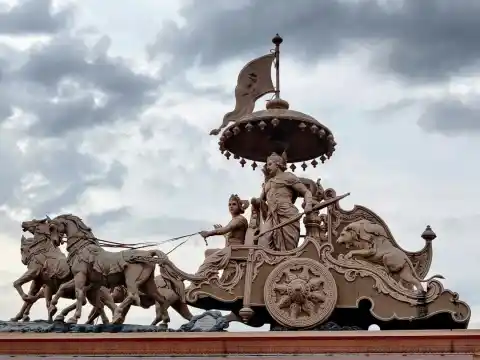
Parmarth Niketan
One of Rishikesh's largest ashrams, known for its riverside Ganga Aarti, yoga programs and annual International Yoga Festival.
Read more ›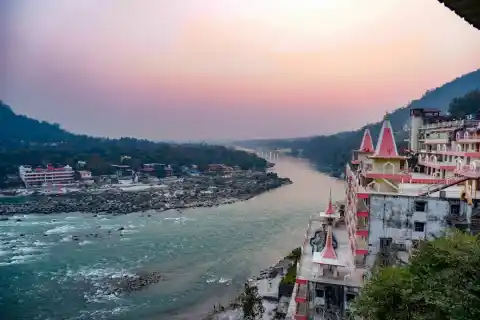
Beatles Ashram (Chaurasi Kutia)
The abandoned ashram where The Beatles studied meditation in 1968, now covered in graffiti art and open for self-guided exploring.
Read more ›Neelkanth Mahadev Temple
A revered Shiva temple in the forested hills above Rishikesh, marking the spot where legend says Shiva swallowed the poison from the churning of the ocean.
Read more ›Kunjapuri Devi Temple
A hilltop Shakti Peeth temple famous for one of the best sunrise views over the Himalayas near Rishikesh.
Read more ›Rajaji National Park
A major wildlife reserve bordering Rishikesh, home to elephants, tigers and leopards, with jeep safaris run out of the Chilla and Motichur gates.
Read more ›Shivpuri
A riverside camping and rafting hub upstream of Rishikesh, the standard starting point for the classic Shivpuri-to-Rishikesh whitewater run.
Read more ›Vashishta Gufa
A cave meditation site on the Ganga's banks associated with the sage Vashishtha, popular for quiet meditation and yoga.
Read more ›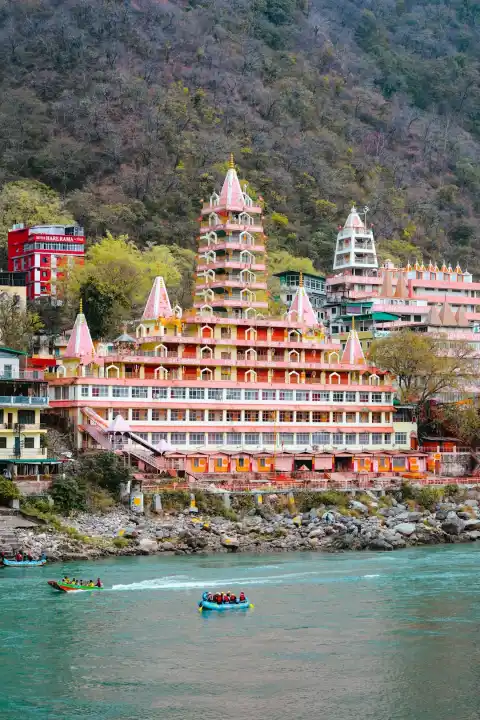
Laxman Jhula
Rishikesh's iconic 450-foot iron suspension bridge across the Ganga, and the informal name for the bustling neighbourhood around it.
Read more ›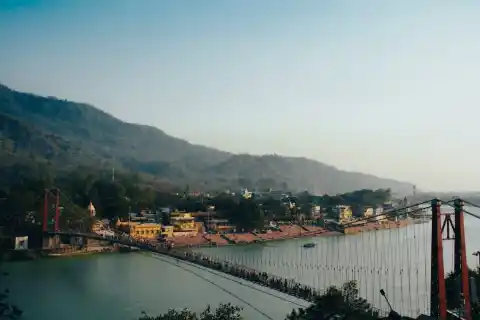
Ram Jhula
A second, sturdier suspension bridge linking Swarg Ashram to Muni Ki Reti, at the heart of Rishikesh's ashram district.
Read more ›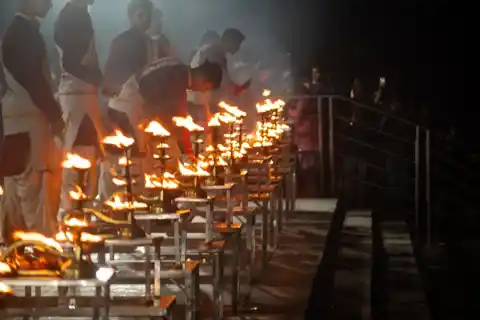
Triveni Ghat
Rishikesh's principal bathing ghat on the Ganga, and the site of the town's main evening Ganga Aarti.
Read more ›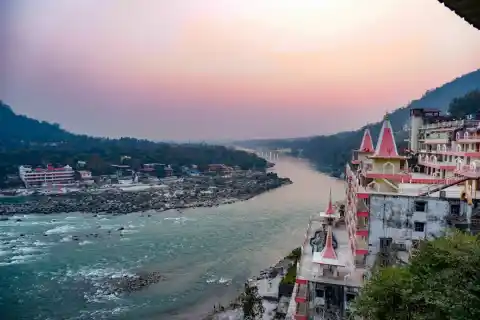
Beatles Ashram
Read more ›Gita Bhawan
Read more ›Sivananda Ashram
Read more ›Shopping
The Ram Jhula and Lakshman Jhula market lanes are the main shopping stretches — rudraksha malas, semi-precious stones, brassware and idols, spiritual books, and yoga-wear. Tapovan has a more café-and-craft-stall feel geared toward longer-stay visitors.
Read the Rishikesh shopping guide →Local Food
Rishikesh's central areas are largely vegetarian and alcohol-free out of respect for its ashrams and temples, so expect a strong satvik (pure vegetarian) food culture — thalis, fresh-pressed juices, and health-food cafés catering to the yoga crowd sit alongside traditional North Indian vegetarian fare. Riverside cafés around Tapovan and Lakshman Jhula are popular for both food and Ganga views.
Explore Rishikesh local food →Festivals in Rishikesh
The International Yoga Festival every March is Rishikesh's signature event. Ganga Dussehra (May/June) and Makar Sankranti (January) are also widely observed here, both centred on the river.
Photography Spots
Ram Jhula and Lakshman Jhula for river and ghat views, Triveni Ghat during Aarti, Neer Garh Waterfall, and the sunrise viewpoint from Kunjapuri Devi Temple.
Suggested Itinerary
What to Pack for Rishikesh
Hospitals in Rishikesh
Rishikesh Emergency Numbers
Travel Tips
- Much of central Rishikesh is dry and vegetarian by local custom — don't expect alcohol or meat near the ghats and ashram areas.
Read all Rishikesh travel tips →Rishikesh Trip Budget
Planning to stay in Rishikesh?
We are adding local stays in Rishikesh. Share your dates and we will contact you when suitable options are available.
Free · No payment · No obligation
Good to know