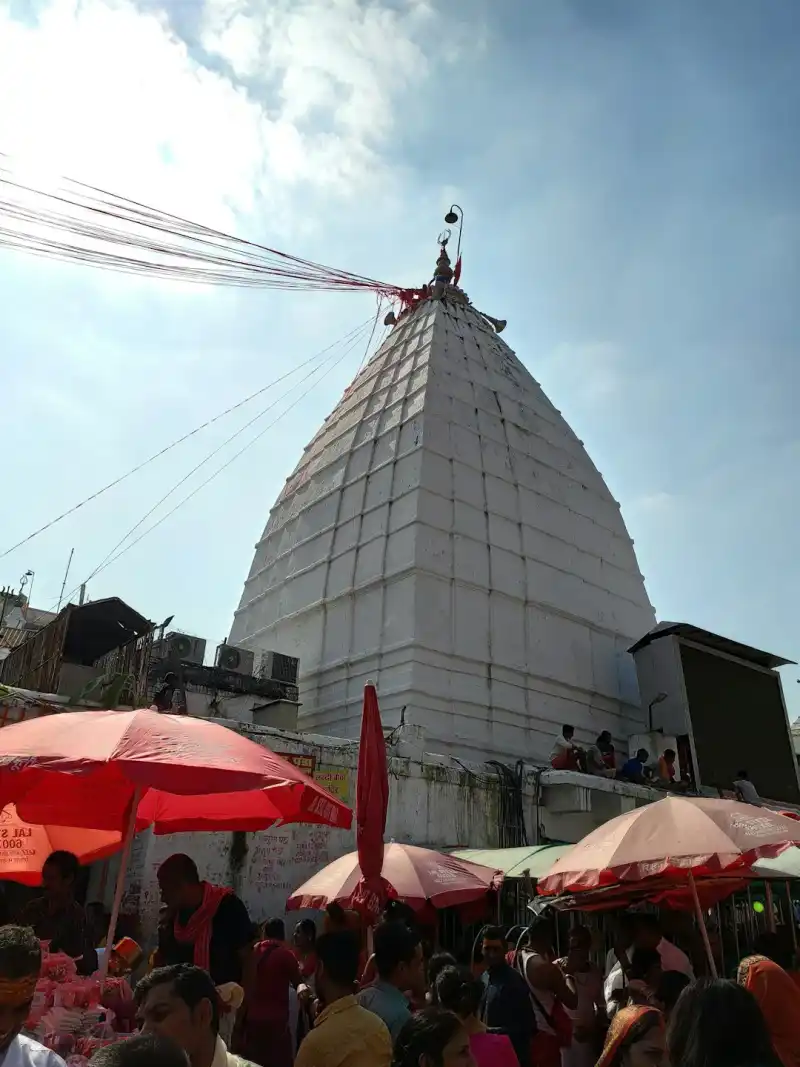
Planning a Trip to Baidyanath Dham
Baidyanath Dham (also known as Baba Dham) located in Deoghar, Jharkhand, is one of the most revered pilgrimage destinations in India. It is one of the 12 divine Jyotirlingas dedicated to Lord Shiva and simultaneously functions as a Shakti Peetha (where Goddess Sati’s heart is believed to have fallen), making it a rare dual sanctum of Shiva and Shakti energy. Devotees visit from across the world to seek health, spiritual restoration, and the fulfillment of heartfelt prayers (Kamna) from Lord Baidyanath—the "Divine Healer".
History of Baidyanath Dham
Mythological Origin: According to the Shiva Purana, the demon king Ravana performed severe penance in the Himalayas to appease Lord Shiva. Pleased by his sacrifice, Shiva granted him the Kamna Linga on the condition that if placed on the ground during his journey to Lanka, it would root there permanently. As Ravana passed through Deoghar, Lord Vishnu disguised himself as a shepherd (Baiju Bhil) and placed the Linga on the ground, permanently fixing it at this site. Ravana attempted to lift it and pressed his thumb on top in frustration, leaving a distinct mark still worshipped today.
Historical Background: The present stone shrine features a 72-foot-tall pyramidal spire. Historical records attribute parts of its construction and major renovations to Raja Puran Mal in the 8th century, with contributions from Mughal-era rulers like Raja Man Singh in the 16th century.
Baidyanath Dham Climate
Summer (March – June): Hot and dry weather with temperatures ranging between $28^\circ\text{C}$ and $42^\circ\text{C}$.
Monsoon (July – September): Moderate to heavy rainfall with high humidity; transforms the surrounding region into lush greenery.
Winter (October – February): Pleasant, crisp, and cool climate with temperatures dropping to $8^\circ\text{C} - 22^\circ\text{C}$.
Baidyanath Dham Weather
The weather at Shree Baba Baidyanath Jyotirlinga Mandir in Deoghar features mostly cloudy skies with a current temperature of 26°C (feels like 29°C), high humidity at 92%, and a light 2 mph wind from the southwest. Today's forecast expects heavy thunderstorms during the daytime with a high of 32°C and a low of 25°C at night.
Best Time to Visit
For Pleasant Weather & Sightseeing: October to March is ideal for general travelers, offering cool temperatures and comfortable sightseeing conditions.
Read the full guide to the best time to visit Baidyanath Dham →How to Reach Baidyanath Dham
By Air: Deoghar Airport (DGH) is located ~12 km from the temple complex and connects directly with major cities like Delhi, Kolkata, Patna, and Ranchi.
Read the full Baidyanath Dham transport guide →Getting Around Baidyanath Dham
Auto-Rickshaws & E-Rickshaws (Totos): The most popular and budget-friendly mode to navigate between Jasidih Junction, local hotels, and the temple campus.
Taxis & Cab Rentals: Readily available for full-day excursions to outskirts like Trikut Pahar and Tapovan.
On Foot: The central temple zone, bazaars, and Tower Chowk are easily navigable on foot.
Top Attractions on a Baidyanath Dham Trip
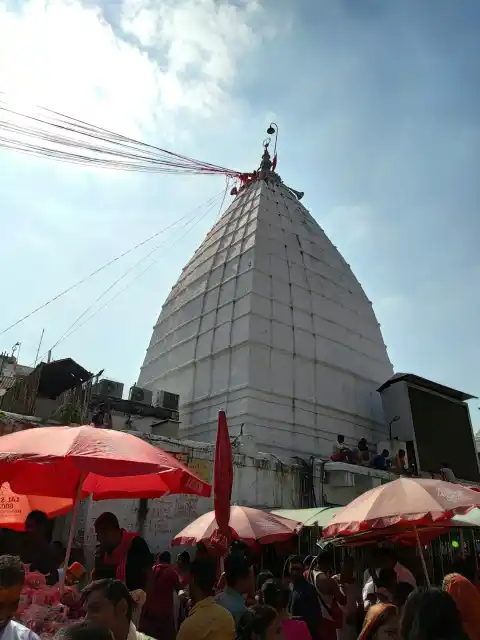
Baba Baidyanath Temple
The main Jyotirlinga shrine — one of Hinduism's twelve most sacred Shiva temples.
Read more ›Maa Parvati Temple, Baidyanath Dham
The adjacent Shakti temple, connected to the main shrine by a sacred red thread.
Read more ›
Shivganga
A sacred tank where pilgrims bathe before darshan at the main temple.
Read more ›Basukinath Temple
The 'court of Baba Bhole Nath' — a twin pilgrimage site about 44 km away, commonly paired with Baidyanath Dham.
Read more ›Naulakha Mandir
A Radha-Krishna temple 1.5 km away, built for nine lakh rupees by a Kolkata devotee.
Read more ›Kaman Chowk / Pera Gali Market
The pedestrian pilgrim lane leading to the temple, lined with prasad, bangle and puja shops.
Read more ›Shopping
Deoghar Peda: The iconic cardamom-infused sweet made of slow-caramelized milk solids ( khoya ).
Read the Baidyanath Dham shopping guide →Local Food
Sweets: Deoghar Peda, Tilkut, Rabri, and Elaichi Dana.
Explore Baidyanath Dham local food →Festivals in Baidyanath Dham
Shrawani Mela (July – August): Asia's longest continuous religious fair where millions of saffron-clad Kanwaris walk 108 km barefoot carrying holy Ganges water from Sultanganj to offer Jalabhisheka at Baba Dham.
Mahashivratri (February/March): Celebrated with grand temple illumination, special midnight rituals, and citywide processions.
Bhadra Purnima: Celebrated with special prayers and rituals dedicated to Lord Shiva.
Photography Spots
Naulakha Mandir: A 146-foot-tall architectural shrine styled after Belur Math.
Trikut Pahar: Offers panoramic views of the hill ranges and surrounding countryside.
Nandan Pahar: Panoramic sunset viewpoints overlooking Deoghar town.
Gathbandhan Ritual Scene: The visual link of red threads connecting the spires of Shiva and Parvati temples.
(Note: Photography is strictly prohibited inside the main temple sanctum).
Suggested Itinerary
Day 1: Spiritual Immersion & City Heritage
See the Baidyanath Dham itinerary hub →What to Pack for Baidyanath Dham
Sravan Season / Monsoon: Light cottons, quick-dry saffron/orange clothing (if participating in pilgrimage), rain gear, and waterproof footwear.
Winter Season: Light woolens, jackets, and comfortable walking shoes.
General Essentials: Modest temple attire (dhotis/sarees/kurta-pyjamas), hand sanitizer, refillable water bottle, and basic medicines.
Hospitals in Baidyanath Dham
Sadhar Hospital (Civil Hospital): Tower Chowk Area, Deoghar.
AIIMS Deoghar: Deviipur, Deoghar (~15 km from temple complex).
Satsang Mission Hospital: Satsang Nagar, Deoghar.
Baidyanath Dham Emergency Numbers
Police Control Room: 100 / 112
Ambulance Service: 108
Deoghar Police Station: +91-6432-222202
Baidyanath Temple Control Room: +91-6432-232308
Travel Tips
Darshan Passes: Book VIP or express Sighra Darshanam passes via the official temple portal during peak seasons to skip long queues.
Read all Baidyanath Dham travel tips →Baidyanath Dham Trip Budget
Budget Traveler: ₹800 – ₹1,500 / day (Dharamshalas, street food, public transport)
Mid-Range Traveler: ₹2,500 – ₹5,000 / day (3-star hotels, cab hires, restaurant dining)
Luxury Traveler: ₹6,000+ / day (Star-rated properties, private transport, express temple access)
Planning to stay in Baidyanath Dham?
We are adding local stays in Baidyanath Dham. Share your dates and we will contact you when suitable options are available.
Free · No payment · No obligation