HomeKolkata › Travel Guide
The complete guide

Kolkata Travel Guide

Everything you need to plan your trip to Kolkata, West Bengal.

← Back to Kolkata overview & guest houses
📑Jump to a section

Introduction to Kolkata

Kolkata is India's third-largest urban agglomeration and, for a century and a half, was the most important city in the British Empire outside London. It was the capital of British India until 1911, the birthplace of Indian nationalism, and the centre of a cultural flowering — the Bengal Renaissance — whose influence on modern Indian thought, literature and art is hard to overstate.

The city sits on the east bank of the Hooghly in the Gangetic delta, barely above sea level, and its geography has shaped everything about it: the river that made it a port, the flat delta that lets it flood, and the humidity that defines its climate.

Visitors tend to arrive with low expectations and leave surprised. Kolkata is poorer and more visibly worn than India's other metros, but it is also warmer in temperament, richer in cultural life, and dramatically better for food. It is not a city that has been prettified for tourism, which is precisely what makes it interesting.

This guide covers when to visit, how to get around, what to see and eat, and the practical details worth knowing before you arrive.

History

The area that became Kolkata consisted of three villages — Sutanuti, Gobindapur and Kalikata — on the east bank of the Hooghly, part of a region long under Mughal administration through the Nawabs of Bengal.

Job Charnock of the East India Company established a trading settlement at Sutanuti in 1690, conventionally treated as the city's founding date, though the courts have since ruled that the city has no single founder and that the villages predate him considerably. The Company built Fort William, and the settlement grew rapidly as a trading port.

In 1756 Siraj-ud-Daulah, Nawab of Bengal, captured the city — the episode that produced the contested "Black Hole of Calcutta" account. Robert Clive retook it the following year, and the Battle of Plassey in 1757 effectively transferred Bengal to Company control, beginning British territorial rule in India.

Calcutta became the capital of British India in 1772 and remained so until 1911. Through the nineteenth century it was the empire's second city — a centre of trade, administration, and increasingly of Indian intellectual life.

The Bengal Renaissance ran roughly from the early nineteenth century into the twentieth, producing an extraordinary concentration of reformers, writers and thinkers: Ram Mohan Roy, who campaigned against sati and founded the Brahmo Samaj; Ishwar Chandra Vidyasagar, the educationist and widow-remarriage reformer; Swami Vivekananda; the novelist Bankim Chandra Chattopadhyay; and Rabindranath Tagore, who in 1913 became the first non-European to win the Nobel Prize in Literature.

The 1905 Partition of Bengal by Lord Curzon triggered the Swadeshi movement and made Calcutta the centre of anti-colonial agitation. Partly in response, the British moved the capital to Delhi in 1911.

The twentieth century was harsh. The Bengal Famine of 1943 killed an estimated two to three million people, with Calcutta absorbing enormous numbers of destitute migrants. Partition in 1947 divided Bengal, and the city received millions of refugees from East Pakistan — a demographic shock it never fully absorbed. Further waves arrived during the 1971 Bangladesh Liberation War.

Industrial decline, labour unrest and a long period of Left Front government from 1977 to 2011 shaped the later twentieth century. The city was officially renamed Kolkata in 2001, reflecting the Bengali pronunciation.

Mother Teresa's work with the destitute, beginning in 1950 and continuing until her death in 1997, gave the city an international profile of a different kind; the Missionaries of Charity Mother House remains a place of pilgrimage.

Geography

Kolkata lies in the Ganges delta in eastern India, on the east bank of the Hooghly river, roughly 150 km north of the Bay of Bengal. The Hooghly is a distributary of the Ganges, which splits in West Bengal, with the main channel continuing into Bangladesh as the Padma.

The city's defining geographic characteristic is its flatness and low elevation — most of Kolkata sits between about 1.5 and 9 metres above sea level. This makes waterlogging during heavy monsoon rain almost inevitable, and it has historically made drainage a central civic problem.

The terrain is entirely alluvial delta, with no natural rock or elevation anywhere in the city. Soil is soft and waterlogged, which has constrained construction and slowed metro expansion.

To the east lie the East Kolkata Wetlands, a Ramsar site of international importance — a remarkable system in which the city's sewage is naturally treated through fish ponds and agriculture, producing fish and vegetables for local markets. It is one of the largest such systems in the world and is under pressure from urban expansion.

South of the city, the delta opens into the Sundarbans, the world's largest mangrove forest and a UNESCO World Heritage Site, home to the Bengal tiger. It is reachable as a multi-day excursion.

The city's proximity to the sea and its delta position make it vulnerable to cyclones tracking up the Bay of Bengal, particularly between April and June and again in October and November.

Climate

Kolkata has a tropical wet-and-dry climate, strongly shaped by the monsoon and by high humidity throughout most of the year.

Summer (March to June) is hot and increasingly humid. Temperatures typically reach the high 30s Celsius, with April and May the hottest months, sometimes exceeding 40°C. The humidity is the real problem — it makes the heat feel considerably worse than the temperature suggests, and there is little relief at night. This period also brings Kalbaisakhi — sudden, violent pre-monsoon thunderstorms with high winds, known in English as Nor'westers, which arrive in the afternoon or evening and can be dramatic.

Monsoon (June to September) brings heavy and sustained rainfall. The southwest monsoon usually arrives in early to mid-June. July and August are the wettest months. Kolkata receives substantially more rain than Delhi or Chennai, and because the city is flat and low-lying, waterlogging is routine — streets flood quickly during heavy spells, and traffic can be badly disrupted. Humidity is very high throughout.

Post-monsoon (October to November) sees the rain withdraw and conditions become progressively more pleasant. This is when Durga Puja falls. Cyclone risk exists in this window.

Winter (December to February) is short, mild and dry — the best weather of the year. Daytime temperatures are comfortable, typically in the low-to-mid 20s, with cool mornings and evenings. Humidity drops considerably. Some morning fog occurs in December and January.

Air quality deteriorates in winter, as it does across the Indo-Gangetic plain, though generally less severely than in Delhi.

🌞 Best Time to Visit

October to March is the best time to visit Kolkata, and within that, Durga Puja (late September or October) is the single most compelling time to come if you can handle crowds.

Durga Puja is the reason many people time a trip to Kolkata. Inscribed on UNESCO's Representative List of the Intangible Cultural Heritage of Humanity in 2021, it turns the entire city into an open-air exhibition. Thousands of pandals — elaborate temporary structures housing idols of Durga — are built across every neighbourhood, many designed by professional artists and architects around themes that range from traditional to sharply contemporary. They are free to enter, open through the night, and the crowds walking between them are enormous and good-humoured.

The main days run from Shashthi to Dashami, five days of continuous activity, ending with the immersion processions on Vijaya Dashami. Accommodation books out months ahead and prices rise sharply. Roads are closed and moving around is slow. It is worth all of it.

November to February is the ideal window for a conventional visit — pleasant temperatures, low humidity, dry weather, and the city comfortable to explore on foot. December and January are the coolest and most agreeable months. This period also carries the Kolkata Book Fair (usually late January to early February), one of the largest book fairs in the world, and the Kolkata International Film Festival.

Avoid April to June. Heat combined with humidity is genuinely draining, and it limits what you can do.

July to September is manageable if you accept rain and waterlogging. Prices are lower and crowds thinner. The city looks different in the rain, and some find it atmospheric, but plan flexibly.

Weather

November to February — the best window. Comfortable daytime temperatures, usually in the low-to-mid 20s, dropping to the low teens at night in December and January. Low humidity and minimal rain. This is the only period when extended walking around the city is genuinely comfortable, and Kolkata rewards walking more than most Indian cities. Bring a light jacket for evenings.

March to June — hot and humid. Temperatures climb into the high 30s and occasionally past 40°C, with humidity making it feel worse. Kalbaisakhi thunderstorms bring sudden, dramatic squalls in the afternoons. Outdoor sightseeing is uncomfortable in the middle of the day.

June to September — monsoon. Heavy, sustained rain, particularly in July and August. Temperatures moderate somewhat into the low 30s but humidity is near-total. Waterlogging is common and can disrupt travel across the city with little notice. Carry an umbrella at all times and don't schedule tightly.

October — transitional and busy. Rain tapers off and conditions become pleasant. Durga Puja usually falls in late September or October, and the city is at its most crowded and most alive. Book far ahead.

✈ How to Reach Kolkata

By air. Netaji Subhas Chandra Bose International Airport (CCU) at Dum Dum is about 17 km northeast of the city centre. It is eastern India's principal airport, with comprehensive domestic connections and international routes to Southeast Asia, the Middle East, Bangladesh, Nepal and Bhutan.

Getting into the city: app cabs (Uber, Ola) and prepaid taxis are the main options, typically taking 45 minutes to over an hour depending on traffic and destination. Prepaid taxi counters inside the terminal are reliable and avoid negotiation. Airport bus services also operate to central points.

By train. Kolkata is a major rail hub with several terminals, and it matters which one your train uses:

  1. Howrah Junction (HWH) — the largest and busiest, on the west bank of the Hooghly across Howrah Bridge. Serves most long-distance trains to Delhi, Mumbai, Chennai and across India. One of the oldest and biggest stations in India.
  2. Sealdah (SDAH) — on the east bank in the city proper, serving northern West Bengal, the northeast and many suburban routes
  3. Kolkata (KOAA) at Chitpur — serves some trains including services towards Bangladesh
  4. Shalimar — serves additional long-distance routes

Check your ticket carefully. Howrah and Sealdah are on opposite sides of the river and getting between them takes time.

By road. National highways connect Kolkata to the rest of eastern India. Long-distance buses run from Esplanade (central), Karunamoyee in Salt Lake, and Babughat.

Typical journeys: Digha (coastal) around 4 hours, Shantiniketan around 4 hours, Darjeeling around 12 hours by road (better done by train to New Jalpaiguri then car), Bhubaneswar around 7 hours.

By river. Ferries cross the Hooghly between Kolkata and Howrah, which is both a practical route and one of the more pleasant short journeys in the city.

🚗 Local Transport

Metro. Kolkata has India's oldest metro, opened in 1984. The original north-south line runs along the city's spine and is fast, cheap and useful for many key destinations. Newer lines including the east-west corridor have opened in stages, including the under-river section beneath the Hooghly — the first of its kind in India. Coverage is improving but still doesn't reach everywhere. Where it runs, it beats road transport comfortably.

Yellow Ambassador taxis. Kolkata's iconic yellow cabs are steadily disappearing but still operate. Meters are often refused; agree a fare first. Increasingly replaced by app cabs.

App cabs. Uber and Ola operate throughout and are the most straightforward option for visitors.

Trams. Kolkata is the only Indian city that still runs trams, operating since 1902. The surviving network is small and slow, but riding one is an experience in itself and worth doing for its own sake rather than for efficiency.

Buses and minibuses. Extensive and very cheap, but crowded and signed largely in Bengali.

Auto-rickshaws. In Kolkata these typically run on fixed shared routes rather than as private hire, which confuses visitors. They are cheap if you're going along a route, less useful for point-to-point.

Hand-pulled and cycle rickshaws. Kolkata is the last city in the world with hand-pulled rickshaws, mainly in the north. Some travellers find them uncomfortable to use for ethical reasons; that is a personal decision.

Ferries. The Hooghly ferries between Kolkata and Howrah are cheap, quick and scenic — a good alternative to crossing the bridge in traffic.

Walking. Central Kolkata — the Maidan, Park Street, Dalhousie Square, the area around the Victoria Memorial — is genuinely walkable and this is the best way to appreciate the architecture. North Kolkata's lanes reward wandering.

Practical note. Traffic is heavy and the road network is constrained by the river and the city's age. The metro and ferries both bypass this and are worth planning around.

Top Tourist Places in Kolkata

Victoria MemorialHowrah BridgeDakshineswar Kali TempleKalighat Kali TempleIndian MuseumSt. Paul's CathedralMarble PalaceBelur MathPark StreetCollege Street Boi ParaEden GardensScience CityMother House Missionaries of CharityPrinsep GhatBotanical Garden ShibpurSouth Park Street Cemetery

🛍 Shopping

New Market (Hogg Market) — The Victorian-era covered market near Esplanade, opened in 1874, selling everything from textiles to leather to food. Chaotic, atmospheric, and full of touts — be firm and bargain hard.

Gariahat — A major shopping district in south Kolkata, particularly good for sarees and textiles, with both street stalls and established showrooms.

College Street — Books. The largest second-hand book market in the world. Rare and out-of-print finds are genuinely possible if you have the patience to look.

Kumartuli — Not conventional shopping, but small clay figures and craft items can be bought from the idol-makers' workshops.

Dakshinapan Shopping Centre — Government emporia from multiple states under one roof, with fixed prices and reliable quality for handloom textiles and crafts.

Bowbazar — The traditional jewellery district, particularly for gold.

Malls — South City Mall in Jadavpur, Quest Mall in Ballygunge, Acropolis and City Centre in Salt Lake and New Town cover international and Indian brands.

What to buy:

  1. Bengali handloom sarees — Tant (light cotton, ideal for the climate), Baluchari (silk with woven narrative panels depicting mythological scenes), Jamdani, and Kantha embroidery
  2. Kantha stitch work — running-stitch embroidery on quilts, stoles and clothing, a distinctive Bengali craft
  3. Dokra metalwork — tribal lost-wax brass casting from the Bengal-Odisha-Jharkhand belt, producing figures with a distinctive coiled texture
  4. Terracotta from Bishnupur, including the temple-style panels
  5. Shantiniketan leather — tooled leather bags and accessories
  6. Books — obviously
  7. Darjeeling tea — West Bengal's most famous export; buy from established tea merchants rather than street sellers
  8. Bengali sweets — sandesh and other milk sweets travel reasonably well for a day or two

🍴 Local Food

Bengali cuisine is distinct from the rest of India and is one of the strongest reasons to visit Kolkata. It is built on rice, freshwater fish, mustard oil and mustard paste, poppy seed, and a subtle use of spice that favours aroma over heat. Meals are traditionally served in courses rather than all at once.

Fish is central. Bengal is a delta and fish is the defining protein:

  1. Macher jhol — the everyday fish curry, light and turmeric-based
  2. Shorshe ilish — hilsa in mustard sauce, the most celebrated Bengali dish. Hilsa is bony and seasonal (best during the monsoon), and eating it properly is a skill
  3. Chingri malaikari — prawns in a coconut-milk gravy, rich and mildly sweet
  4. Bhetki paturi — fish marinated in mustard paste and steamed in banana leaf

Vegetarian dishes are more substantial than outsiders expect — shukto (a bitter-sweet mixed vegetable dish that traditionally opens a meal), aloo posto (potatoes with poppy seed paste), begun bhaja (fried aubergine), and various dal preparations.

Kosha mangsho — slow-cooked mutton in a dark, thick gravy, a Sunday-lunch institution.

Kolkata biryani — distinct from Hyderabadi and Lucknowi versions in that it includes a large potato, and often a boiled egg, alongside the meat. The potato is not a filler but a defining feature, traced to the Awadhi court in exile at Metiabruz. Lightly spiced and aromatic.

Kathi roll — invented in Kolkata: kebab meat wrapped in a paratha with onion, chilli and lime. The city's signature street food.

Puchka — the Kolkata version of pani puri, with a spicier, tamarind-heavy water. Bengalis will tell you it is superior to all other regional versions, and they are not entirely wrong.

Chinese food. Kolkata has India's only significant Chinatown at Tangra, settled by Hakka Chinese from the eighteenth century onwards. Indian-Chinese cuisine essentially originates here, and Tangra remains the best place in India to eat it. The older Chinatown at Tiretti Bazaar has a famous early-morning Chinese breakfast market.

Sweets are a serious matter. Bengal's sweet tradition is based on chhena (fresh curdled milk), which distinguishes it from most of India:

  1. Rosogolla — chhena balls in light sugar syrup, the subject of a long-running origin dispute with Odisha
  2. Sandesh — a drier chhena sweet in many varieties, the connoisseur's choice
  3. Mishti doi — sweetened fermented yoghurt, caramel-coloured, served in earthenware
  4. Nolen gur — date-palm jaggery, available only in winter, which transforms every sweet made with it. If you visit between December and February, seek out nolen gur sandesh specifically.

Tea. Bengalis drink tea constantly, and street tea served in disposable clay cups (bhaar) tastes noticeably better than in a plastic cup.

Where to eat. Kolkata has both long-established Bengali restaurants and a strong street-food culture. Park Street holds the older colonial-era establishments. For Bengali home-style cooking, the smaller family-run restaurants across south Kolkata are better than hotel dining rooms.

Festivals

Durga Puja (September–October) — The defining event of Kolkata's year and one of the world's great festivals, inscribed on UNESCO's Intangible Cultural Heritage list in 2021.

Over five main days, thousands of pandals — elaborate temporary pavilions housing idols of the goddess Durga — are erected across the city. Many are designed by professional artists and architects, with themes ranging from traditional temple forms to contemporary social commentary, and the level of craft is extraordinary. All are free to enter.

The city stays awake for the duration, with enormous crowds walking between pandals through the night. Dhaak drumming, dhunuchi dance, food stalls and new clothes are all part of it. It closes with Vijaya Dashami, when the idols are carried in procession and immersed in the Hooghly.

Practical advice: book accommodation months ahead, expect road closures and heavy congestion, wear comfortable shoes, and accept that you will move slowly. Visiting Kumartuli in the weeks beforehand, to see the idols being made, is a highlight in itself.

Kali Puja and Diwali (October–November) — Kali Puja is celebrated more prominently in Bengal than Diwali, with its own pandals and night-long worship, coinciding with the Diwali period.

Poila Boishakh (mid-April) — Bengali New Year, marked with new clothes, sweets, and businesses opening new account books (haal khata).

Saraswati Puja (January–February) — Dedicated to the goddess of learning, celebrated with particular enthusiasm at schools and colleges. Yellow clothing is traditional.

Rabindra Jayanti (May) — Rabindranath Tagore's birth anniversary, with recitals, readings and performances across the city.

Kolkata Book Fair (late January to early February) — One of the largest book fairs in the world by attendance, and a genuine cultural event rather than a trade show.

Kolkata International Film Festival (November) — Long-running festival with a strong programme, reflecting the city's serious film culture.

Christmas (December) — Park Street is elaborately illuminated and the celebration is city-wide, reflecting Kolkata's Anglo-Indian and Christian communities. Bow Barracks and the Park Street area are particularly festive.

Eid — Marked substantially, with the areas around Zakaria Street near Nakhoda Masjid becoming a major food destination during Ramadan evenings.

Jagaddhatri Puja (November) — Particularly significant in Chandannagar, a former French colony north of Kolkata, known for its spectacular lighting displays.

Photography Spots

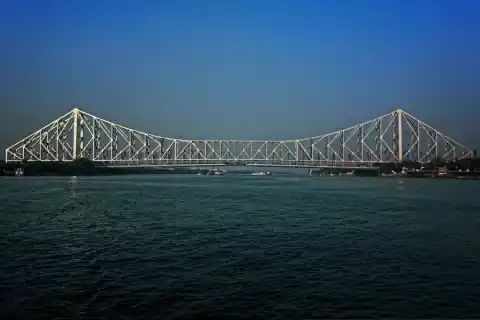
Howrah Bridge — Note that the bridge is a designated sensitive structure and photography from certain points is officially restricted; check signage and be aware of the rules. Views from the Hooghly ferry and from Mullick Ghat flower market at dawn are the classic compositions.

Mullick Ghat Flower Market — Beneath Howrah Bridge, at its most vivid between roughly 5am and 8am. Dense colour, movement and character. One of the best street photography locations in India. Be respectful and ask before close portraits.

Kumartuli — The idol-makers' workshops in north Kolkata. In the weeks before Durga Puja, hundreds of clay figures in various stages of completion, with artisans at work. Extraordinary subject matter. A small tip or purchase is appropriate.

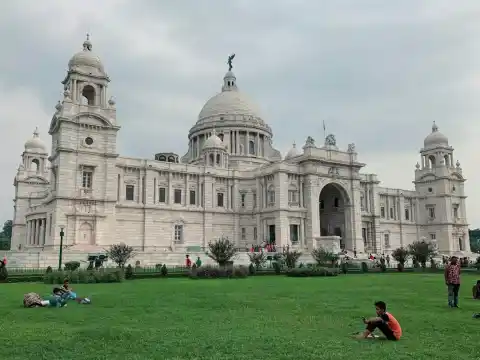
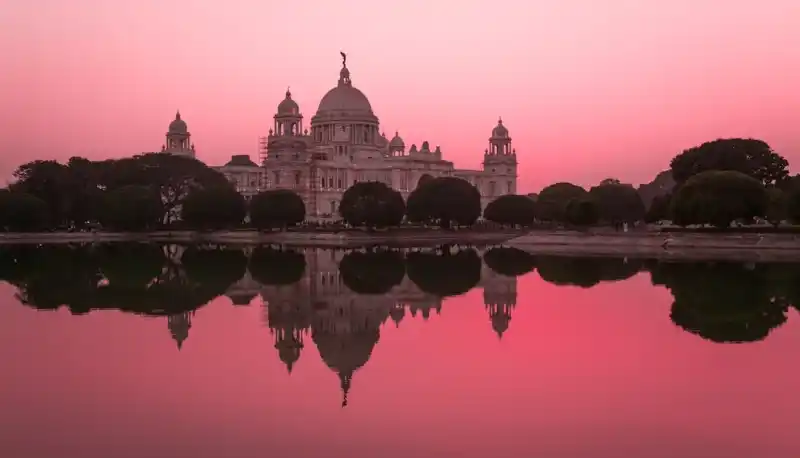
Victoria Memorial — White marble against gardens, with reflections in the surrounding water. Best in early morning or at sunset, and illuminated after dark.

North Kolkata lanes — Crumbling mansions, wrought-iron balconies, narrow alleys and everyday life. Shobhabazar, Bagbazar and Jorasanko areas. Early morning gives the best light and quietest streets.

Dalhousie Square (BBD Bagh) — Colonial administrative architecture around a central tank — the Writers' Building, the GPO, and surrounding structures.

South Park Street Cemetery — Overgrown Georgian and Victorian funerary monuments, obelisks and mausolea in dappled light. Atmospheric and quiet.

Prinsep Ghat and the riverfront at sunset — The restored colonial pavilion and boats on the Hooghly.

Kolkata trams — The last trams in India, best photographed on the older routes with period buildings behind.

College Street — Stacked books, tiny stalls, and the Indian Coffee House interior with its high ceilings and old-world atmosphere.

Durga Puja pandals — If you're visiting in autumn, the pandals themselves are designed artworks and are exceptional subjects. Extremely crowded, so go early in the morning when possible.

Tangra and Tiretti Bazaar — Chinatown, particularly the early-morning Chinese breakfast market at Tiretti.

📅 Suggested Itinerary

Two days — the essentials

Day 1 — Colonial Kolkata and the centre

  1. Early morning: Mullick Ghat flower market beneath Howrah Bridge, then a ferry across the Hooghly
  2. Mid-morning: Dalhousie Square (BBD Bagh) colonial architecture
  3. Late morning: Indian Museum
  4. Lunch: Bengali thali or Kolkata biryani
  5. Afternoon: Victoria Memorial and St. Paul's Cathedral
  6. Late afternoon: South Park Street Cemetery
  7. Evening: Park Street — dinner at one of the older establishments

Day 2 — Temples, books and the river

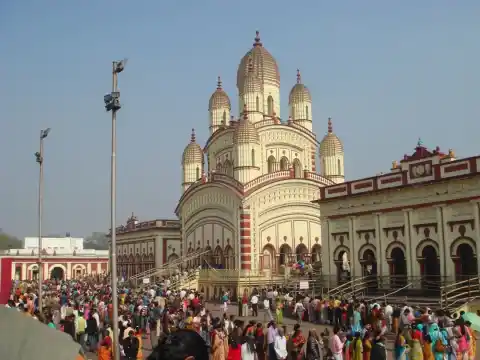
  1. Morning: Dakshineswar Kali Temple, then ferry or bridge across to Belur Math
  2. Lunch: local Bengali restaurant
  3. Afternoon: College Street book market and the Indian Coffee House
  4. Late afternoon: Kumartuli potters' quarter
  5. Evening: Prinsep Ghat at sunset, then a kathi roll and dinner

Four days

Days 1 and 2 as above.

Day 3 — South Kolkata and food

  1. Morning: Kalighat Kali Temple
  2. Late morning: Mother House, Missionaries of Charity
  3. Lunch: Tangra Chinatown for Indian-Chinese
  4. Afternoon: Gariahat shopping — sarees, Kantha work
  5. Evening: Bengali sweets tour, then a cultural performance at Nandan or the Academy of Fine Arts

Day 4 — Across the river and out

  1. Morning: Indian Botanic Garden, Shibpur, for the Great Banyan Tree
  2. Lunch: Howrah side or back in the city
  3. Afternoon: Marble Palace (check permit requirements in advance), then north Kolkata walking
  4. Evening: tram ride, then dinner

One week

Add a Sundarbans trip (2–3 days, organised, with boat-based accommodation, for mangroves and the possibility of tiger sightings) and/or Shantiniketan (2 days, Tagore's university town, about 4 hours north).

🌑 What to Pack

Clothing by season:

November to February. Comfortable daytime clothing plus a light jacket or sweater for mornings and evenings, when temperatures can drop to the low teens. This is the most comfortable season and needs the least specialist packing.

March to June. The lightest cotton and linen you own — humidity is the issue, not just temperature. Multiple changes of clothing, as you will sweat through them. Sun hat, sunglasses, high-SPF sunscreen.

June to September (monsoon). A good umbrella (essential, not optional), quick-dry clothing, waterproof bags or dry-bags for cameras and phones, and footwear you can walk through standing water in and that will dry. Sandals often work better than shoes. Waterlogging is routine.

Year-round essentials:

  1. Comfortable walking shoes — Kolkata is a walking city and pavements are uneven
  2. Slip-on shoes for temple visits
  3. Modest clothing for religious sites — shoulders and knees covered; head covering useful at some sites
  4. Mosquito repellent — important, particularly during and after the monsoon; dengue occurs
  5. Hand sanitiser and tissues
  6. Reusable water bottle
  7. Universal adapter — 230V, 50Hz, Type C, D and M sockets
  8. Basic medication — oral rehydration salts, stomach remedies, prescriptions with copies
  9. A light scarf — useful for sun, dust, temple visits and over-cold air conditioning
  10. Documents — passport, visa, printed copies stored separately, insurance details

If visiting during Durga Puja: comfortable shoes above everything, as you will walk a great deal in crowds. A small crossbody bag worn in front. Patience.

Hospitals

Kolkata has a long medical tradition and a good range of both government teaching hospitals and modern private facilities.

Major private hospitals:

  1. Apollo Multispeciality Hospitals (formerly Apollo Gleneagles), Salt Lake — large private multi-speciality with international patient services
  2. AMRI Hospitals — several branches including Dhakuria, Salt Lake and Mukundapur
  3. Medica Superspecialty Hospital, Mukundapur — large private multi-speciality
  4. Fortis Hospital, Anandapur — multi-speciality
  5. Belle Vue Clinic, Loudon Street — long-established private hospital, centrally located
  6. Woodlands Multispeciality Hospital, Alipore — established private hospital in south Kolkata

Government hospitals:

  1. SSKM Hospital (Institute of Post Graduate Medical Education and Research), Bhowanipore — the principal government hospital and teaching institution, centrally located
  2. Calcutta Medical College and Hospital, College Street — one of the oldest medical colleges in Asia, founded 1835
  3. R.G. Kar Medical College and Hospital, north Kolkata
  4. NRS Medical College and Hospital, Sealdah

Practical advice. Belle Vue and Woodlands are convenient for visitors staying centrally or in south Kolkata; the larger private facilities in Salt Lake and Mukundapur are further out but more comprehensive. Private hospitals require payment or insurance confirmation upfront. Ensure travel insurance covers medical treatment. Pharmacies are widespread, with 24-hour options near the major hospitals. Dengue is a genuine seasonal risk after the monsoon — use repellent and seek medical attention for persistent high fever.

Emergency Numbers


  1. 112 — National emergency number (police, fire, ambulance)
  2. 100 — Police
  3. 101 — Fire and rescue
  4. 102 — Ambulance
  5. 1090 — Kolkata Police helpline (verify current number locally)
  6. 1091 — Women's helpline
  7. 1098 — Childline (child protection)
  8. 1363 — Tourist helpline (national, multilingual)
  9. 1073 — Traffic police helpline


💡 Travel Tips

Language. Bengali is the state language and is spoken by almost everyone. Hindi is widely understood, and English is common in hotels, restaurants and among educated Kolkatans — the city has a strong English-language tradition. Communication is rarely a problem. "Nomoshkar" (hello) and "dhonnobad" (thank you) are appreciated.

Kolkata is a walking city. More than Delhi or Mumbai, the way to experience it is on foot — the architecture, the street life and the neighbourhood texture only register at walking pace. Wear proper shoes and accept uneven pavements.

Howrah Bridge photography. The bridge is designated a sensitive structure and photography from certain points is officially restricted. Be aware of signage and don't assume it's fine. Views from the ferry are both legal and better.

Which station? Howrah and Sealdah are on opposite sides of the river and a long way apart. Check your ticket carefully and allow substantial time if you need to get between them.

Durga Puja planning. If visiting during the festival, book accommodation months in advance, expect prices to rise sharply, and accept that moving around will be slow. Go to Kumartuli beforehand. Wear comfortable shoes. It is worth every inconvenience.

Kalighat temple caution. As at many major pilgrimage temples, unofficial "guides" and priests may attach themselves to you and demand substantial payment. Be polite but firm, agree any amount in advance, or decline assistance entirely.

New Market touts. Persistent and numerous. A firm, repeated "no thank you" works; engaging in conversation does not.

Food safety. Kolkata street food is excellent and generally safe from busy stalls with high turnover. Puchka and kathi rolls are worth trying. Avoid raw items and standing water, and stick to sealed bottled or filtered water.

Waterlogging in monsoon. Streets flood quickly and can become impassable during heavy rain. Don't schedule tightly between June and September, and be prepared to change plans.

Air conditioning and temperature swings. Interiors are often aggressively cold while outside is hot and humid. A light layer helps.

Money. ATMs widespread, cards accepted at established businesses, UPI dominant. Carry cash for street food, taxis, markets and ferries.

Bargaining. Expected at New Market, Gariahat and street stalls; not in emporia, malls or restaurants.

Politics and conversation. Kolkatans talk about politics, film and football with real seriousness and enjoy debate. Engaging is welcomed; being dismissive is not. Football rivalries (Mohun Bagan and East Bengal) are taken very seriously.

Connectivity. Good coverage across the city. Buy a local SIM on arrival with passport and visa copies plus a photo.

Budget Guide

Approximate per-person daily costs in Indian rupees, excluding international flights. Kolkata is one of the cheaper Indian metros.

Budget traveller — ₹1,200 to ₹2,500 per day

  1. Accommodation: ₹500–1,200 (hostel dorm, budget guesthouse; the Sudder Street area is the traditional backpacker district)
  2. Food: ₹300–550 (street food, kathi rolls, Bengali home-style restaurants, sweets — extremely good value)
  3. Transport: ₹120–300 (metro, buses, ferries — all very cheap)
  4. Sightseeing: ₹150–400 (many sites free or low-cost)

Mid-range — ₹3,000 to ₹6,500 per day

  1. Accommodation: ₹1,800–4,500 (three-star hotel, boutique property, heritage hotel)
  2. Food: ₹700–1,500 (restaurants, Park Street establishments, Tangra Chinese)
  3. Transport: ₹400–1,000 (app cabs plus metro)
  4. Sightseeing and activities: ₹500–1,000

Luxury — ₹10,000 and upward per day

  1. Accommodation: ₹6,000–20,000+ (five-star hotels, including grand colonial-era properties)
  2. Food: ₹2,000–4,500 (fine dining)
  3. Transport: ₹2,000–3,500 (private car with driver)
  4. Activities: guided heritage walks, private tours, Sundarbans excursions

Specific costs to plan around:

  1. Airport to city by prepaid taxi or app cab: roughly ₹350–700
  2. Metro journey: ₹5–25 — among the cheapest urban transport in India
  3. Hooghly ferry crossing: nominal, a few rupees
  4. Tram ride: nominal
  5. Kathi roll: ₹60–150
  6. Puchka: ₹20–50 for a portion
  7. Kolkata biryani: ₹200–450
  8. Bengali thali at a mid-range restaurant: ₹300–700
  9. Victoria Memorial entry: low for Indian nationals, higher for foreign nationals
  10. Indian Museum entry: modest, higher for foreign nationals
  11. Sundarbans 2-night organised trip: ₹6,000–15,000 depending on standard
  12. Durga Puja period accommodation: expect 2–3x normal rates

Money-saving notes. Kolkata is exceptional value for food — street food and small Bengali restaurants cost very little and are better than most hotel dining. The metro, trams and ferries are all almost free. Durga Puja pandals are free to enter. Walking the colonial districts costs nothing and is one of the best things to do in the city.

Good to know

Frequently Asked Questions about Kolkata

What is the best time to visit Kolkata?
October to March is the best time. November to February has the most comfortable weather — mild, dry and low humidity. Durga Puja in late September or October is the most spectacular time to visit, though crowds are enormous and accommodation must be booked months ahead.
When is Durga Puja and is it worth planning around?
Durga Puja usually falls in late September or October, running five main days. It is absolutely worth planning around — thousands of elaborate artist-designed pandals across the city, free to enter, with the whole city awake through the night. It was inscribed on UNESCO's Intangible Cultural Heritage list in 2021. Book accommodation months in advance.
How many days do you need in Kolkata?
Two days covers the main sights — Victoria Memorial, Howrah Bridge, Dakshineswar, College Street and the colonial centre. Three to four days lets you add south Kolkata, Tangra Chinatown, the Botanic Garden and more walking, which suits the city much better.
Which airport serves Kolkata?
Netaji Subhas Chandra Bose International Airport (CCU) at Dum Dum, about 17 km northeast of the centre. It is eastern India's main airport with comprehensive domestic routes and international connections to Southeast Asia, the Middle East, Bangladesh, Nepal and Bhutan.
Which railway station will my train arrive at in Kolkata?
Check carefully — Howrah Junction is the largest and sits across the river on the west bank, while Sealdah is in the city proper on the east bank. Kolkata (Chitpur) and Shalimar serve additional routes. Howrah and Sealdah are far apart and getting between them takes time.
Is Kolkata safe for tourists?
Kolkata is generally considered one of India's safer and friendlier large cities, and visitors frequently comment on the warmth of people. Normal urban precautions apply. Watch for persistent touts at New Market and unofficial guides at Kalighat temple, but serious crime against tourists is uncommon.
Can I photograph Howrah Bridge?
Be careful. The bridge is designated a sensitive structure and photography from certain points is officially restricted. Check signage and don't assume it is permitted. Views from the Hooghly ferry or Mullick Ghat flower market are both better compositions and less problematic.
What food is Kolkata famous for?
Bengali cuisine built on fish and mustard — macher jhol, shorshe ilish (hilsa in mustard), chingri malaikari (prawns in coconut). Also kosha mangsho, Kolkata biryani with its distinctive potato, the kathi roll which was invented here, puchka, and an outstanding sweet tradition including rosogolla, sandesh and mishti doi.
What makes Kolkata biryani different?
It includes a large potato, and often a boiled egg, alongside the meat — not as filler but as a defining feature, traced to the Awadhi court in exile at Metiabruz. It is also more lightly spiced and aromatic than Hyderabadi biryani.
What is nolen gur and when can I try it?
Nolen gur is date-palm jaggery, available only in winter, roughly December to February. It transforms every sweet made with it, and nolen gur sandesh is one of the great seasonal foods in India. If you visit in winter, seek it out specifically.
Is there good Chinese food in Kolkata?
Yes — Kolkata has India's only significant Chinatown at Tangra, settled by Hakka Chinese from the 18th century. Indian-Chinese cuisine essentially originates here and Tangra remains the best place in India for it. Tiretti Bazaar has a famous early-morning Chinese breakfast market.
What is College Street?
The largest second-hand book market in the world, stretching along the street around Presidency University and Calcutta University. The Indian Coffee House upstairs has been a centre of intellectual and political argument since the 1940s and is a Kolkata institution.
Does Kolkata still have trams?
Yes — Kolkata is the only Indian city that still operates trams, running since 1902. The surviving network is small and slow, but riding one is an experience worth having for its own sake rather than for efficiency.
Is the Kolkata Metro good?
It is India's oldest metro, opened in 1984, and the north-south line is fast, cheap and useful. Newer lines including the east-west corridor have opened in stages, with an under-river section beneath the Hooghly. Coverage doesn't reach everywhere but where it runs it beats road transport comfortably.
How do I visit the Sundarbans from Kolkata?
The Sundarbans are about 3-4 hours away and best done as an organised two or three-day trip with boat-based accommodation. It is the world's largest mangrove forest, a UNESCO World Heritage Site and a tiger reserve. Day trips are not really practical.
What should I buy in Kolkata?
Bengali handloom sarees — Tant, Baluchari, Jamdani — plus Kantha embroidery, Dokra tribal metalwork, Bishnupur terracotta, Shantiniketan leather, Darjeeling tea and books from College Street. Dakshinapan has fixed-price state emporia if you dislike bargaining.
How humid does Kolkata get?
Very. Humidity is high for most of the year and is the defining discomfort from March through September, making the heat feel considerably worse than the temperature suggests. November to February is the only genuinely comfortable stretch.
Does Kolkata flood?
Yes, routinely during heavy monsoon rain. The city is flat and sits barely above sea level in the Ganges delta, so streets waterlog quickly and traffic gets badly disrupted. Don't schedule tightly between June and September.
Is Kolkata expensive?
It is one of the cheaper Indian metros. Budget travellers manage on ₹1,200-2,500 a day, mid-range on ₹3,000-6,500, luxury from ₹10,000 upward. Food and transport in particular are exceptional value — metro rides cost a few rupees and street food is excellent.
Where should I stay in Kolkata?
Park Street and the central area are convenient for sightseeing and restaurants. Sudder Street is the traditional budget backpacker district. Ballygunge and Alipore in south Kolkata are quieter and more residential. Salt Lake and New Town are modern but far from the historic centre.
What is Kumartuli and should I visit?
Kumartuli is the traditional potters' quarter in north Kolkata where the Durga idols are made. Visiting in the weeks before Durga Puja, when hundreds of clay idols are in various stages of completion and artisans are at work, is one of the most rewarding things you can do in the city.
Can I visit Marble Palace?
Marble Palace is a 19th-century mansion still privately occupied, filled with Western sculpture, paintings and Victorian objects. Permission or a permit is typically required to visit, so check current arrangements in advance rather than turning up.
What is Belur Math?
The headquarters of the Ramakrishna Mission, founded by Swami Vivekananda, on the west bank of the Hooghly. The main temple deliberately combines Hindu, Islamic, Buddhist and Christian architectural elements to express religious unity. Calm, well-maintained riverside grounds, usually combined with Dakshineswar across the river.
Is Kolkata good for walking?
It is the best major Indian city for walking. The colonial architecture, north Kolkata's lanes and the central district only really register at walking pace. Pavements are uneven so wear proper shoes, and stick to the cooler months for extended walking.
Do I need vaccinations for Kolkata?
Consult a travel clinic before departure. Hepatitis A and typhoid are commonly recommended for India. Mosquito-borne dengue is a genuine seasonal risk after the monsoon, so bring repellent and seek medical attention for persistent high fever.
Is Kolkata cyclone-prone?
West Bengal is exposed to cyclones tracking up the Bay of Bengal, mainly between April and June and again in October and November. Check advisories if travelling in those windows, though direct impacts on the city are occasional rather than routine.

Ready to book your stay in Kolkata?

Browse verified, admin-reviewed guest houses with real photos and honest prices.

← Back to overview Book guest house in Kolkata