HomeDelhi › Travel Guide
The complete guide

Delhi Travel Guide

Everything you need to plan your trip to Delhi, Delhi (National Capital Territory).

← Back to Delhi overview & guest houses
📑Jump to a section

Introduction to Delhi

Delhi has been the seat of power in northern India, on and off, for close to a thousand years. It is a city that has been destroyed and rebuilt repeatedly, and rather than erase what came before, each new ruler tended to build alongside it. The result is an urban landscape where a Sultanate-era tomb can sit in the middle of a residential colony and a Mughal fort faces a metro station.

Administratively, Delhi is a National Capital Territory containing both Old Delhi — the walled Mughal city of Shahjahanabad — and New Delhi, the planned capital the British built in the early twentieth century. Around and beyond them sprawls the modern metropolis, extending into the satellite cities of Gurugram, Noida and Faridabad.

For visitors, Delhi is usually the first or last stop in India, and often both. This guide covers when to visit, how to navigate a city this large, what to see and eat, and how to handle the practical realities — the air quality, the heat, the scams — that catch first-timers out.

History

Delhi's history stretches back to at least the sixth century BCE, and tradition associates the site with Indraprastha, the capital in the Mahabharata. Archaeological evidence confirms continuous settlement over an extraordinarily long period.

The medieval city took shape with the Tomara and Chauhan Rajputs, whose citadel at Lal Kot and Qila Rai Pithora formed the first of what are traditionally counted as Delhi's seven cities. In 1192, Muhammad of Ghor defeated Prithviraj Chauhan, and his general Qutb-ud-din Aibak established the Delhi Sultanate, beginning the Qutub Minar in 1199.

Successive Sultanate dynasties — Slave, Khilji, Tughlaq, Sayyid and Lodi — each built their own fortified capitals, leaving behind Siri, Tughlaqabad, Jahanpanah and Firozabad, whose ruins are scattered across the modern city.

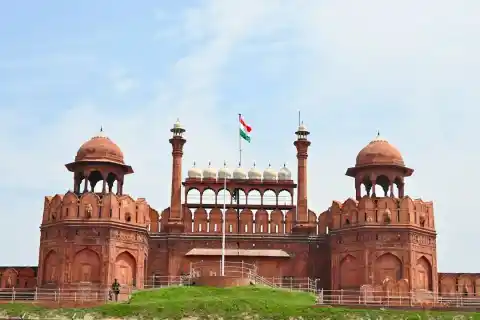
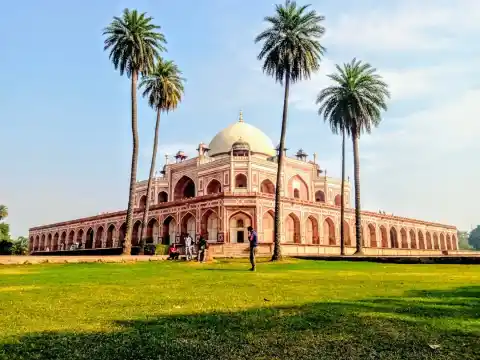
The Mughals arrived in 1526 with Babur's victory at Panipat. Humayun's Tomb, completed in the 1570s, introduced the garden-tomb form that would culminate in the Taj Mahal. Shah Jahan moved the Mughal capital from Agra to Delhi in 1638 and built Shahjahanabad — the walled city known today as Old Delhi — with the Red Fort as its palace-fortress and Jama Masjid as its congregational mosque.

Mughal power declined through the eighteenth century, with devastating invasions by Nadir Shah in 1739 and later the Afghans. The British took control after 1803, and Delhi was central to the Revolt of 1857, after which the last Mughal emperor was exiled and the city heavily damaged.

In 1911 the British moved the capital from Calcutta to Delhi, commissioning Edwin Lutyens and Herbert Baker to design New Delhi — the wide avenues, Rashtrapati Bhavan and the Secretariat buildings. It was inaugurated in 1931.

Partition in 1947 transformed the city's demography, as huge numbers of Hindu and Sikh refugees arrived from West Punjab and much of the Muslim population left. Delhi has expanded enormously since, becoming one of the world's largest urban agglomerations.


Geography

Delhi sits in northern India on the west bank of the Yamuna, on the Indo-Gangetic plain, at an elevation of roughly 200–250 metres above sea level. It is landlocked, roughly 1,000 km from the nearest coast, which is central to its extreme continental climate.

The dominant natural feature is the Delhi Ridge, the northernmost extension of the Aravalli Range — one of the oldest mountain systems in the world. The Ridge runs through the city in several sections and carries most of Delhi's remaining forest cover, acting as a green lung and a partial barrier against desert winds from Rajasthan.

The Yamuna enters from the north and runs along the eastern edge of the city before continuing south to join the Ganges at Prayagraj. Its Delhi stretch is severely polluted. The floodplain, known as the Yamuna Khadar, is low-lying and floods during heavy monsoon years.

The terrain is otherwise mostly flat alluvial plain. Delhi shares borders with Haryana on three sides and Uttar Pradesh to the east, and the built-up area has long since spilled across those boundaries into the National Capital Region.

Delhi's inland position, combined with the Thar Desert to the southwest and the Himalayas to the north, produces both very hot summers and genuinely cold winters — and, critically, winter temperature inversions that trap pollutants over the city.


Climate

Delhi has a humid subtropical climate with extreme seasonal variation — one of the widest annual temperature ranges of any major world city.

Summer (April to June) is severe. Temperatures routinely exceed 40°C, and May and June frequently see readings above 45°C. Hot, dry winds known as the loo blow in from the desert during the afternoons and can be dangerous. Humidity is low, which makes the heat marginally more bearable than coastal cities, but the absolute temperatures are much higher.

Monsoon (late June to September) brings relief and heavy rain. The southwest monsoon typically arrives at the end of June. Rainfall is concentrated in July and August. Humidity rises sharply, and while temperatures drop from their summer peak they remain warm. Waterlogging and traffic disruption are routine during heavy spells.

Post-monsoon (October to November) is pleasant in temperature but problematic for air quality. As the monsoon withdraws, temperatures moderate to comfortable levels. However, this period coincides with crop-residue burning in neighbouring states, Diwali fireworks and the onset of winter temperature inversions, and Delhi's air quality frequently deteriorates to hazardous levels, particularly in November.

Winter (December to February) is genuinely cold by Indian standards, with January the coldest month. Night temperatures can fall to a few degrees above freezing, occasionally lower. Dense fog is common in December and January and regularly disrupts flights and trains. Air quality remains poor through much of the winter.

Spring (February to March) is brief and probably the single most pleasant stretch of the year — mild temperatures, clearer air than midwinter, and gardens in bloom.


🌞 Best Time to Visit

October to March is the best time to visit Delhi, with February and March arguably the sweet spot.

October offers warm, dry, pleasant weather as the monsoon retreats, and coincides with Durga Puja, Dussehra and often Diwali — the city at its most festive. The trade-off is that air quality begins to deteriorate towards the end of the month.

November to January is peak tourist season and the temperatures are ideal for sightseeing, but this is also when Delhi's air is at its worst and when fog disrupts travel most. Many visitors still choose this window and manage fine, but it is worth going in aware.

February and March combine mild temperatures, improving air quality and blooming gardens, with fewer of the winter's disruptions. Holi usually falls in March. For many travellers this is the best compromise.

Avoid April to June. The heat is extreme and genuinely limits what you can do.

July to September is workable if you don't mind rain and humidity. Prices are lower, crowds thinner, and the monuments look their best against green surroundings. Waterlogging is the main practical problem.

A note on festivals. Diwali (October or November) is spectacular but comes with the worst air quality of the year and heavy crowds. Holi (March) is enormous fun but be prepared to get thoroughly covered in colour, and note that many businesses close.


Weather

October to March — the travel season. Daytime temperatures range from comfortable in October (upper 20s to low 30s) down to cool in December and January (mid-to-high teens by day, sometimes near freezing at night). Rain is minimal. This is the only period when full-day outdoor sightseeing is comfortable. Pack genuine warm clothing for December and January — visitors regularly underestimate how cold Delhi gets.

Fog in December and January. Dense morning fog is common and frequently delays or cancels flights and trains, sometimes for many hours. If travelling in this window, build slack into your itinerary and avoid tight connections.

April to June — extreme heat. Temperatures above 40°C are normal, and above 45°C not unusual in May and June. The dry loo winds make afternoons hazardous. Sightseeing should be confined to early morning and evening. Heatstroke is a genuine risk.

July to September — monsoon. Heavy rain, high humidity, temperatures in the low-to-mid 30s. Monuments are green and photogenic, crowds thinner and prices lower, but waterlogging disrupts travel and humidity is draining.

Air quality — a real planning factor. Delhi's air quality is poor for much of the year and frequently severe between late October and January. If you have asthma or a respiratory condition, this should influence when you visit. Check the AQI before and during your trip; consider N95 masks on bad days. February to April and the monsoon months generally have better air than the late-autumn and winter peak.


✈ How to Reach Delhi

By air. Indira Gandhi International Airport (DEL) is India's busiest airport and the country's principal international gateway, roughly 16 km southwest of central Delhi. It has three terminals — Terminal 3 handles most international and many domestic flights, Terminal 1 handles domestic low-cost carriers, and Terminal 2 handles additional domestic traffic. Free inter-terminal shuttles run, but allow time, as the terminals are not close together.

Getting into the city:

  1. Airport Express Metro (Orange Line) — the fastest and best-value option, connecting Terminal 3 to New Delhi Railway Station in around 20–25 minutes for a modest fare. Runs roughly 5:20am to 11:30pm, every 10–15 minutes. Terminal 1 is served by the Magenta Line.
  2. App cabs (Uber, Ola) — readily available; 45 minutes to over an hour depending on traffic and destination
  3. Prepaid taxis — booked at official counters inside the terminal; use these rather than accepting offers from touts

By train. Delhi is India's largest rail hub, with four major stations:

  1. New Delhi (NDLS) — the main station, centrally located near Connaught Place and Paharganj, connected to the Airport Express and Yellow Line metro
  2. Old Delhi / Delhi Junction (DLI) — near Chandni Chowk
  3. Hazrat Nizamuddin (NZM) — serves many trains heading south
  4. Anand Vihar (ANVT) — serves eastern routes

Fast, comfortable trains connect Delhi to Agra (Gatimaan and Shatabdi services, around 100 minutes), Jaipur, Amritsar, Lucknow, Varanasi and Chandigarh. Book through IRCTC well in advance for good classes.

By road. Delhi is the hub of India's national highway network. Three main interstate bus terminals operate: Kashmere Gate ISBT (the largest, serving north and west), Anand Vihar ISBT (east) and Sarai Kale Khan ISBT (south).

The Yamuna Expressway to Agra and the Delhi–Meerut Expressway have cut journey times considerably. Agra is around 3–4 hours by road, Jaipur around 5 hours, Chandigarh around 4–5 hours.


🚗 Local Transport

Delhi Metro is the best urban transport system in India and should be your default. It is extensive, clean, air-conditioned, cheap, punctual and safe, covering almost everywhere a visitor needs to go across multiple colour-coded lines. Buy a smart card on arrival rather than queuing for tokens each trip. Every train has a women-only carriage at one end. Avoid peak hours (roughly 8:30–10:30am and 5:30–8pm) if you can — trains get extremely crowded.

App cabs. Uber and Ola operate throughout Delhi and the NCR. Reliable and the easiest option for door-to-door journeys, luggage, or late nights.

Auto-rickshaws. Everywhere, and useful for short hops the metro doesn't cover. Meters are often refused — agree a fare beforehand or use the app-based auto option, which avoids the negotiation entirely.

Cycle rickshaws. The only sensible way to navigate the narrow lanes of Old Delhi around Chandni Chowk. Cheap; agree the fare first.

Buses. DTC runs an extensive network including air-conditioned services. Very cheap but harder for visitors to navigate.

Hired car with driver. Worth considering for day trips to Agra or for a full day covering scattered monuments. Widely available through hotels and operators.

Practical notes.

  1. Delhi is very large and traffic is heavy. A cross-city journey can take well over an hour at peak times. The metro is often dramatically faster than road.
  2. Air pollution is worst in traffic; the metro also limits your exposure.
  3. Do not accept unsolicited offers of transport or "official tourist office" help at the airport or New Delhi station — this is a well-established scam pattern.


🚆
Railway
New Delhi (NDLS), Old Delhi (DLI), Hazrat Nizamuddin (NZM) and Anand Vihar (ANVT); New Delhi station is the main hub
✈️
Airport
Indira Gandhi International Airport (DEL), approx. 16 km southwest of the centre, India's busiest airport with three terminals
🚌
Bus
Kashmere Gate ISBT (main), plus Anand Vihar ISBT and Sarai Kale Khan ISBT

Top Tourist Places in Delhi

Red FortQutub MinarHumayun's TombIndia GateJama MasjidLotus TempleAkshardham TempleGurudwara Bangla SahibRashtrapati BhavanSafdarjung TombNational MuseumLodhi GardensChandni ChowkRaj GhatHauz Khas ComplexAgrasen ki Baoli

🛍 Shopping

Dilli Haat — An open-air crafts and food market with rotating stalls from across India's states. Fixed-ish prices, good quality, and the easiest single place to buy regional handicrafts. There are branches at INA and elsewhere.

Chandni Chowk — Old Delhi's market district, subdivided into specialist lanes. Kinari Bazaar for trimmings and wedding materials, Dariba Kalan for silver, Nai Sarak for books and stationery, Khari Baoli for spices (Asia's largest spice market, a genuine sensory experience). Crowded and intense; go in the morning.

Janpath and Connaught Place — Street stalls on Janpath sell clothing, jewellery and handicrafts at negotiable prices; Connaught Place's inner and outer circles carry established brands and long-running stores.

Sarojini Nagar — Delhi's best-known bargain market for clothing, much of it export surplus. Extremely cheap if you're willing to dig and haggle. Very crowded at weekends.

Karol Bagh — Large general market, strong for clothing, electronics and jewellery.

Lajpat Nagar Central Market — Popular for textiles, ethnic wear and household goods.

Government emporia on Baba Kharak Singh Marg — Each Indian state runs an emporium here selling authentic regional crafts at fixed prices. Reliable quality, no bargaining, excellent for carpets, textiles, wood and metalwork.

Khan Market — Upmarket, with bookshops, boutiques, cafés and speciality food.

Malls — Select Citywalk in Saket, DLF Promenade and Emporio in Vasant Kunj cover international brands. Emporio is the luxury end.

What to buy — Textiles and pashmina, carpets and dhurries, silver jewellery, brass and copper, marble inlay work, spices, tea, and miniature paintings.

Caution — Be sceptical of anyone who offers to take you to a "government emporium" that isn't on Baba Kharak Singh Marg, and of extremely cheap "pashmina". Commission-driven shop touts are common around tourist areas.


🍴 Local Food

Delhi's food is a product of its history — Mughal court cooking, Punjabi refugee cuisine after Partition, and street food traditions that go back centuries, plus regional food from every part of India.

Old Delhi street food is the essential experience:

  1. Parathas — stuffed flatbreads fried in ghee, the speciality of Paranthe Wali Gali in Chandni Chowk
  2. Chaat — the broad family of savoury snacks: golgappa (pani puri), aloo tikki, papdi chaat, dahi bhalla
  3. Kebabs and korma — the Muslim quarter around Jama Masjid, particularly Matia Mahal, is the place for seekh kebabs, nihari and biryani
  4. Jalebi and rabri — hot, syrup-soaked spirals with thickened milk
  5. Daulat ki chaat — a winter-only aerated milk-foam dessert found in Old Delhi, worth seeking out if you visit between roughly December and February

Punjabi and North Indian standards — butter chicken, dal makhani, chole bhature, rajma chawal, tandoori breads. Delhi does these better and more consistently than almost anywhere.

Mughlai cuisine — rich, meat-heavy dishes descended from the imperial kitchens: korma, nihari, haleem, biryani.

Chole bhature — spiced chickpeas with a large fried bread, the classic Delhi breakfast or lunch.

Butter chicken and dal makhani — both credited to Delhi restaurants in the years after Partition.

Momos — Tibetan-origin dumplings, now completely naturalised as Delhi street food and available everywhere.

Regional food. Because people from every Indian state live in Delhi, you can eat South Indian, Bengali, Kashmiri, Naga, Rajasthani and Gujarati food at a high standard. Bengali Market, Pandara Road and the various state bhawan canteens are good hunting grounds — the state bhawan canteens in particular serve authentic regional food at low prices.

Practical advice for street food. Choose busy stalls with high turnover. Eat freshly cooked hot items rather than anything sitting out. Avoid raw chutneys, salads and tap water at informal stalls, and skip ice. If your stomach isn't used to India, ease in — a guided food walk in Old Delhi is a good way to eat well with less risk.


Festivals

Diwali (October or November) — The festival of lights, and Delhi's biggest. Homes and markets are lit with lamps and lights, sweets are exchanged, and fireworks are set off extensively despite restrictions. Spectacular, but it produces the worst air quality of the year and markets are extremely crowded in the preceding week.

Holi (March) — The spring festival of colour. Delhi celebrates enthusiastically — expect to be covered in coloured powder and water if you are out on the streets. Wear clothes you will throw away, protect your camera, and be aware that some celebrations involve heavy drinking and that women travellers should be cautious in unstructured street settings. Organised events at hotels and venues are a safer way to take part.

Dussehra and Ramlila (September–October) — Ten days of Ramlila performances across the city culminating in the burning of giant Ravana effigies, most famously at the Ramlila Maidan and Red Fort grounds.

Durga Puja (September–October) — Delhi's substantial Bengali community, particularly around Chittaranjan Park, builds elaborate pandals with a strong food and cultural programme.

Republic Day (26 January) — The national parade along Kartavya Path, with military contingents, state tableaux and a flypast. Tickets are required and security is extremely tight; central Delhi is heavily restricted for days beforehand.

Independence Day (15 August) — The Prime Minister addresses the nation from the Red Fort ramparts. Similar security restrictions apply.

Eid — Both Eid al-Fitr and Eid al-Adha are marked substantially, with the area around Jama Masjid at its most vivid. Ramadan evenings around Matia Mahal are one of Delhi's great food experiences.

Guru Nanak Jayanti (November) — Major Sikh celebration, with processions and langar at Bangla Sahib and other gurudwaras.

Qutub Festival and Delhi International Arts Festival — Cultural programming through the cooler months, with classical music and dance performed at monument settings.

Garden tourism. The Mughal Gardens at Rashtrapati Bhavan open to the public for a limited spring window, and the Garden of Five Senses and Lodhi Gardens are at their best in February and March.


Photography Spots

Humayun's Tomb — The best single architectural subject in Delhi. Symmetry, warm red sandstone and formal gardens. Late afternoon light is ideal.

Qutub Minar — The tower needs a wide lens; the surrounding ruins and arched screens of Quwwat-ul-Islam give more interesting compositions than the minaret alone.

Jama Masjid from the southern minaret — Panoramic views over the rooftops of Old Delhi, especially at sunset. There is a small fee to climb and a camera charge.

Chandni Chowk and Old Delhi lanes — Dense street photography — spice markets at Khari Baoli, wedding trimmings at Kinari Bazaar, the rooftops and electrical tangle. Go early morning when the light is soft and the crowds are lighter. Ask before photographing people closely.

Lodhi Gardens — Medieval tombs framed by trees and lawn, with excellent early-morning light and mist in winter.

Agrasen ki Baoli — Strong geometric lines and light-and-shadow patterns down the stepwell. Best in the middle of the day when light reaches the lower steps.

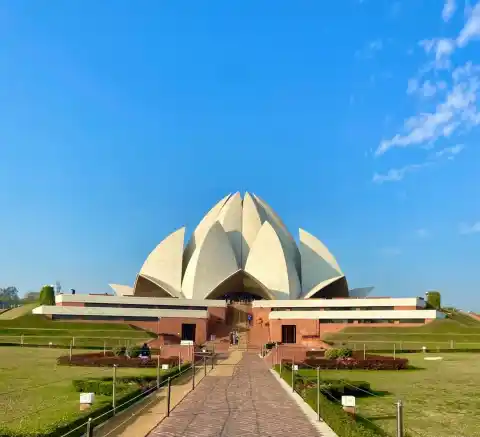
Lotus Temple — Clean white curves against sky; best in the late afternoon. Photography is not permitted inside the prayer hall.

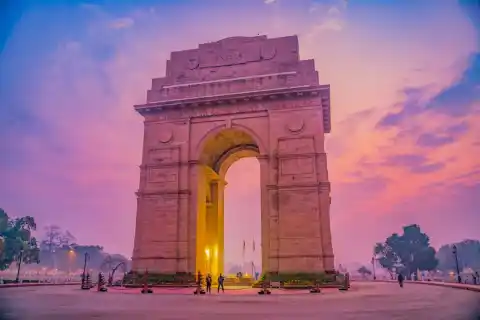
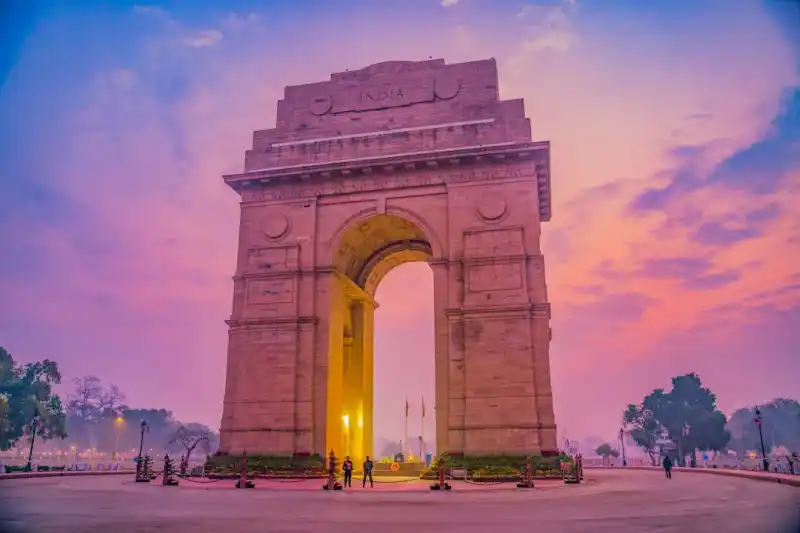
India Gate at dusk — Illuminated arch with crowds and street vendors.

Hauz Khas — The reservoir and ruins at sunset, with the medieval tomb complex reflecting in the water.

Nizamuddin Dargah on Thursday evening — Qawwali performances in an atmospheric setting. Deeply respectful behaviour required; ask permission before photographing, cover your head, and be aware this is a working shrine rather than a tourist site.

Lodhi Art District — Delhi's open-air street-art precinct, with large murals across residential blocks in Lodhi Colony.

Rashtrapati Bhavan and Kartavya Path — The colonial ceremonial axis, best in early morning light with fewer people.


📅 Suggested Itinerary

Two days — the essentials

Day 1 — Old Delhi and Mughal heritage

  1. Morning: Red Fort (closed Mondays)
  2. Late morning: Jama Masjid, then climb the minaret for the view
  3. Lunch: Old Delhi street food — Paranthe Wali Gali or the kebab shops around Matia Mahal
  4. Afternoon: cycle-rickshaw through Chandni Chowk, Khari Baoli spice market
  5. Late afternoon: Raj Ghat
  6. Evening: Gurudwara Bangla Sahib, then dinner in Connaught Place

Day 2 — New Delhi and South Delhi

  1. Morning: Humayun's Tomb
  2. Late morning: Qutub Minar complex
  3. Lunch: Hauz Khas or Saket
  4. Afternoon: Lotus Temple, then the National Museum
  5. Evening: India Gate and Kartavya Path at dusk

Four days

Days 1 and 2 as above.

Day 3 — Agra day trip

  1. Early train (Gatimaan or Shatabdi, around 100 minutes) or car
  2. Taj Mahal (closed Fridays), Agra Fort, and Itmad-ud-Daulah if time allows
  3. Return to Delhi in the evening

Day 4 — Depth and shopping

  1. Morning: Akshardham (closed Mondays; no electronics permitted)
  2. Late morning: Lodhi Gardens and Safdarjung Tomb
  3. Afternoon: shopping — Dilli Haat, state emporia on Baba Kharak Singh Marg, or Sarojini Nagar
  4. Evening: Nizamuddin Dargah for qawwali if it's a Thursday, otherwise Lodhi Art District and dinner in Khan Market


🌑 What to Pack

Seasonal clothing is the key decision.

October to March. Layers. October and March are mild, but December and January are genuinely cold — daytime in the mid-to-high teens, nights sometimes near freezing. Bring a warm jacket, sweater, and consider a scarf and gloves for December and January. Visitors consistently underpack for Delhi winter.

April to June. Lightest possible cotton and linen, long sleeves to protect from the sun, a wide-brimmed hat, high-SPF sunscreen and sunglasses. A cooling towel or scarf helps.

July to September. Quick-dry clothing, an umbrella or light rain jacket, and footwear that copes with waterlogged streets.

Year-round essentials:

  1. Modest clothing for religious sites — shoulders and knees covered. A scarf for covering your head at gurudwaras and dargahs. Robes are provided at Jama Masjid.
  2. Slip-on shoes — you'll remove footwear at temples, mosques and gurudwaras repeatedly
  3. Comfortable walking shoes — Delhi involves a lot of walking on uneven surfaces
  4. N95 masks — genuinely worth carrying between October and February given air quality
  5. Hand sanitiser and tissues — public toilets often lack both
  6. Mosquito repellent — particularly during and after the monsoon
  7. Reusable water bottle, ideally with a filter
  8. Universal adapter — India uses 230V, 50Hz, Type C, D and M sockets
  9. Power bank — long sightseeing days
  10. Medication — prescriptions with a copy, plus oral rehydration salts and basic stomach remedies
  11. Documents — passport, visa, printed copies stored separately, insurance details


Hospitals

Delhi has India's highest concentration of top-tier medical facilities, including both premier government institutions and major private hospital chains.

Government hospitals:

  1. All India Institute of Medical Sciences (AIIMS), Ansari Nagar — India's foremost public medical institution and teaching hospital
  2. Safdarjung Hospital, Ansari Nagar — large government general hospital adjacent to AIIMS
  3. Ram Manohar Lohia Hospital, central Delhi — government hospital near Connaught Place
  4. Lok Nayak Hospital, near Delhi Gate — major government hospital serving Old Delhi

Major private hospitals:

  1. Sir Ganga Ram Hospital, Rajinder Nagar — long-established, comprehensive multi-speciality
  2. Max Super Speciality Hospital, Saket — large private multi-speciality with international patient services
  3. Fortis Escorts Heart Institute, Okhla — cardiac speciality centre
  4. Indraprastha Apollo Hospital, Sarita Vihar — large private multi-speciality
  5. BLK-Max Super Speciality Hospital, Pusa Road
  6. Medanta, Gurugram — major facility just outside Delhi in the NCR


Emergency Numbers

  1. 112 — National emergency number (single point of contact for police, fire and ambulance)
  2. 100 — Police
  3. 101 — Fire and rescue
  4. 102 — Ambulance
  5. 108 — Emergency response service
  6. 1091 — Women's helpline
  7. 181 — Delhi Women's helpline
  8. 1098 — Childline (child protection)
  9. 1363 — Tourist helpline (national, multilingual)
  10. 1073 — Traffic police helpline


💡 Travel Tips


Budget Guide


Good to know

Frequently Asked Questions about Delhi

What is the best time to visit Delhi?
October to March is the best time, with February and March arguably ideal — mild temperatures, improving air quality and blooming gardens. October is pleasant and festive. November to January has the most comfortable temperatures but the worst air quality and fog disruption.
How many days do you need in Delhi?
Two days covers the main monuments — Red Fort, Jama Masjid, Qutub Minar, Humayun's Tomb and India Gate. Three to four days lets you add museums, markets and an Agra day trip, which is the better plan for a first visit.
Which airport serves Delhi?
Indira Gandhi International Airport (DEL), about 16 km southwest of the centre. It is India's busiest airport with three terminals — T3 for most international flights, T1 for domestic low-cost carriers, and T2 for additional domestic traffic.
How do I get from Delhi airport to the city?
The Airport Express Metro (Orange Line) is fastest and best value, reaching New Delhi Railway Station in around 20-25 minutes for roughly ₹50-60. It runs from about 5:20am to 11:30pm. App cabs and prepaid taxis take 45 minutes or more depending on traffic.
Is Delhi's air pollution really that bad?
Yes, and it should factor into your planning. Air quality is poor much of the year and frequently severe from late October to January, when crop burning, Diwali fireworks and winter temperature inversions combine. Check the AQI daily, carry N95 masks, and consider visiting February to April if you have a respiratory condition.
Is Delhi safe for tourists?
Delhi is manageable with sensible precautions. The main risks are scams rather than violence — fake tourist offices, taxi drivers claiming your hotel is closed, and commission-driven shop touts. Use app cabs, book through official prepaid counters, and decline unsolicited help. Women travellers should take extra care at night and use the women-only metro carriage.
What are the common tourist scams in Delhi?
The main ones cluster around New Delhi Railway Station, Paharganj and the airport — people claiming your hotel has closed, fake "government tourist offices" (the real India Tourism office is at 88 Janpath), drivers claiming roads are closed to divert you to shops, and overpriced pashmina or gem schemes. Decline unsolicited assistance and use apps or official counters.
Is the Delhi Metro good for tourists?
It is excellent and should be your default. Extensive, clean, air-conditioned, cheap, punctual and safe, covering almost everywhere a visitor needs. Buy a smart card on arrival. Avoid peak hours (8:30-10:30am and 5:30-8pm). Every train has a women-only carriage.
How cold does Delhi get in winter?
Colder than most visitors expect. December and January daytime temperatures sit in the mid-to-high teens, with nights sometimes near freezing. Bring a proper warm jacket and sweater. Dense fog is also common and frequently delays flights and trains.
How hot does Delhi get in summer?
Extremely hot. April to June regularly exceeds 40°C, with May and June frequently above 45°C. Hot dry loo winds blow in the afternoons and can be dangerous. Sightseeing should be limited to early morning and evening.
Which monuments in Delhi are UNESCO World Heritage Sites?
Three — the Qutub Minar complex, Humayun's Tomb and the Red Fort. All three are worth visiting and can be combined with other sights across two days.
Which days are Delhi monuments closed?
The Red Fort, Lotus Temple and Akshardham all close on Mondays. If day-tripping to Agra, note the Taj Mahal closes on Fridays. Check before finalising your itinerary.
Can I visit Akshardham with my phone?
No. Phones, cameras and most electronics are prohibited inside Akshardham and must be deposited at the entrance. Security is strict and the deposit process takes time, so plan for it.
What food is Delhi famous for?
Old Delhi street food — parathas, chaat, kebabs and jalebi. Punjabi standards like butter chicken, dal makhani and chole bhature, both of which are credited to Delhi restaurants. Mughlai dishes such as korma, nihari and biryani. Delhi also has excellent regional food from every Indian state.
Where should I eat street food in Delhi?
Chandni Chowk in Old Delhi is the classic destination — Paranthe Wali Gali for stuffed breads and Matia Mahal near Jama Masjid for kebabs and biryani. Choose busy stalls with high turnover, eat freshly cooked hot food, and consider a guided food walk for your first visit.
How do I get to Agra from Delhi?
Fast trains like the Gatimaan Express and Shatabdi take around 100 minutes from Hazrat Nizamuddin or New Delhi. By road via the Yamuna Expressway it is roughly 3-4 hours. Day trips are very common. Remember the Taj Mahal is closed on Fridays.
Where should I stay in Delhi?
Connaught Place and central Delhi are convenient for sightseeing and transport. Paharganj is the budget backpacker area near New Delhi station. South Delhi (Hauz Khas, Saket, Greater Kailash) is quieter with better restaurants. Aerocity suits short stays near the airport.
Is alcohol available in Delhi?
Yes, through licensed bars, restaurants, hotels and government-approved shops. Delhi's legal drinking age is 21, reduced from 25 in 2021. Neighbouring Haryana (Gurugram) and Uttar Pradesh (Noida) set their own rules, so check locally if you cross into the NCR. Most bars close by around 1am.
What should I wear in Delhi?
Layers in winter, as it gets genuinely cold. Light cotton and sun protection in summer. Modest dress generally, with shoulders and knees covered at religious sites. Carry a scarf for covering your head at gurudwaras and dargahs, and wear slip-on shoes since you remove footwear frequently.
Do foreign tourists pay more at Delhi monuments?
Yes. Archaeological Survey of India sites including the Red Fort, Qutub Minar and Humayun's Tomb charge foreign nationals significantly more than Indian citizens. Budget for this if visiting several monuments; combined tickets can reduce the total.
Is Delhi expensive?
It spans a wide range. Budget travellers manage on ₹1,500-3,000 a day, mid-range on ₹4,000-9,000, and luxury from ₹15,000 upward. Food and metro travel are very cheap; monument entry for foreign nationals and upmarket hotels are the main costs.
Can I drink tap water in Delhi?
No. Drink only sealed bottled or properly filtered water, and avoid ice at informal establishments. A filter bottle is a good way to cut down on plastic while staying safe.
What is the difference between Old Delhi and New Delhi?
Old Delhi is Shahjahanabad, the 17th-century Mughal walled city — dense, chaotic and home to the Red Fort, Jama Masjid and Chandni Chowk. New Delhi is the planned colonial capital built by the British in the early 20th century, with wide avenues, India Gate and Rashtrapati Bhavan.
Is Holi safe to experience in Delhi?
It is enormous fun but comes with caveats. Expect to be thoroughly covered in colour and water. Wear clothes you will discard, protect electronics, and be aware that street celebrations can involve heavy drinking. Organised events at hotels and venues are a safer and more controlled way to take part, particularly for women travellers.
How far is Jaipur from Delhi?
About 5 hours by road, roughly 280 km. Delhi, Agra and Jaipur together form the Golden Triangle, the classic first-time India circuit, usually done over about a week.
Do I need vaccinations for Delhi?
Consult a travel clinic well before departure. Hepatitis A and typhoid are commonly recommended for India, with others depending on your itinerary. Carry mosquito repellent, as dengue occurs particularly after the monsoon.

Ready to book your stay in Delhi?

Browse verified, admin-reviewed guest houses with real photos and honest prices.

← Back to overview Book guest house in Delhi