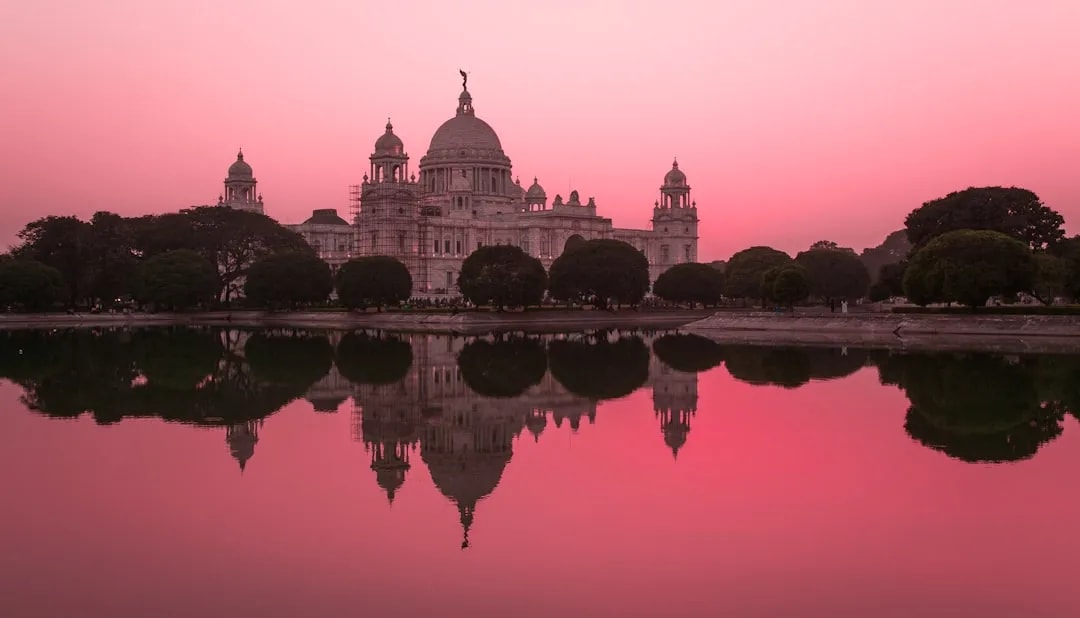
What is the best time to visit Kolkata?
▼
October to March is the best time. November to February has the most comfortable weather — mild, dry and low humidity. Durga Puja in late September or October is the most spectacular time to visit, though crowds are enormous and accommodation must be booked months ahead.
When is Durga Puja and is it worth planning around?
▼
Durga Puja usually falls in late September or October, running five main days. It is absolutely worth planning around — thousands of elaborate artist-designed pandals across the city, free to enter, with the whole city awake through the night. It was inscribed on UNESCO's Intangible Cultural Heritage list in 2021. Book accommodation months in advance.
How many days do you need in Kolkata?
▼
Two days covers the main sights — Victoria Memorial, Howrah Bridge, Dakshineswar, College Street and the colonial centre. Three to four days lets you add south Kolkata, Tangra Chinatown, the Botanic Garden and more walking, which suits the city much better.
Which airport serves Kolkata?
▼
Netaji Subhas Chandra Bose International Airport (CCU) at Dum Dum, about 17 km northeast of the centre. It is eastern India's main airport with comprehensive domestic routes and international connections to Southeast Asia, the Middle East, Bangladesh, Nepal and Bhutan.
Which railway station will my train arrive at in Kolkata?
▼
Check carefully — Howrah Junction is the largest and sits across the river on the west bank, while Sealdah is in the city proper on the east bank. Kolkata (Chitpur) and Shalimar serve additional routes. Howrah and Sealdah are far apart and getting between them takes time.
Is Kolkata safe for tourists?
▼
Kolkata is generally considered one of India's safer and friendlier large cities, and visitors frequently comment on the warmth of people. Normal urban precautions apply. Watch for persistent touts at New Market and unofficial guides at Kalighat temple, but serious crime against tourists is uncommon.
Can I photograph Howrah Bridge?
▼
Be careful. The bridge is designated a sensitive structure and photography from certain points is officially restricted. Check signage and don't assume it is permitted. Views from the Hooghly ferry or Mullick Ghat flower market are both better compositions and less problematic.
What food is Kolkata famous for?
▼
Bengali cuisine built on fish and mustard — macher jhol, shorshe ilish (hilsa in mustard), chingri malaikari (prawns in coconut). Also kosha mangsho, Kolkata biryani with its distinctive potato, the kathi roll which was invented here, puchka, and an outstanding sweet tradition including rosogolla, sandesh and mishti doi.
What makes Kolkata biryani different?
▼
It includes a large potato, and often a boiled egg, alongside the meat — not as filler but as a defining feature, traced to the Awadhi court in exile at Metiabruz. It is also more lightly spiced and aromatic than Hyderabadi biryani.
What is nolen gur and when can I try it?
▼
Nolen gur is date-palm jaggery, available only in winter, roughly December to February. It transforms every sweet made with it, and nolen gur sandesh is one of the great seasonal foods in India. If you visit in winter, seek it out specifically.
Is there good Chinese food in Kolkata?
▼
Yes — Kolkata has India's only significant Chinatown at Tangra, settled by Hakka Chinese from the 18th century. Indian-Chinese cuisine essentially originates here and Tangra remains the best place in India for it. Tiretti Bazaar has a famous early-morning Chinese breakfast market.
What is College Street?
▼
The largest second-hand book market in the world, stretching along the street around Presidency University and Calcutta University. The Indian Coffee House upstairs has been a centre of intellectual and political argument since the 1940s and is a Kolkata institution.
Does Kolkata still have trams?
▼
Yes — Kolkata is the only Indian city that still operates trams, running since 1902. The surviving network is small and slow, but riding one is an experience worth having for its own sake rather than for efficiency.
Is the Kolkata Metro good?
▼
It is India's oldest metro, opened in 1984, and the north-south line is fast, cheap and useful. Newer lines including the east-west corridor have opened in stages, with an under-river section beneath the Hooghly. Coverage doesn't reach everywhere but where it runs it beats road transport comfortably.
How do I visit the Sundarbans from Kolkata?
▼
The Sundarbans are about 3-4 hours away and best done as an organised two or three-day trip with boat-based accommodation. It is the world's largest mangrove forest, a UNESCO World Heritage Site and a tiger reserve. Day trips are not really practical.
What should I buy in Kolkata?
▼
Bengali handloom sarees — Tant, Baluchari, Jamdani — plus Kantha embroidery, Dokra tribal metalwork, Bishnupur terracotta, Shantiniketan leather, Darjeeling tea and books from College Street. Dakshinapan has fixed-price state emporia if you dislike bargaining.
How humid does Kolkata get?
▼
Very. Humidity is high for most of the year and is the defining discomfort from March through September, making the heat feel considerably worse than the temperature suggests. November to February is the only genuinely comfortable stretch.
Does Kolkata flood?
▼
Yes, routinely during heavy monsoon rain. The city is flat and sits barely above sea level in the Ganges delta, so streets waterlog quickly and traffic gets badly disrupted. Don't schedule tightly between June and September.
Is Kolkata expensive?
▼
It is one of the cheaper Indian metros. Budget travellers manage on ₹1,200-2,500 a day, mid-range on ₹3,000-6,500, luxury from ₹10,000 upward. Food and transport in particular are exceptional value — metro rides cost a few rupees and street food is excellent.
Where should I stay in Kolkata?
▼
Park Street and the central area are convenient for sightseeing and restaurants. Sudder Street is the traditional budget backpacker district. Ballygunge and Alipore in south Kolkata are quieter and more residential. Salt Lake and New Town are modern but far from the historic centre.
What is Kumartuli and should I visit?
▼
Kumartuli is the traditional potters' quarter in north Kolkata where the Durga idols are made. Visiting in the weeks before Durga Puja, when hundreds of clay idols are in various stages of completion and artisans are at work, is one of the most rewarding things you can do in the city.
Can I visit Marble Palace?
▼
Marble Palace is a 19th-century mansion still privately occupied, filled with Western sculpture, paintings and Victorian objects. Permission or a permit is typically required to visit, so check current arrangements in advance rather than turning up.
What is Belur Math?
▼
The headquarters of the Ramakrishna Mission, founded by Swami Vivekananda, on the west bank of the Hooghly. The main temple deliberately combines Hindu, Islamic, Buddhist and Christian architectural elements to express religious unity. Calm, well-maintained riverside grounds, usually combined with Dakshineswar across the river.
Is Kolkata good for walking?
▼
It is the best major Indian city for walking. The colonial architecture, north Kolkata's lanes and the central district only really register at walking pace. Pavements are uneven so wear proper shoes, and stick to the cooler months for extended walking.
Do I need vaccinations for Kolkata?
▼
Consult a travel clinic before departure. Hepatitis A and typhoid are commonly recommended for India. Mosquito-borne dengue is a genuine seasonal risk after the monsoon, so bring repellent and seek medical attention for persistent high fever.
Is Kolkata cyclone-prone?
▼
West Bengal is exposed to cyclones tracking up the Bay of Bengal, mainly between April and June and again in October and November. Check advisories if travelling in those windows, though direct impacts on the city are occasional rather than routine.