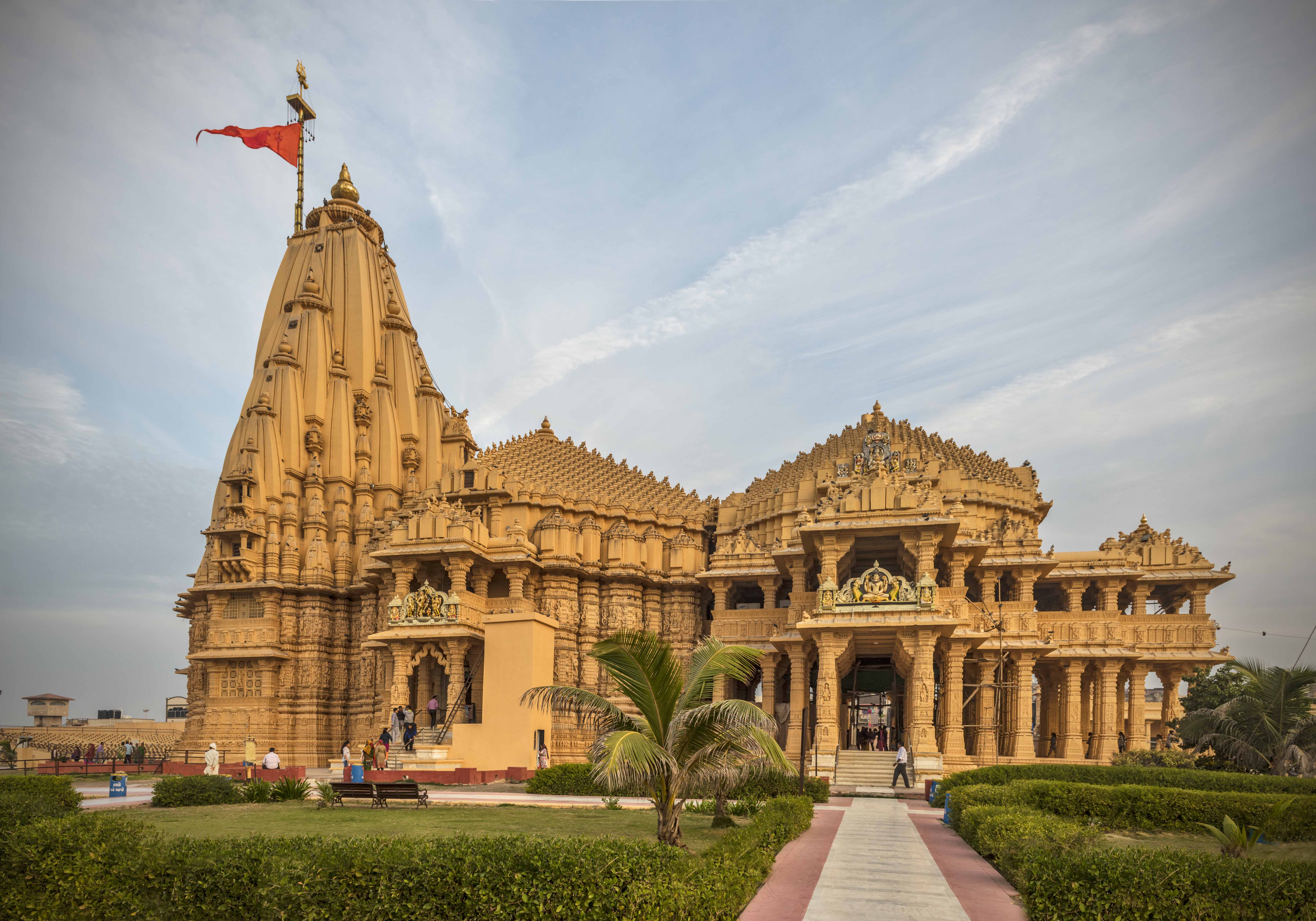
Somnath Jyotirlinga, located in Prabhas Patan, Gir Somnath district of Gujarat, is revered as the first among the twelve Jyotirlingas of Lord Shiva. Standing majestically on the Arabian Sea coast, Somnath is one of India's most sacred pilgrimage destinations and symbolizes faith, resilience, and spiritual devotion.
On the western coast of India, where the waves of the Arabian Sea gently touch the shores of Prabhas Patan, stands one of the most sacred temples in Hinduism—Somnath Jyotirlinga. Revered as the first among the twelve Jyotirlingas of Lord Shiva, Somnath is not only a place of worship but also a timeless symbol of faith, resilience, and India's rich spiritual heritage.
For centuries, devotees have travelled from every corner of the country to seek the blessings of Lord Shiva at Somnath. Saints, kings, scholars, and ordinary pilgrims have all walked the temple's sacred pathways, making it one of the oldest continuously revered pilgrimage destinations in the world.
Unlike many temples that are admired only for their architecture or religious importance, Somnath offers a unique experience. The sound of temple bells blends with the roar of the Arabian Sea, creating an atmosphere that is both peaceful and powerful. Visitors come here not only to pray but also to witness a place that has stood as a symbol of unwavering devotion through centuries of change.
Whether you are planning your first pilgrimage, completing the sacred Jyotirlinga Yatra, travelling with family, or exploring Gujarat's cultural treasures, this guide will help you plan every aspect of your journey.
| InformationDetails | |
| Temple Name | Somnath Jyotirlinga |
| Popular Name | Somnath Mahadev Temple |
| Location | Prabhas Patan, Gir Somnath District, Gujarat |
| Presiding Deity | Lord Shiva |
| Religious Significance | First of the Twelve Jyotirlingas |
| Temple Style | Chalukya Architecture |
| Best Time to Visit | October to March |
| Ideal Trip Duration | 2 Days |
| Nearest Airport | Diu Airport |
| Nearest Railway Station | Somnath Railway Station |
| Major Festival | Mahashivratri |
| Suitable For | Families, Pilgrims, Senior Citizens, Solo Travellers |
Somnath is famous for three reasons.
First, it is traditionally regarded as the first Jyotirlinga, making it one of the holiest shrines dedicated to Lord Shiva.
Second, its history represents extraordinary resilience. The temple has been rebuilt multiple times over many centuries, becoming a symbol of faith that endured despite repeated destruction.
Third, its spectacular location beside the Arabian Sea creates a setting unlike any other Jyotirlinga. Watching the sunrise or sunset near the temple is an unforgettable experience for pilgrims and travellers alike.
A visit to Somnath is much more than a temple visit.
Here you can:
The word Somnath is derived from two Sanskrit words:
Together, Somnath means "Lord of the Moon."
The temple derives its name from the ancient legend of Chandra Dev (the Moon God), who performed intense penance here to seek Lord Shiva's blessings after being cursed by King Daksha.
This story forms one of the most important legends associated with the temple.
According to Hindu tradition, Chandra Dev married the twenty-seven daughters of King Daksha. However, he loved only one of his wives, Rohini, and neglected the others.
Angered by this unequal treatment, Daksha cursed Chandra, causing him to lose his brilliance and gradually fade away.
Realising the seriousness of the curse, Chandra sought guidance from sages, who advised him to perform penance in honour of Lord Shiva.
He travelled to Prabhas Kshetra—the present-day location of Somnath—and undertook deep meditation.
Pleased with his devotion, Lord Shiva appeared before him and partially lifted the curse. Instead of removing it entirely, Shiva ordained that the Moon would continue to wax and wane, symbolising the cycle of decline and renewal.
This legend is closely associated with the lunar phases observed each month and explains why Lord Shiva became known here as Somnath, the Lord of the Moon.
Somnath occupies a unique place in Indian history.
Ancient texts describe it as one of the wealthiest temples of its time, attracting devotees, scholars, traders, and rulers from across the Indian subcontinent.
Throughout history, the temple faced repeated attacks and was rebuilt on several occasions by different rulers and communities. Each reconstruction reflected the determination of devotees to preserve one of Hinduism's most sacred places.
The present temple, completed in the Chalukya architectural style after India's independence, stands not merely as a reconstruction but as a national symbol of cultural continuity and spiritual strength.
Today, millions of pilgrims visit every year, making Somnath one of Gujarat's most visited religious destinations.
Among the twelve Jyotirlingas, Somnath is traditionally placed first.
Devotees believe that worshipping Lord Shiva here helps them:
Many pilgrims begin or conclude their Jyotirlinga Yatra at Somnath because of its special place in Hindu tradition.
The present Somnath Temple reflects the grandeur of traditional Chalukya architecture.
The towering shikhara rises elegantly above the sanctum, while beautifully carved pillars and detailed stonework demonstrate the craftsmanship of Indian temple architecture.
The temple's location beside the Arabian Sea adds to its magnificence, creating a dramatic backdrop rarely found at other pilgrimage sites.
One of the temple's most interesting landmarks is the Baan Stambh (Arrow Pillar). According to information displayed at the site, it symbolizes the uninterrupted stretch of sea southward from this point until Antarctica, highlighting the temple's unique geographical position.
Most visitors describe Somnath as a place where spirituality and nature come together.
Early mornings are peaceful, with fewer crowds and a calm atmosphere for darshan.
Evenings are especially memorable because devotees can attend the aarti before enjoying the Sound and Light Show that narrates the temple's history.
The nearby seafront provides an opportunity to relax and reflect after visiting the temple.
The temple remains open throughout the year, but each season offers a different experience.
This is widely considered the best period to visit because of pleasant weather and comfortable sightseeing conditions.
Ideal for:
Summer temperatures are higher. If visiting during this period, plan darshan early in the morning or later in the evening.
The monsoon season brings refreshing weather and greener surroundings. Occasional rain may affect sightseeing but also creates beautiful coastal scenery.
Somnath Temple welcomes devotees every day throughout the year. Whether you visit during a peaceful weekday morning or on the vibrant occasion of Mahashivratri, the temple offers a deeply spiritual experience.
| ActivityTimings* | |
| Temple Opens | 6:00 AM |
| Morning Darshan | 6:00 AM onwards |
| General Darshan | Throughout the day |
| Evening Aarti | 7:00 PM |
| Temple Closes | 9:30 PM |
*Temple timings may change on special festivals and religious occasions. It is always advisable to verify the latest timings before planning your visit.
Participating in the daily aarti is one of the most memorable experiences at Somnath Temple. The temple resonates with devotional chants, ringing bells, and the fragrance of incense, creating an atmosphere of peace and devotion.
Daily aartis are generally conducted:
Among these, the evening aarti is especially popular as it is followed by the famous Sound and Light Show.
If possible, plan your visit to include the evening aarti for a truly memorable spiritual experience.
At different times of the year, especially during festivals or peak pilgrimage seasons, special darshan arrangements may be available through the temple administration.
Before your journey:
During Mahashivratri and major holidays, waiting times can be significantly longer due to the large number of devotees.
Before entering the temple, visitors should keep the following points in mind:
Temple management may update visitor rules from time to time, so it is advisable to follow the latest instructions displayed at the entrance.
Although there is no elaborate mandatory dress code for general visitors, traditional and modest clothing is recommended.
Avoid clothing that may be considered inappropriate inside a religious place.
Photography policies may vary within the temple complex.
Generally:
Visitors should always follow the latest security and photography guidelines announced by the temple administration.
One of the major attractions after sunset is the Sound and Light Show, which beautifully narrates the history of Somnath Temple through music, narration, and visual effects.
The show explains:
Visitors staying overnight should include this in their itinerary.
One of the advantages of visiting Somnath is its excellent connectivity by air, rail, and road.
The nearest airport is Diu Airport, located approximately 80–90 kilometres from Somnath.
Other nearby airports include:
From these airports, visitors can hire taxis or continue their journey by bus or train.
Somnath has its own railway station, making train travel convenient for pilgrims.
Nearby stations include:
Several trains connect Somnath with major cities in Gujarat and other parts of India.
Somnath enjoys excellent road connectivity.
Regular buses and taxis operate from:
Travellers driving their own vehicles will find well-maintained highways leading to the temple town.
Parking facilities are available near the temple complex.
During weekends and major festivals, parking areas can become busy, so arriving early is recommended.
If travelling by private vehicle:
Somnath Temple is visited by devotees of all age groups.
Families with children and senior citizens generally find the temple premises manageable.
Visitors requiring special assistance should check the latest accessibility facilities available at the temple before their visit.
A trip to Somnath becomes even more memorable when combined with visits to nearby religious and historical sites.
The confluence of three sacred rivers is considered highly auspicious by devotees.
Distance from Temple: Approximately 1 km
Recommended Visit Duration: 30–45 minutes
According to Hindu tradition, this is the place where Lord Krishna is believed to have been struck by an arrow before departing from his earthly life.
Distance: Approximately 5 km
Recommended Visit Duration: 1 hour
An important spiritual site associated with the final earthly moments of Lord Krishna.
Distance: Approximately 2 km
A beautiful temple dedicated to the teachings of the Bhagavad Gita.
Ideal for peaceful meditation and spiritual reflection.
Located close to the temple, the beach offers beautiful sunset views and a peaceful atmosphere.
Visitors should exercise caution while approaching the sea, as swimming conditions may vary.
History enthusiasts can explore sculptures, inscriptions, and archaeological remains that provide insights into the region's rich heritage.
If you have only a few hours:
Morning
Afternoon
Evening
This itinerary allows visitors to experience both the spiritual and cultural highlights of Somnath in a single day.
Choosing the right accommodation can make your pilgrimage more comfortable and convenient. Staying close to Somnath Temple allows you to attend the early morning darshan, participate in the evening aarti, and explore nearby attractions without spending much time on local travel.
Visitors can choose from a variety of accommodation options depending on their budget and travel style.
Budget guest houses are ideal for:
Many guest houses offer clean rooms, basic amenities, and easy access to the temple.
Families often prefer guest houses because they provide:
Several dharamshalas operate around Somnath and offer economical accommodation for pilgrims.
Facilities vary from one property to another, so it is advisable to check available amenities before booking.
Visitors looking for additional comfort can choose from a wide range of hotels, from budget to premium categories.
Choosing accommodation within a short distance of Somnath Temple offers several advantages:
A visit to Somnath is incomplete without tasting the delicious flavors of Gujarat.
Many restaurants near the temple serve authentic vegetarian meals suitable for pilgrims and families.
Visitors can purchase a variety of religious and traditional items from markets near the temple.
Popular purchases include:
Shopping from local vendors also supports the regional economy and artisans.
Mahashivratri is the most important festival celebrated at Somnath Temple.
Thousands of devotees gather to offer prayers, participate in special rituals, and witness the grand celebrations.
If you plan to visit during Mahashivratri:
The holy month of Shravan is another significant period for Lord Shiva devotees. Special prayers and increased pilgrim footfall make this a spiritually vibrant time to visit.
The temple also attracts many devotees during Kartik Purnima, when special religious activities are organized.
The following estimates are indicative and may vary depending on the season, accommodation, and personal preferences.
| Travel StyleEstimated Budget (Per Person) | |
| Budget | ₹2,000 – ₹4,000 |
| Mid-range | ₹4,000 – ₹8,000 |
| Premium | ₹8,000 and above |
To make your journey comfortable and memorable:
Somnath is revered as the first Jyotirlinga of Lord Shiva and is one of India's most sacred pilgrimage destinations.
It is located in Prabhas Patan, Gir Somnath district, Gujarat.
October to March offers pleasant weather, while Mahashivratri and Shravan are spiritually significant but much busier.
One to two days are generally sufficient to explore the temple and nearby attractions.
Darshan is generally free. Any special services or paid facilities, if available, are managed by the temple authorities.
Special darshan arrangements may be available during certain periods. Check the latest information before your visit.
Yes, parking facilities are available near the temple.
Photography rules vary within the temple complex. Follow the guidelines displayed by the temple authorities.
Yes. Somnath is a family-friendly destination with accommodation and facilities suitable for all age groups.
Yes. Budget guest houses, family guest houses, dharamshalas, and hotels are available within a short distance of the temple.
Diu Airport is the closest airport.
Somnath Railway Station serves the town, with Veraval Junction also nearby.
Gujarati Thali, Dhokla, Khaman, Thepla, Fafda, Jalebi, and other traditional vegetarian dishes.
Yes, many senior citizens visit every year. Planning ahead and choosing nearby accommodation can make the visit more comfortable.
Triveni Sangam, Bhalka Tirth, Dehotsarg Tirth, Gita Mandir, Somnath Beach, and Prabhas Patan Museum.
A peaceful stay is an important part of a memorable pilgrimage.
Whether you are travelling with family, friends, or as a solo pilgrim, choosing accommodation close to Somnath Temple can help you save time and enjoy a more relaxed experience.
At BookYourGuestHouse.com, our goal is to help travellers discover verified guest houses, family stays, budget accommodations, and comfortable lodging options near India's most important pilgrimage destinations.
Explore guest houses near Somnath Temple, compare facilities, and choose the stay that best suits your travel needs.
Somnath Jyotirlinga is much more than an ancient temple. It is a living symbol of devotion, resilience, and India's spiritual heritage. From its sacred mythology and remarkable history to its breathtaking location on the Arabian Sea, every aspect of Somnath leaves a lasting impression.
Whether you come seeking blessings, exploring history, or simply experiencing one of India's most iconic pilgrimage destinations, Somnath offers an unforgettable journey that blends faith, culture, and natural beauty.
May Lord Shiva bless your journey with peace, prosperity, and spiritual fulfillment.
Har Har Mahadev!
Browse admin-verified guest houses with honest prices and a real host on the other end.
Find a stay →There are places you visit to admire their beauty. There are places you visit to learn about history. And then there ...
Baidyanath Jyotirlinga, popularly known as Baba Baidyanath Dham, is one of the twelve sacred Jyotirlingas of Lord Shi...
Ujjain's Mahakaleshwar is one of the few Dakshinamukhi (south-facing) Jyotirlingas, and is known across India for its...