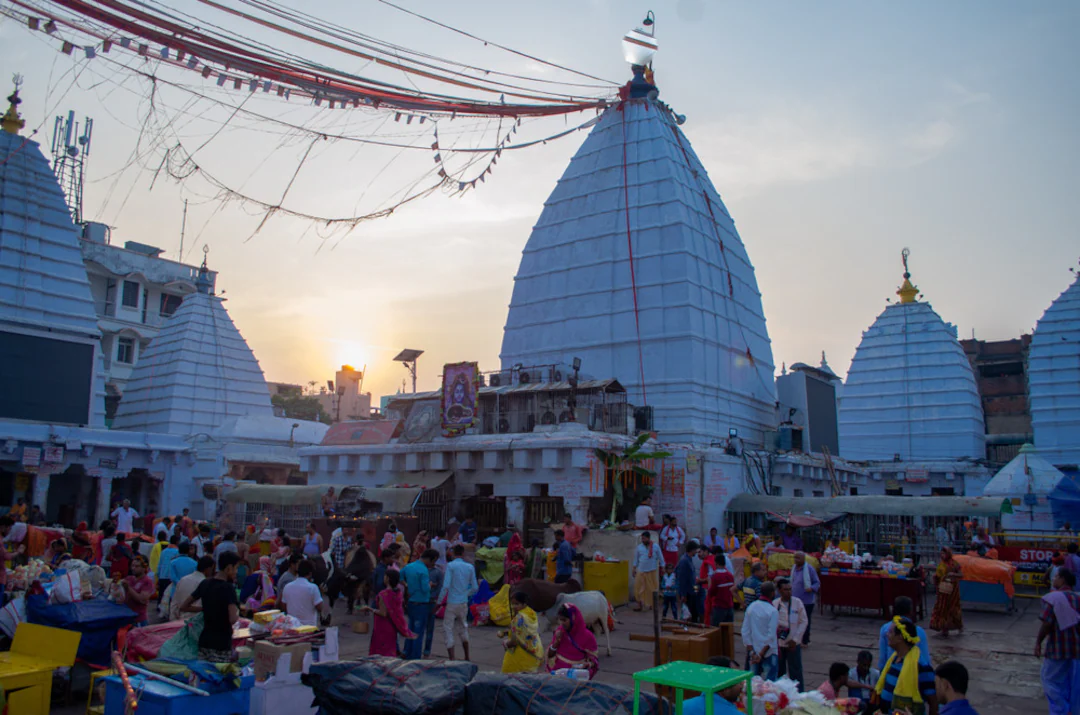
Baba Baidyanath Dham is one of the twelve sacred Jyotirlingas of Lord Shiva - and remarkably, also one of the 51 Shakti Peethas, where Goddess Sati's heart is believed to have fallen, earning it the name Hriday Peeth. This rare dual significance makes it one of the most powerful pilgrimage sites in India. "Baidyanath" means "Lord of Physicians," reflecting the temple's deep association with healing and well-being. The main temple complex houses 21 shrines, including temples to Parvati, Ganesha, Brahma and Hanuman, crowned by the distinctive Panchashul - a five-pronged symbol representing the destruction of five human weaknesses: lust, anger, greed, attachment and jealousy.
Deoghar's famous peda (a milk-based sweet) is closely associated with the temple and widely available at Peda Gali, right near the complex - a popular offering and souvenir. Simple vegetarian thalis near the temple are suited to pilgrims looking for a quick, satisfying meal between darshan visits.
The temple generally opens at 4:00 AM for morning rituals, with general darshan continuing through the morning until around 2:00-3:30 PM. It closes briefly for cleaning and rest, then reopens around 6:00 PM for evening Aarti until about 8:00-9:00 PM. Timings can change during Shravan, Mahashivratri and other major occasions - it's worth confirming locally when you arrive.
It's one of very few sites in India that is both a Jyotirlinga (a sacred Shiva shrine) and a Shakti Peetha (a site linked to Goddess Sati) at the same location - a rare and powerful combination that sets it apart from other pilgrimage destinations.
Key rituals include the Shodashopachar Puja (a detailed 16-step morning worship), Shringar Puja (ceremonial decoration of the Jyotirlinga), and the Ghandhan ritual, where red threads are tied between the Shiva and Parvati temples as a blessing. Morning and evening Aarti are open for devotees to witness.
Yes, significantly - the temple extends darshan hours to manage the huge daily footfall, especially on Shravan Mondays. Expect longer queues and revised schedules during this period, so plan extra time.
Modest, traditional clothing is appropriate, and queues can be long, especially in the morning and during peak season - arriving very early or in the evening off-peak hours generally means a shorter wait.
For a calm, unhurried darshan with shorter queues, aim for October to March, ideally on a weekday morning right after the temple opens at 4 AM. If your visit is specifically for Shravani Mela or Kanwar Yatra (July-August), expect very large crowds and extended darshan hours - especially on Shravan Mondays, which see the heaviest footfall of the year. Early morning (right at opening) or the evening Aarti window tend to be the least crowded times even during peak season.
Modest, traditional clothing appropriate for temple visits, a small offering (flowers, bel patra, or Ganga water if you're completing the Kanwar Yatra), comfortable footwear you can easily remove and carry (footwear isn't worn inside), and patience - queues move steadily but can take time during busy periods.
We're adding verified guest houses here. List yours free — no commission, guests pay you directly.
List your property →