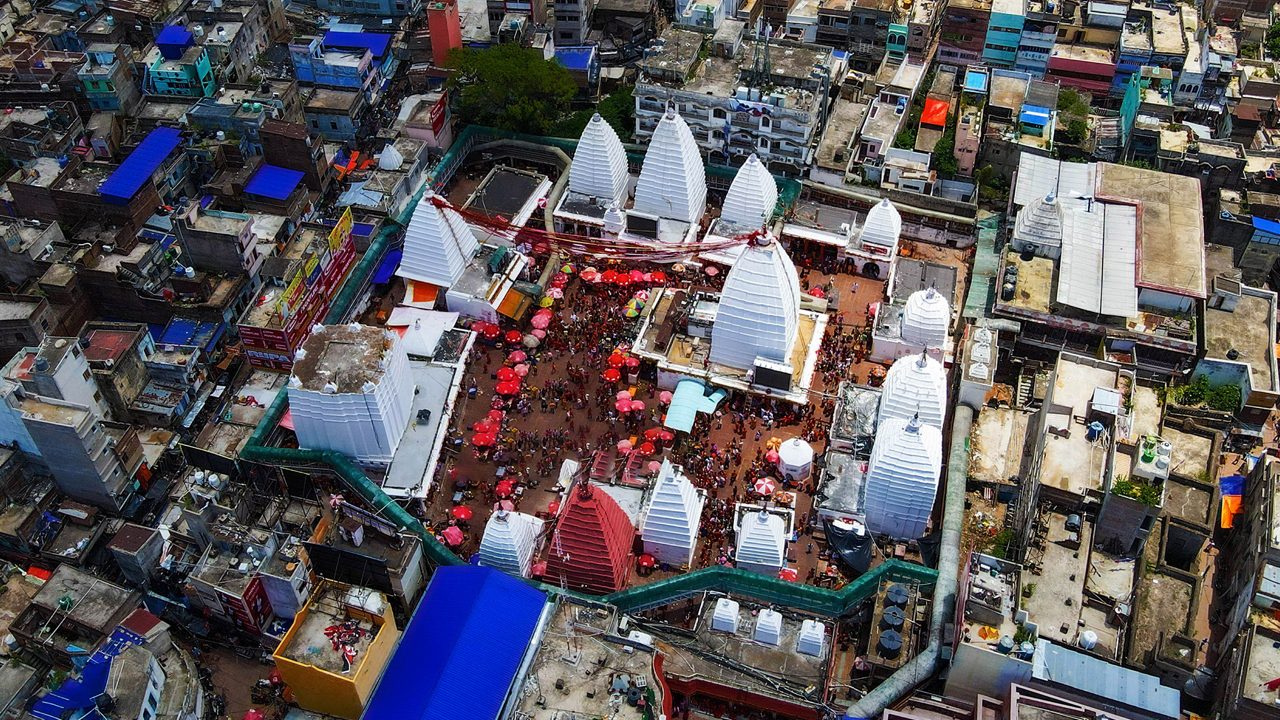
Festival timing transforms a temple town completely. Here's how to decide whether to travel into the crowds or deliberately avoid them.
The same town can be two entirely different places depending on when you arrive. Deoghar in October is an unhurried temple town where you'll get darshan in minutes. Deoghar during Shravan hosts lakhs of pilgrims and queues that last hours. Neither is better - but choosing accidentally is a mistake.
Shravani Mela (July-August) is the biggest event at Baidyanath Dham, when kanwariyas walk from Sultanganj carrying Ganga water. The Mondays of Shravan are the peak days within an already peak month.
Mahashivratri (February-March) brings night-long worship and heavy crowds at Shiva temples nationwide. Basant Panchami (January-February) is considerably quieter and a good compromise if you want atmosphere without the crush.
Most Hindu festivals follow the lunar calendar, so their Gregorian dates move every year - sometimes by several weeks. Always check the current year's dates against a reliable panchang rather than assuming last year's timing carries over. Our homepage festival calendar lists the typical period for each, with exact dates added once confirmed.
Book accommodation two to three months ahead - not two to three weeks. Expect longer darshan queues and altered temple timings. Travel light, since bag storage gets scarce. And build slack into your plans: roads close, routes divert, and nothing runs quite to schedule.
Browse admin-verified guest houses with honest prices and a real host on the other end.
Find a stay →Festival timing transforms a temple town completely. Here's how to decide whether to travel into the crowds or delibe...